I Love You but You Didn’t Do the Reading

From “creationist” neo-confederates to whiskey-drinkin tooth-pullers, this week had it all. Here are some of the articles that riled us:

Is there an intellectual wing to Trumpism? Daniel McCarthy reviews some conservative contenders at American Conservative.

Should college students have to PAY for speakers they disagree with? Hechinger looks at the fight over mandatory student fees.

Wow! Whatta week for in-depth profiles of ILYBYGTH personalities:

John Kelly’s comments generated a lot of culture-war heat.Bart reading bible

Does THIS count as school segregation? Or is it just a reasonable attempt to reward good behavior?

Ouch. The Nation profiles the painful lengths people go to in Tennessee when they lack dental insurance. Spoiler: It includes “pliers, chisels, and whiskey.”

I Love You but You Didn’t Do the Reading

Happy Halloween, SAGLRROILYBYGTH! There were plenty of tricks and a few treats in the news this week. Here are some of the headlines you might have missed:

School scams? Orlando Sentinel reporters investigate public money going to private-school ripoffs.

B-ding! There’s another one: Rich smart person teaches briefly in low-income school, writes memoir.

The most expensive evangelical building ever? CT reviews Hobby Lobby’s Museum of the Bible.Bart reading bible

A new gen-ed: “Patriotic Education and Fitness.” Will it help students at the College of the Ozarks be good citizens?

“Border science” and Nazi occultism. At Religion & Politics Michael Schulson reviews Eric Kurlander’s Hitler’s Monsters.

  • The takeaway? Schulson: “There’s the fascination with purity. And there’s the belief in secret histories, secret forces, and secret knowledge. These concepts are not fringe ways of thinking. They are familiar, I think, in one form or another, to most Americans.”

What should a conservative PhD student watch out for? Some controversial anonymous advice at IHE.

At HNN, Gary Nash asks why we have forgotten about white Christian anti-racist activists.

What’s a progressive parent to do? Do they have to support public education even if they don’t like public schools? One parent asks for progressive advice at The Nation.

How did Betsy DeVos change her daily routine when she moved from being a private-school activist to a public-school uber-administrator? According to the New York Times, she didn’t.

Schools are left-wing indoctrination centers, Newt Gingrich writes.

What do schools really need? At Flypaper, Michael Petrilli prescribes “a swift kick in the ass.”

I Love You but You Didn’t Do the Reading

This week the interweb’s series of tubes heated up with plenty of ILYBYGTH-related material. Here are some of the stories we might have missed:

It’s not just segregation. In NYT, John Rury and Derrick Darby on the history of racial imbalances in the rate of harsh school punishments.

Leo Ribuffo at HNN on Trump, Nixon, and anti-Semitism in the Oval Office.

Evangelicals for Obamacare.Bart reading bible

Inside the mind of school-choice maven Eva Moskowitz. Why do teachers call the NYC charter-school leader “Evil” Moskowitz?

Why is young-earth impresario Ken Ham mad at Princeton University?

AG Sessions: Free speech for campuses, not for NFL sidelines.

“Why in the hell would I pay 60 grand a year to have my child’s life ruined?” Mary Poplin at Christianity Today on the dangers of “secular privilege” in higher education.

Can an academic journal nowadays publish a defense of colonialism? The latest on the Third World Quarterly hullabaloo from CHE.

What will make conservative parents happy? Michael Petrilli looks at school choice at National Affairs.

Harvard, Queen Betsy, and school choice: Peter Greene tears apart Devos’s Harvard speech.

Is “Kingdom of God” the New “Heritage”?

You’ve heard it before: Defenders of Confederate monuments insist their intentions are not to foster racism, but only to celebrate their heritage. The other side (including me) argues that the historical baggage of these statues is simply too heavy. Even if Confederate heritage-lovers don’t mean to be racist, that’s what the statues and flags have come to mean. Today, I wonder if we have a new, evangelical version of this dilemma. A key phrase in evangelical culture seems utterly benign to many smart, well-meaning evangelicals. But it terrifies the rest of us.

So here’s the tough question of the day: Is the “Kingdom of God” the evangelical version of “heritage?”

A couple of days ago, Wheaton College’s Ed Stetzer defended the phrase at Christianity Today. When a federal judge appointee declared that she wanted to work for the “Kingdom of God,” a few senators blanched. Would she use her taxpayer-funded position of power to impose theocratic rule?

Stetzer protested. The senators, he claimed, were imposing an anti-Constitutional religious test for office. Plus, the senators seemed remarkably ignorant about evangelical culture. As Stetzer explained,

The “Kingdom of God” (something that I too am deeply committed to) does not conflict with our ability to work faithfully in the public square with integrity and honor. In fact, our “dogma” may actually benefit society, for it brings certain values which work towards the good of people and society. People do say that they are motivated for public service in part because of their faith. Religion is not a hindrance to a proper functioning marketplace and governmental system; rather, it brings with it inherent moral and ethical codes which seek a better tomorrow for all of us today.

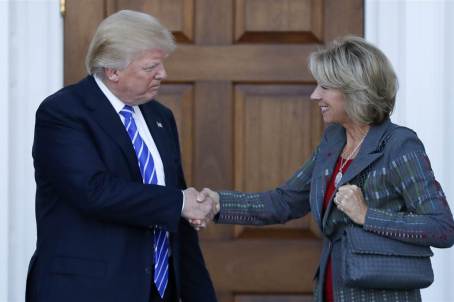
We’ve seen this before. Many secular progressive types (like me) recoiled in horror when Ed Secretary Betsy DeVos revealed her scheme to use her job to further the “Kingdom of God.” Her plan, some assumed, is to impose a Handmaid’s-Tale horror show of theocratic rule on school and society. Activist groups protested that Queen Betsy’s vision was to overturn constitutional separation of church and state and impose religious beliefs as public policy.

As evangelical intellectuals have pointed out, such assumptions are a misreading of evangelical culture. In the Reformed heartland of Michigan, working for the Kingdom of God can have a lot of different meanings. At Calvin College, for example, as Abram Van Engen explained, the phrase is not about imposing theocracy. As Van Engen put it,

Calvin does indeed call its students to be “Christ’s agents of renewal in the world.” We are told to “advance God’s kingdom.” Without being inside of that tradition, it can sound, perhaps, like theocracy. What do these phrases actually mean? Most broadly, they mean a service-oriented vision of vocation. Students are called to serve, and they can serve in many ways. For example, Calvin students are regularly called upon to work in the world for racial reconciliation.

Sounds wonderful. But the dilemma remains. If a federal judge or an education secretary announce they are working to establish “God’s Kingdom,” it doesn’t sound as if they are dedicated to such things. It sounds—to the rest of us—like an explanation why so many white evangelicals voted for Trump. It sounds like a declaration of war on the secularization that has made such strides over the past fifty years. It sounds like an effort to wind the clock back to an imagined past in which evangelical values were imposed on everyone as simply “American” values.

I know this is hard for evangelical intellectuals to hear. They don’t like to think of their religious beliefs as dictatorial, chauvinistic, or theocratic. And, to be fair, I sincerely believe that for many evangelicals, their desire to further the Kingdom of God really is none of those things. Historically, however, as I’m arguing in my new book about evangelical higher education, evangelicalism in America has always been tangled inextricably with such unsavory themes, with a deep-seated assumption that the real America is Christian America.

As our ugly battles over “heritage” have made clear, the baggage of history isn’t something we can simply ignore. Just as evangelicals need to understand that telling someone you love them but they’re going to hell is not usually taken as anything but a hateful attack, so evangelicals need to realize that their traditional jargon sounds scary to the rest of us.

I Love You but You Didn’t Do the Reading

You might have been out fishin’, but the interwebs kept foaming over. Here are some stories SAGLRROILYBYGTH might have missed:

From the University of Colorado, Boulder’s latest token conservative scholar reflects on his experience.

Trump, Bannon, Conway: Historian Andrew Wehrman says they would be right at home with America’s Founding Fathers.

Cut it out: Tom Englehardt argues in The Nation that progressives should stop insulting Trump.

Atheists strike back, ninety-two years later. Freedom from Religion Foundation sponsors a statue of Clarence Darrow in Dayton, Tennessee.

We know Republicans don’t like colleges these days.

Who gets to define “hate?” American Conservative Rod Dreher tees off on the Southern Poverty Law Center.

Bart reading bibleIf Americans really do oppose school segregation—as they tell pollsters they do—then why are schools getting more and more segregated? In The Nation, Perpetual Baffour makes the case that class prejudice has supplanted racial prejudice.

Harvard considers banning fraternities and sororities. It hopes to diminish exclusionary, inegalitarian arrangements.

  • At The Atlantic, Conor Friedersdorf asks, “is there any American institution that trades on unapologetic exclusion and perpetuates inegalitarian arrangements that benefit an in-group more than Harvard?”

Why does the Trinity Lutheran decision matter? Not because of playgrounds, but because of vouchers.

Don’t do it: Medievalist argues against luring college students into medieval studies with Game of Thrones references.

Queen Betsy’s civil-rights deputy apologizes for saying that 90% of campus rape accusations were due to regret over drunken hook-ups.

The segregationist history of school vouchers.

Curmudgucrat Peter Greene on the ignored dilemmas of rural schools.

Why bother killing the Department of Education? It has already been dying on its own for the past thirty years.

I Love You but You Didn’t Do the Reading

A few stories from the interwebs this week that might be of interest to SAGLRROILYBYGTH:

Can a public university have a Christian chapel? East Central University in Oklahoma goes back and forth.

Culture-war category bashers: Pro-life feminists.Bart reading bible

Historian Chris Gehrz: Don’t forget about America’s tradition of Christian communism.

Celebration or segregation? A skeptical look at separate graduation ceremonies.

What do high-school students want? The Fordham Institute’s study of student types.

Ole Miss takes the plunge: Changing the name of Vardaman Hall & putting up slave-labor historical notices.

When Queen Betsy asked for suggestions, people listened. Politico tallies the comments so far.

Hobby Lobby Bible Museum hits a snag: Forced to return artifacts to Iraq.

Who was the first American philosopher to tackle creationism? Glenn Branch finds a new historical clue.

A week late, but still worth reading: Cara Burnidge compiles great takes on “America.”

I Love You but You Didn’t Do the Reading

Another rip-roaring week has come and gone in the offices of ILYBYGTH. Here are some stories you might have missed:

Anti-Muslim? Or pro-secular? School-prayer debates in Ontario.

Forget about free speech and violent protests for a second. At WaPo, Jeffrey Selingo argues that there are much bigger problems to worry about in the world of higher education.Bart reading bible

Southern evangelical churches wonder what to do about their Confederate monuments.

Summer vacation is here. From the Fordham Institute, Christopher Rom says we need to get rid of it. And it’s not because we’re not all a bunch of farmers anymore.

Jerry Falwell wants in. But other university leaders want out. Queen Betsy’s Ed Dept is having trouble filling its ranks.

The more things change…Southern Baptist Convention debates an anti-racism resolution.

More Trumpian tragedy: Cabinet meeting relives the opening of King Lear.

Helicopter parenting and the authoritarian personality: Pratik Chougule makes the case at the American Conservative.

Teaching climate change: A rundown of the latest developments.

DeVos’s Ed Dept. closes a sexual-assault investigation at Liberty University.

What do we do when a religion is all about racial violence? The question of Odinism.

Will vouchers help? Only at the edges, two researchers claim. Positive effects from vouchers are due to something else.

Trump and DeVos: Improving Science and History Education?

It’s too soon to tell, of course, but that’s not going to stop me from wondering. Historians, science-educators, and members of the Democratic Party have all been horrified by Trumpism. But murmurs from the field suggest that Trump’s excesses are sparking a pro-history, pro-science, pro-donkey backlash. At least a little.

History first. It didn’t take an expert to be shocked by some of Trump’s campaign rhetoric. Shouting about “America First,” for example, seemed to willfully ignore the tortured history of that phrase.

Then science. Trump has long bashed climate-change science as a “hoax,” a “Chinese plot,” a “con job.”

And politics. Trump’s surprise victory had many Democratic Party faithful wringing their hands at their abject failure. If they couldn’t stop a buffoon like Trump, how could they expect to get anywhere?

Trump and devos

So bad it’s good…?

So maybe it’s just wishful thinking, but we’re hearing all sorts of mumbling about anti-Trump backlash.

Amy Wang asks if Trump’s surprise victory has sparked renewed interest in history on college campuses. In the past few years, the number of history majors has slumped, as more and more college students study business and engineering. At Yale, however, the history major recently regained its top spot. Elsewhere, students are looking at the history major with renewed interest. Wang wonders if Trump’s victory

has broken through an apathy barrier of sorts. People who’d become disengaged with politics suddenly started paying attention again.

And at least one progressive Seattle science teacher claims that Trumpist science-denialism has sparked greater interest among his students in studying real science. As he put it,

My students are angry and frightened and I am humbled by the fact that most of them have only deepened their commitment to do what Trump will not: honestly explore and enact how best to live on Earth.

When it comes to politics, too, Democrats are finding that Trump and DeVos make excellent fundraisers…for Democrats. As Politico reports, Democratic Party campaigns that focus on DeVos’s policies are raking in the dollars. As Politico’s Michael Stratford reports,

Emails citing DeVos are raising money at a faster clip than others and driving engagement from supporters.

We shouldn’t be surprised, I guess. No one was less popular in the 1930s than FDR, and he stayed in office for four terms. Nobody provoked greater animosity than Abraham Lincoln, and he got the penny. So we don’t want to overestimate the importance of inevitable anti-Trump backlash.

We can’t help but wonder, though: Will Trumpism really spark a renaissance of academic history, science education, and Democratic Party politics?

Christian Culture Warriors Come in from the Cold

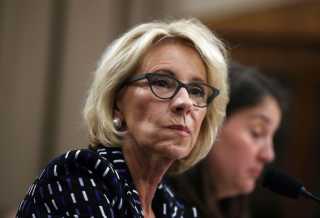
It has not been easy to be anti-gay lately. In a rush, support for same-sex marriage went from fringe to front-and-center. Many conservative religious people have felt flash-frozen out of the mainstream. When it comes to LGBTQ issues, many evangelicals have been surprised to hear themselves called bigots. In her continuing role as conservative dream-maker, Ed Secretary Betsy DeVos recently moved to bring anti-LGBTQ religious activists back into the mainstream. Will it work?

DeVos lgbtq

Welcoming anti-welcomers

First, let me lay out the required clarifications. SAGLRROILYBYGTH are sick of hearing it, but new folks might not know where we’re coming from here at ILYBYGTH. So here they are: I personally feel strongly about LGBTQ rights, in school and elsewhere. But in these pages—as in my recent book about educational conservatism—I’m more interested in understanding the politics involved than scoring political points one way or the other.

Second, a little background: In the past three years or so, many conservative religious folks have been surprised to find themselves so quickly tossed from the precincts of respectability when it comes to LGBTQ issues. As I’ve been working on my book about evangelical higher ed, I’ve noticed how often university leaders have bumped up against the question. At Gordon College near Boston, for example, President Michael Lindsay was surprised by the ferocious response to his reminder about Gordon’s policy against homosexuality. The issue of same-sex rights threatened to split the world of evangelical higher education in two.

As traditional evangelical notions about homosexuality were kicked out of the mainstream, evangelical intellectuals were confronted again with their perennial dilemma. Do they maintain their dissident notions and deal with the consequences? Or do they adapt their ideas as mainstream culture changes?

Today, we see that Ed Secretary Betsy DeVos has moved to reverse the tide. As reported by BuzzFeed, she invited two unapologetically anti-LGBTQ groups to an official Ed Department meeting. Focus on the Family and the Family Research Council both participated in a recent Father’s Day event. The signal couldn’t be clearer: Opposing expanding LGBTQ rights and protections does not make conservatives unwelcome in Queen Betsy’s regime.

We should not be surprised. In the twentieth century, according to progressive critics, Queen Betsy’s family foundation gave sizeable donations to both Focus on the Family and its offshoot Family Research Council. And there is absolutely no doubt that the two groups are stridently opposed to LGBTQ rights. Founder James Dobson views homosexuality and transgender as transgressions, pathways to “orgies” and sin.

Will such notions move back into the mainstream? Will groups who hold such views be allowed to participate in federally funded projects? It’s a frightening prospect, and the Trump White House makes it seem frighteningly realistic.

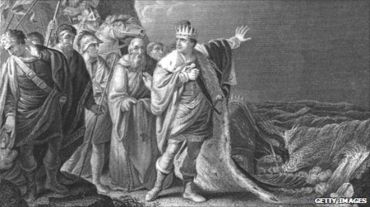
canute

I command you, tide…

In the end, though, I think DeVos’s Canute strategy is doomed. She seems blithely unaware of her own separation from mainstream notions, but she will nevertheless be forced to deal with it. By including Focus and FRC, for example, she alienated the national Parent-Teacher Association, hardly a group known for its culture-war extremism.

As with her recent remarkable comments about discrimination in schools, Secretary DeVos will find herself apologizing for her inclusion of these anti-LGBTQ groups. There is no doubt she would like to welcome their ideas back into the mainstream, but she doesn’t have the power to reverse the tide.


I Love You but You Didn’t Do the Reading

As the weather heats up, so do the interwebs. Here are a few stories we might have missed over the past week:

Stanford students call for greater ideological diversity on their elite campus.

Will individualized classroom material always help students? Not always. Dan Willingham explores a new study of adaptive vs. static practice.

Poaching teachers to North Carolina from low-pay Oklahoma.Bart reading bible

Conservative evangelicals pooh-pooh climate change on religious grounds. Jakob Erickson accuses at Religion Dispatches.

University of Chicago researcher finds—surprise!—left-wingers and right-wingers read very different science books. HT: V(F)W

How to get fired: One Texas middle-school teacher gave out “Most Likely to Be a Terrorist” and “Most Likely to Blend in with White People” awards.

Republicans pressure Secretary DeVos to sweeten the education budget.

Buzzfeed claims Trump is inspiring school bullies nationwide.

How did she learn to be Betsy? The New York Times looks at Secretary Devos’s evangelical schools and those of her children.

Whoops! It looks as if Liberty’s Jerry Falwell Jr. spoke too soon. He won’t be leading a higher-ed task force after all.

Say whatever you want, as long as it makes us look good: The University of North Carolina shuts down a history class that publicized its recent athletics scandal.