Required Reading: Learning to Hear Why Evangelical Christians Hear God

Guest Post by David Long
Tanya Luhrmann, When God Talks Back

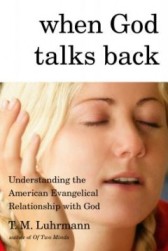
Tanya M. Luhrmann, When God Talks Back: Understanding the American Evangelical Relationship with God (New York: Vintage, 2012).

Adam Laats’s testimonial for his creation of I love you but you’re going to hell was one of the most refreshing perspectives I’ve read in a long time.  Laats’ roots in Boston—having, what those of us living in the “fly-over” states might skeptically be inclined to see as the judgment of a  limited, Northeastern Liberal metropolitan view—make for interesting reading given his apparent surprise at thoughts and tendencies of ‘Red State’ America. In short, the general tone sounds something like—”these creatures really still exist?!”  In fact, as I suppose Laats has encountered through reader feedback, such creatures not only exist but make up a good bit of the Union.Countering Laats, those of us raised where ‘olde-timey’ religion has never faded, and where it remains an assumed keystone of responsible civic participation, raise an eyebrow to what we see as shortsighted judgment of those disinclined to ever value living in the interior.  Calming our nervous eye, Laats is on the right track.  His earnestness rings true.  Try to figure these curious people out.  Know where people are coming from.  But then what?  Historians are great at drawing on the past to inform the present.  Often, due to the normal purview of their back-looking view, they’re not as good at analyzing the dynamics of here and now.

The American relationship to God has not been static as historians show well.  Unabashed liberal  theologians such as Marcus Borg and sociologists such as Robert Putnam and David Campbell show that the American response to the sacred has been changing.  As Putnam and Campbell show most clearly, the old “Mainline” Christianity of Laats’ and many other’s childhood has eroded.  Congregations reduced by half in many cases over the past half century, the “Mainline” is Main no longer.  American Protestantism has changed dramatically in recent decades, ever more and more defined by the new Evangelicalism featured in T.M. Luhrmann’s When God Talks Back.

As Luhrmann sees it, “this is an important story because the rift between the believers and non-believers has grown so wide that it can be difficult for one side to respect the other.  Since evangelical Christianity emerged as a force in American culture, and especially since the younger George Bush rode a Christian wave into office, non-evangelical observers transfixed by the change in the American religious landscape.  Many have been horrified by what they take to be naïve and unthinking false beliefs, and alarmed by the nature of this modern God” (p. xv).

When God Talks Back follows the emergence of the rapidly growing neo charismatic evangelical movement in the U.S. through the lives, thoughts, and hopes of dozens of fellow church goers.  Luhrmann, a psychological anthropologist, presents a salient answer to those ILYBYGTH readers who wonder not only how such people exist, but how such views are cultivated.  Luhrmann’s work is ethnographic—she became a congregant of the Vineyard Church in a number of U.S. cities over a few years.  Countering some of Laats’ personal narrative, and further deflating modernist hopes that science and theories of progress would dissolve American religious commitment in time, Luhrmann shows that neo charismatic Evangelicalism is spreading throughout the U.S.—including major urban areas.  “There are pockets of liberal Christianity left in America and Europe,  but Christianity around the world has exploded in its seemingly least liberal and most magical form—in charismatic Christianities that take Biblical miracles at face value and treat the Holy Spirit as if it had a voltage” (p. 302).

Underscoring Luhrmann’s work, and worth what is a sometimes lengthy and ranging ethnographic treatment of Vineyard Church members, is the strongly theorized, yet easily digestible insight about science, faith, and the near American future.  The neo-Evangelicalism explored in Luhrmann’s work points strongly to a theory of religious practice—of knowing from doing religion—rather than the usually scientistic efforts of explaining Evangelicalism through evaluation of epistemological pathways of coming to know.

As Luhrmann explains, “…what I saw was that coming to a committed belief in God was more like learning to do something than to think something.  I would describe what I saw as a theory of attentional learning—that the way you learn to pay attention determines your experience of God.  More precisely, … people learn specific ways of attending to their minds and their emotions to find evidence of God, and that both what they attend to and how they attend changes their experience of their minds, ad that as a result, they begin to experience a real, external, interacting living presence” (p. xxi).

What unfolds chapter by chapter is a unique and deeply insightful look into the social practice of being an Evangelical Christian in early 21st century America.  As Luhrmann sees it, and given my own experience working and talking with creationists, such views are much more saliently explainable once you come to acknowledge the social support evangelicals get from their churches, appended by the reality of time allocation.  As Luhrmann makes a convincing case, being an Evangelical in today’s charismatic style—through the many, emotionally exuberant hours of praise and worship—changes one’s style of thinking.  Like Aristotelian phronesis, one can become quite good—a master—at the virtues of evangelical worship regardless of whether liberal America thinks it’s silly, backward, or indicative of sloppy thinking.

“They seemed to think about sensing God more or less the way we think about sophisticated expertise in any field: that repeated exposure and attention, coupled with specific training, helps the expert see things that are really present but that the raw observer cannot, and that some experts are more expert than others.  A sonogram technician looks at the wavy grey blur on the screen and sees a healthy boy.  This is not a matter of taste or aesthetic judgment: there is, or is not, a boy in the woman’s womb, and the technician can see evidence for the fact in a picture that leaves the expectant mother bewildered.  And a very good technician sees details that a merely competent one cannot” (p. 60).

In fact Luhrmann’s work offers another compelling insight into the durability of evangelical christianity in the early 21st century American milieu.  Countering the shrillness of some “New Atheists” such as Richard Dawkins, etc., Luhrmann repeatedly follows evangelicals through life trials for which their church homes offer not only a sense of purpose, but a foil to those who might critique religious practice as being an inadequate explanatory matrix to respond to the world.  As Luhrmann makes clear, “in some quite fundamental way, modern believers don’t need religion to explain anything at all.  They have plenty of scientific accounts for why the world is as it is and why some bodies rather than others fall ill.  What they want from faith is to feel better than they did without faith.  They want a sense of purpose; they want to know that what they do is not meaningless” (p. 295).

Luhrmann’s book then is an invitation to those willing to suspend their critique of Christian America’s current form in favor of a an exploration of how and why it currently comes to be.


DAVID LONG is an anthropologist who studies the American relationship towards science, particularly as it unfolds in schools and universities.  His work examines the role of religious faith, social class, ethnicity, and gender in people’s lives as they relate to science.   He is the author of Evolution and religion in American education: an ethnography (Springer 2011), where he followed a cohort of college students, many of whom were Creationists, documenting the rationales and anxieties they encountered while thinking and talking about evolution.  He is currently conducting longitudinal research on the administrative decision making in K-12 schools which does or does not support science teaching.  Dr. Long currently directs implementation research for the Virginia Initiative for Science Teaching and Achievement at George Mason University.  He can be reached at dlong9@gmu.edu



Porky’s Revenge: Gender Identity and School Bathrooms

Remember Porky’s?  I looked it up, and found a surprisingly thorough plot summary on Wikipedia.  Before I looked it up, though, I had only a hazy memory from my teenage years of a group of boys trying to look into a girl’s shower.

According to some conservative commentators, the Massachusetts Department of Education (MDOE) has sunk to Porky’s level in a misguided attempt to avoid discrimination.

In November, 2011, the Massachusetts legislature passed a law prohibiting discrimination on the basis of gender identity.  If someone identifies as something other than the gender that person was assigned at birth, whether as a male, female, neither, or other, that person may not be discriminated against in any way.

Recently, MDOE issued some guidelines for school implementation of the new law in public schools.  Public schools must make all students feel welcome and valued, regardless of gender identity.

Predictably, some commentators focused first on the restroom ramifications of the new law.

Writing for Fox News, Todd Starnes noted that parents reacted with outrage to the notion that someone born as a boy could identify as a girl and use the girls’ restroom, or vice versa.  Starnes also critiqued the rule’s enforcement policy.  If a student does not adequately recognize a fellow student’s gender identity—in the way the fellow student wishes—he or she could face punishment for bullying.  That is, if a student calls a fellow student “he,” or a “boy,” when the fellow student identifies as a “girl,” or “neither,” it could count as bullying.

One parent told Starnes, “It doesn’t treat all students the same. . . .  It has a greater preference to gender-identifying children. That concerns me a great deal.”

In the pages of Public Discourse, lawyers Adam J. McCloud and Andrew Beckwith took a different approach.  This sort of policy overreach, McCloud and Beckwith insist, is nothing more than a predictable outgrowth of America’s penchant for redefining marriage.

Changes in law and principle can take a while to unfold as policy and practice, they note.  “Redefining marriage to eliminate sexual complementarity as an essential characteristic,” they argue,

“doesn’t automatically commit a state to forcing girls to share locker rooms with boys. But there is a logical connection. One of the premises justifying the redefinition of marriage also grounds these new regulations, that is, the view that sexual difference is irrelevant to the practice of marriage.

“But if sexual difference is irrelevant to marriage, then how can it be relevant to any practices? Once the state has determined that sexual difference is no longer a legitimate reason to extend special recognition to man-woman monogamy, there is no reason in principle to maintain sexual distinctions in less intimate practices. If one’s anatomical reality isn’t relevant to one’s marriage, it’s even less obvious why it should be relevant to one’s bathroom choice.”

Creationists Love The Bible

The young-earth creationists of Ken Ham’s Answers in Genesis endorse The Bible.  Not just the Good Book, but now also the Good Movie.

Dr. Elizabeth Mitchell (MD) reviewed the new ten-hour History Channel film on the AiG website today.

I believe the folks at AiG will agree with me when I say this: they have a tendency to be extremely particular about the company they keep.  They only endorse those who agree on the importance of a young earth and a six-day creation.  Even other conservative Christians will come into AiG disfavor if they dispute those ideas.  Recently, for instance, founder Ken Ham took the 700 Club’s Pat Robertson to task for making nice with evolutionary science.

So when an AiG reviewer praises the new Bible film as something that “allows the plain truths of biblical history from the time of our origins to speak and connects those truths to the relevant issues of life,” it says a great deal about the content of the film.

Mitchell notes that the film depicts a literal world wide flood.  “Even in its opening scene,” Mitchell writes,

“a believable Noah recounts the six days of creation for his seasick family in a massive, storm-tossed Ark in a Flood that is clearly global. The worldwide scope of the Flood is portrayed by the graphic of a flooded planet and the narrator’s confirmation that the floodwaters had ‘engulfed the world.'”

Mitchell notes the necessary shortcuts that a ten-hour film must make in condensing such a massive set of books.  In the end, however, Mitchell believes that the film is true to the original.  The best proof of the film’s merit will be, in Mitchell’s words, that

“The Bible will likely lead many to Christ. Why? Because it presents the Bible’s history as real history—instead of eroding trust in God’s Word from the very first verse. Because it demonstrates the relevance of the Fall of mankind soon after creation to all the evil that has ever cursed our world. Because it depicts the Old Testament sacrifices that God intended to prefigure the ultimate sacrifice of Christ, the Lamb of God who takes away the sin of the world (John 1:29). And because it presents the Bible’s history as a continuous narrative of God’s plans for us from creation through the covenant people of Abraham and Moses to Christ and the early church, thus showing how Jesus Christ is indeed God’s answer for the sin-guilt of the entire world.”

As long as important doctrine is respected, it seems, including the truths of a young earth and a six-day creation, Answers in Genesis is happy to endorse any work that will lead to more conversions.

As we’ve been discussing lately, the Hollywood Christian power couple behind this film have advocated for more Bibles (books, that is, not films) in public schools.  If ardent young-earth creationists can endorse the film, what does that tell us about the sectarian intentions of the filmmakers?

Celebrity Bibles in Public Schools

If you haven’t bothered reading the book, since you knew the movie would be coming out soon, your plan paid off.

Hollywood Christian power couple Roma Downey (“Touched by an Angel”) and Mark Burnett (“The Voice,” “Survivor”) have produced a ten-hour Bible series for the History Channel.  Their massive movie project is not the sum total of their Bible ambition.  As they wrote recently in the Wall Street Journal, they also want to see more Bible in public schools.

Evangelical Protestants have largely endorsed the new Bible series.  Emily Belz wrote in World Magazine that the parts she saw seemed “theologically orthodox.”  Writing in the Christian Post, George Tunnicliffe declared, “This Time, Hollywood Got It Right.”

In Burnett’s and Downey’s WSJ op-ed, they argue that cultural literacy demands a thorough knowledge of the Bible.  This is not a religious mandate, they insist, only an educational one.  Young people won’t understand basic cultural references without reading the Bible.

Their argument raises some perennial questions about the teaching of the Bible in public schools.

As they correctly note, the Supreme Court in 1963 explicitly stated that the Bible could and should be used in public schools.  It must not be read devotionally, Justice Tom Clark wrote, but it should be used to teach students about culture.

However, as we have seen recently, such Bible courses in Texas have often lapsed into evangelical exercises.  Professor Mark Chancey of Southern Methodist University found plenty of devotional training packed into public-school Bible classes.

Nor should this surprise us.  As I found in my study of the first decade of Protestant fundamentalism, Bible classes in public schools often attracted irresistible public support during the 1920s.  At that time, support usually came from Protestant activists, with opposition from Catholic and Jewish groups.  Such religious dissenters often insisted that “non-devotional” study was just a ruse, meant to sneak Protestant religiosity into public education through a back door.

Do Burnett and Downey want to sneak religious proselytization into public schools?  They say they do not.  Merely to understand Shakespeare, for instance, students should be familiar with Bible language and stories.  The Bible, the celebrities argue, is a foundational text of our culture.  Not including it in public schools means depriving students of basic cultural literacy.

“Can you imagine,” they ask,

“students not reading the Constitution in a U.S. government class? School administrators not sharing the periodic table of the elements with their science classes? A driver’s ed course that expected young men and women to pass written and road tests without having access to a booklet enumerating the rules of the road?”    

Of course, this is the second half of the Bible dilemma.

Not only do religious dissenters fear that purportedly non-devotional Bible classes will serve as a cover for proselytization, but dissenters, pluralists, and secularists fear precisely the celebrities’ attitude toward the Bible.

Burnett and Downey join the conservative evangelical Protestant tradition on the question of Bibles in public schools.

By insisting that the Bible is the cultural equivalent of the US Constitution in government, the periodic table in chemistry, or the road rules in driver’s ed, these Bible-loving celebrities suggest that the Bible is more than just a good book.  After all, the Constitution and the periodic table are more than just good things people should know about.  They are foundational documents that contain essential truths of government or chemistry.  The implication, though the celebrities would likely deny it, is that the Bible is more than just a storehouse of cultural referents.  The implication is that the Bible contains the eternal truths young people need.

By describing the Bible this way, Burnett and Downey suggest that the Bible is not only important for its cultural information, but also for its religious message.

What Do You Want Your 7-Year Old to Learn about Lynching?

A story yesterday from Jacksonville, Florida raises some difficult questions about what we want to teach our children.

According to News4Jax.com, a parent of a second grader complained at the coloring book his child brought home.  The coloring book, “Who Was Jim Crow?” by edhelper.com, included some disturbing racial imagery.  Not least shocking was a picture of a crowd lynching a victim.

Image source: News4Jax.com

Image source: News4Jax.com

As a historian, I think we need to teach young people the sometimes-disturbing story of America’s past.  But this sort of classroom material raises all sorts of questions:

  • How old do Americans need to be to learn about racial stereotyping?
  • How should students be taught about America’s history of racial violence?
  • Should teachers be using cheap on-line teaching materials like this?  Even if the school board approved them?
  • Is this an example of racial political correctness gone wild?  Or is this an example of classroom racism?
  • Can offensive racial stereotyping ever make good teaching materials?

‘Pentecostal Hairdos’ and Teaching the Bible

Kudos to Mark Oppenheimer.

Oppenheimer tells New York Times readers about Mark Chancey’s study of Bible-reading in Texas public schools.  For ILYBYGTH readers, there’s not much news there.

As we noted here weeks ago, Professor Chancey found lots of Bible evangelism going on in public-school Bible classes in Texas.  At the time, we opined that we shouldn’t be too surprised at those findings.

But Oppenheimer explored a little deeper, and spoke with Gay Hart, a 77-year-old Bible teacher from Eastland, Texas.  Hart offered the best Bible-teacher stereotype-busting quotation I’ve seen:

‘“I go to First Baptist,” she said. “I wear a Pentecostal hairdo. I play the organ at the Episcopal church. When I could sing, I was the alto at Church of Christ. I have taught in a Catholic school. I am 77, and I am not a little old lady with a 15-year-old car that has 3,000 miles on it. I sky-dived last summer. I have a life, and I love this class.”’

I don’t know about you, but I had to look up “pentecostal hairdo” to see if that was a real thing.  As usual, turns out I’m the last to know.  Thanks to Erika, I now know how to do it myself!

Get In Line, David Barton

What history books should American school children read?

Most recently, the history darling-in-chief among many conservatives has been Wallbuilders’ David BartonGlenn Beck, Mike Huckabee, and other conservative politicians have praised Barton’s vision of American history.

For those who haven’t followed the story lately, here’s a brief synopsis: Barton claims to be the best historian around, the only one honest and dedicated enough to discover the real Christian intention of most of the Founding Fathers.  His latest book, The Jefferson Lies, came under brutal attack for its historical inaccuracies and misrepresentations.  The accusations came not only from partisan leftists, but also from conservative Christian critics.  As a result, the original publisher pulled the book from store shelves.  Glenn Beck’s publishing arm quickly picked up the title.

Image source: Ebay

Image source: Ebay

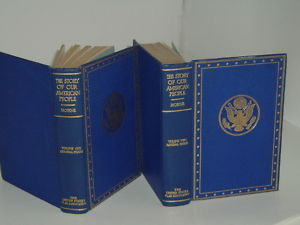
In the research for my current book about conservative educational activism in the twentieth century, I came across an eerily similar story from the 1920s.  In that decade, the American Legion resolved to sponsor a two-volume school history.  Too many of the books on the market, the Legion concluded in 1922, “contain misrepresentation of American history.”  Legion leaders contacted Charles F. Horne, a professor of English at City College of New York.  Horne agreed to author the books, to be called The Story of Our American People.

This textbook, the Legion’s special committee in charge of the textbook project declared in 1925, would build “character.”  Too often, the Legion leaders lamented, young people “grow up ignorant or anarchistic or otherwise ‘destructive.’”  There was no chance, the Legion wrote, that such youth, taught that their government deserved nothing but contempt, could mature into healthy, productive citizens.  Most commercial history textbooks only tore down young people’s confidence in their society and government.  A good history textbook could fix this.  The proper teaching of history, the Legion argued, must teach, despite “occasional mistakes,” that American history has been “so glorious that its proper study must inspire any child to patriotism.”

When a preliminary draft emerged in 1925, it earned some instant praise from conservatives who had long fretted about the deplorable state of most history textbooks.  Walter M. Pierce, for example, in 1926 the Klan-backed governor of Oregon, dashed off a letter to Professor Horne.  The new volumes, Governor Pierce gushed, represented “the finest history of early America that we have ever had.”

But other early readers took a different view.  Writing in the pages of Harper’s Magazine, historian Harold Underwood Faulkner blasted Horne’s books as “perverted American history.”  No professional historian, Faulkner sniffed, would have produced such drivel.  The books represented nothing more than a “bombastic eulogy of all things American.” (Harold Underwood Faulkner, “Perverted American History,” Harper’s, Feb. 1926, pp. 337-346. [Subscription only.]) They could not even be criticized on historical grounds, Faulkner claimed, since the books did not really constitute a history.  Worse, the books were intended to “produce a bigoted and stereotyped nationalism . . . a deplorable subservience to the rule of ignorance.”

Such criticism from snobby historians might not have doomed Horne’s books.  But an internal committee of the American Legion itself also found the books “filled with incomplete and inaccurate statements.”  Instead of inspiring American youth to embrace a patriotic vision of America’s past, the Legion investigators concluded, such shoddy history could only mislead youth and heap ridicule on the American Legion.

The Legion abrogated its contract with Horne.  They agreed not to receive any revenue from the book project and withdrew their endorsement.

As a result, the books never made the impact on schools Legion activists had hoped for.  Even among Legionnaires, the 1920s textbook project quickly became a politely forgotten story.  In 1949, for example, one Legionnaire wrote in the pages of The American Legion Magazine that the Legion ought to sponsor its own patriotic textbooks.  Such a textbook series, this writer insisted—apparently utterly innocent of the history of the Horne histories—could replace the overabundance of boring pink textbooks with “the rich and meaty story of American history.” [See John Dixon, “What’s Wrong with American History?” The American Legion Magazine (May, 1949): 40.]

So get in line, Mr. Barton.  You are far from the first to attempt to impose sectarian history on America.  Just as the fiercest and most effective critics of the Horne books were the Legion investigators themselves, so the conservative Christian criticism of Barton’s books helped isolate and neutralize Barton’s influence.

Liberty and Intellectual Diversity

Can the faculty at a fundamentalist university embody a true intellectual diversity?  In some senses, of course they can.  Depending on the school, faculty at conservative Protestant schools may disagree vehemently on important issues such as the age of the earth, the best tax system, or the proper way to structure an election.  But fundamentalist schools still face a narrower list of potential faculty members than do less strictly defined colleges.  At many conservative schools, prospective faculty members must agree to an institutional creed.  This has the desired effect of cutting out a wide range of dissenting intellectual perspectives.

Journalist Michael McDonald brought up these issues of perennial interest this morning in a Bloomberg.com article about Jerry Falwell’s Liberty University.

McDonald’s main interest was in the financial aspect and prospect of Liberty’s enormous and lucrative on-line branch.  As McDonald notes, the deeply conservative evangelical Protestant school is now the largest private non-profit university in the country.  For a school dedicated to a sternly fundamentalist theology, that is a remarkable achievement.

In his research for the article, Mr. McDonald asked me if I thought Liberty’s success could mean that it will become a model for mainstream universities.  As McDonald quoted in his piece,

“This dream of turning it into Notre Dame won’t work for Liberty,” said Adam Laats, an assistant professor in education and history at Binghamton University in Binghamton, New York. “Liberty University faculty will always be more constrained in the breadth of intellectual diversity they can welcome.”

It’s true: most colleges and universities do not require faculty to sign a strict creed.  If Notre Dame could only hire Catholics, or if my alma mater Northwestern University could only hire Methodists, they might be in a similar situation.

But Liberty’s potential faculty will have to agree with the school’s strict evangelical Protestantism, and this will always set it apart from more pluralistic colleges.

Of course, I’m not the first person to note this, by any means.  Leading evangelical historians such as Mark Noll and George Marsden have long argued that evangelical institutions differ in important ways from pluralist ones, due largely to this tradition of faculty and institutional creeds.

But already I have heard some intelligent objections.  Dan Richardson contacted me to object to my premise in the Bloomberg article.  As Mr. Richardson wrote,

“I read your comments with interest on Bloomberg concerning Liberty University. As a graduate myself of the Virginia Public University system, I found essentially zero tolerance or professors willing to even consider or give any credence/discussion to any philosophy other than relativistic, humanistic,  at best agnostic culture on campus today. There are countless examples of ‘conservative’ speakers, hassled, disinvited, shouted down at many public universities. If you truly care about the breadth of intellectual diversity, start with thyself.”

Richardson makes an important point.  Simply because the faculty of fundamentalist colleges lack some of the inherent intellectual diversity of pluralist schools, this does not mean that pluralist schools do a perfect job of encouraging true diversity themselves.

As historian Jonathan Zimmerman has asked, what would it take to get real intellectual diversity on pluralist campuses?  Do we need an affirmative action program for conservative intellectual faculty?

Sometimes the creeds in place at pluralist universities are implicit.  Sometimes they are more aggressively spelled out.  The recent flap over the funding of a Christian student group at Tufts University, for example, demonstrates the way pluralist universities’ dedication to pluralism often has confounding and unpredictable results.

Nevertheless, I stand by my statement in Mr. McDonald’s article.  Mainstream universities will have different challenges from Liberty University when it comes to welcoming a variety of intellectual perspectives.  Liberty’s dramatic financial success with on-line education does not change that.

Stanford: Science Teachers Must Value Creationism

Can a science teacher do a good job if she does not value the creationist beliefs of some of her students?

According to Stanford University education scholars, the answer appears to be ‘no.’

Hard to believe?

The Teacher Performance Assessment developed by the Stanford Center for Assessment, Learning and Equity (SCALE) has become the new standard for teacher certification or licensure in twenty-four states and the District of Columbia.

In order to receive certification in these states, new teachers must submit a portfolio of lessons and reflections.  These materials will be judged according to a series of rubrics.

According to one of these rubrics, teachers must acknowledge, value, and incorporate the cultural beliefs and backgrounds of their students.  In “Rubric 3: Using Knowledge of Students to Inform Teaching and Learning,” the Stanford folks provide a ranking of new teachers’ ability to relate to their students.  At the lowest level, new science teachers will be penalized if they don’t include enough knowledge of students’ backgrounds.  Also at this lowest level (Level 1), new teachers will be dinged if the teachers’ “justification of learning tasks . . . represents a deficit view of students and their backgrounds.”  At the higher levels, new teachers are supposed to justify their “learning tasks” by including “examples of personal/ cultural/ community assets.”

In the case of creationist students, it appears new science teachers must not view those beliefs as a “deficit.”  Indeed, to be considered truly proficient, new science teachers are encouraged to include those cultural and community beliefs in their science classes.

For those of us who have observed the creation/evolution struggles from the outside, this new rubric for judging science teachers raises a few vital questions: Was it the intention of the Stanford folks to force new science teachers to value creationist beliefs?  Will new science teachers really be judged negatively if they view creationist beliefs in their classroom as a “deficit view?”  That is, will new teachers really be pushed to see creationism as a legitimate cultural belief, instead of merely a lack of understanding of evolution?

It seems doubtful.  Maybe I’m not giving the SCALE group enough credit, but my hunch is that they did not intend to force science teachers to avoid impugning creationist beliefs in science classes.  Nevertheless, it seems the rubric they’ve created will certainly be read that way.

Inter-faith Creationism?

It is no longer surprising to see deeply conservative religious thinkers reach across religious lines to work together.  Could we soon see effective Muslim-Christian coalitions to support the teaching of creationism?

Perhaps as a model, interfaith creationists could consider Robert George and Hamza Yusuf’s collaboration.  The two leading intellectuals, one Catholic, one Muslim, co-wrote an open letter to hotels, requesting the removal of pornography from television options.

Even more apt, we could consider the fact that American creationism has always used the work of fellow creationist writers from different religious traditions.  In the 1920s, as my grad-school mentor Ronald Numbers argued, Catholic writers such as Alfred McCann were favorites among ferociously Protestant creationists.  More recently, this tradition has continued with the creationist embrace of Jonathan Wells’ work.

Could this tradition of creationist ecumenism work to bridge the Christian-Muslim divide?

There is no doubt that both religions harbor fervent creationists.  A recent article in The Economist detailed recent creationist developments among Islamic populations.  The article cited a study by Salman Hameed of Muslim attitudes to evolution.  That study found that 20% of Muslims in Indonesia, Malaysia, and Pakistan embraced evolution.  In Egypt, only 8% did.

As The Economist article describes, “controversial” Turkish evangelist Adnan Oktar, known as Harun Yahya, has long conducted an energetic creationist campaign in Muslim circles, including a series of conferences in the USA.

Of course, the conservative theology behind both Islamic and Christian creationism creates some barriers.  Orthodox religious thinkers on both sides will be wary of working with people from opposing traditions.

But there has also been a long tradition of cooperation.  As Ronald Numbers pointed out in The Creationists, in the mid-1980s, the Institute for Creation Research received a telephone call from the minister of education of Turkey, requesting teaching materials (Creationists, 2006, pg. 421).  In 1992, a Turkish creationism conference invited ICR stalwarts Duane Gish and John Morris as keynote speakers.  Professor Numbers also describes the founding in 1990 of the Turkish Science Research Foundation (Bilim Arastirma Vakfi, or BAV).  In Numbers’ words, “For years BAV maintained a cozy relationship with Christian young-earth creationists, feting them at conferences, translating their books, and carrying their message to the Islamic world”  (Creationists, 2006, pg. 425).

For a long generation, then, Muslim and Christian creationists have worked together.  The question is not whether such cooperation can happen.  Rather, the question is whether and when these efforts will gather enough support to become a major influence on the politics and policies of creationism and evolution education.