Red Carpet Culture War

Maybe it’s not the big-time red carpet.  Not the Emmys, the Tonys, or the Grammys.

But the People’s Choice Awards this year are promising to give people a chance to vote for their culture-war preference.

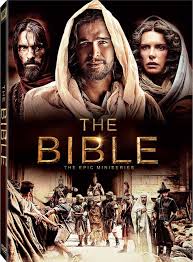
According to the Christian Post, The Bible and Liberace are going head to head.

In the category “Favorite TV Movie/Miniseries,” voters have placed these two at first and second place so far.

The Bible Miniseries?

The Bible Miniseries?

The Bible series has been a favorite among evangelical viewers.  Produced by “Touched by an Angel” star Roma Downey and her husband Mark Burnett, the project hoped to bring the Gospel message into the homes and hearts of millions.  As we’ve noted here on ILYBYGTH, the producers even hoped to bring The Bible into America’s public schools.

...or the story of this tempestuous love affair?

…or the story of this tempestuous love affair?

“Behind the Candelabra,” on the other hand, tells the love story of the flamboyant entertainer Liberace and his much younger lover Scott Thorson.

What do the people like better?  We’ll find out soon…


Creationism in Texas: A Foreshortened History

Read it.  It’s good.  But be warned: this story has a fatal flaw.

Brentley Hargrove’s history of the Texas textbook wrangles is a helpful introduction to the recent round of textbook fights in the Lone Star State.

In the pages of the Dallas Observer, Hargrove introduces readers to the recent history of creationist influence in the selection of Texas science textbooks.  He offers the backstory of review-board members such as intelligent-design proponent Raymond Bohlin.

Hargrove takes the story of the Texas Textbook Two-Step back to the 1970s, when self-appointed watchdogs Mel and Norma Gabler wielded outsize influence on the adoption of books.

He describes the rise to educational power of creationist dentist Don McLeroy and the board membership of theologue Cynthia Dunbar.

This story is a must-read for everyone interested in today’s culture wars over education, not just in Texas but around the nation.  It joins films such as The Revisionaries and documentaries such as the Long Game in pointing out both the peculiarities of educational politics in Texas and the broader meanings Texas school politics has for all of us.

But as a historian of these school battles, I must protest against the foreshortened history Hargrove describes.  He gives a nod to the long history of cultural battles over education.  He mentions the nineteenth-century Bible wars that rocked America’s cities.  But then he skips from 1844 to 1961.  He leaves out the formative period of today’s educational culture wars.

As he puts it, since the nineteenth century,

the fear of secularism and modernity remains as potent as ever. Yet it wasn’t until the Gablers came along that this fear took shape in Texas and assumed power.

Now, that’s just not true.  I understand Hargrove is interested in the way these battles have developed over the past fifty years.  But the way they did so was decisively influenced by earlier generations of Texas activists.

To be fair, Hargrove’s historical myopia is widely shared.  In his Observer article, he quotes prominent sociologist William Martin.  “The Gablers,” Martin told Hargrove, “were the first people to have taken this on in such as systematic way.”

Even if we make allowances for the contemporary interests of journalists and sociologists, this sort of misrepresentation of the history of Texas’ school battles can’t be given a pass.

The tradition of conservative activism in which the Gablers, McLeroy, Bohlin, and Dunbar take part has direct roots in the 1920s battles in Texas and elsewhere.

As I argue in my 1920s book, anyone with even a passing familiarity with Texas history will recognize the historical importance of J. Frank Norris, for example.  In the 1920s, Norris established the activist precedent that later conservatives followed.  Norris fulminated against the directions of 1920s public schools in ways that McLeroy, Dunbar, and the Gablers would have appreciated.

And he had even more political pull.  In the 1920s, though a state-wide law banning the teaching of evolution failed in the Texas legislature, the governor ordered textbook publishers to remove any mention of evolutionary science from the state’s textbooks.

All well and good, you might say.  But does that pre-history have anything to do with today’s textbook fights?  If we want to understand the current moment, do we really have to go so far back?  Isn’t it enough to look to the Gablers and start there?

The school fights of the 1920s are of interest to more than just nitpicky academic historians like me.  Even if we want to start with the Gablers, we need to understand the formative school battles of the 1920s.  Mel Gabler was ten years old in 1925.  The content and structure of the schools he attended was decided by the activism of pundits such as J. Frank Norris and the pusillanimity of politicians such as the Governors Ferguson.

It was in the 1920s that America first battled over schooling in the terms that have remained so familiar ever since.  The issues and positions laid down in the 1920s have become the durable trench lines in American education.

As Gabler biographer James Hefley described, by the 1960s the Gablers had become

the cream of self-reliant Middle America.  They lived by the old landmarks, took child-rearing seriously, supported community institutions, sang ‘God Bless America’ with a lump in their throats, and believed that the American system of limited and divided governmental power was the best under the sun.

How did they get to be that way?  How did they become so confident that their vision of proper schooling and society must be fought for?  The Texas the Gablers loved had been defined by the activism of the 1920s and succeeding generations.  The vision of proper education that fueled the self-confident activism of the Gablers had been established as such in the controversies of the 1920s.

If we really want to understand what’s going on today, we need at the very least to acknowledge the longer history of these issues.  We need to understand that today’s fights grew out of earlier generations, and those earlier generations did not just spring up full-grown from the Texas soil.

 

Why Are Schools So Terrible?

Conservative intellectuals have long asked the question: What went wrong with America’s schools?

Of course, the question presumes that something HAS gone wrong.

We at ILYBYGTH don’t really care if America’s schools are terrible.  We’re more focused on dissecting conservative approaches to the question. How have different conservatives at different times offered different answers to this perennial question?

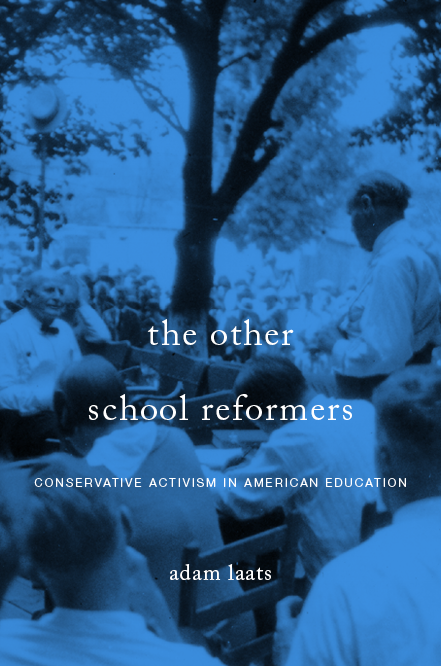
Now available free online is an argument I put together a few years back. The article appears in the pages of the storied Teachers College Record.

This article looks at the school-history visions of four very different conservative thinkers: Milton Friedman, Max Rafferty, Sam Blumenthal, and Henry Morris. Each of them agreed that public schools had become ineffective, even dangerous institutions. But the reasons they gave for that lamentable decline differed. Friedman, for example, blamed teachers’ unions and government control, beginning just after the American Civil War. Rafferty blasted the wrong-headed “progressive” takeover of the 1930s. Blumenfeld and Morris both looked further back, to a Unitarian coup at Harvard University variously timed either in 1805 (Blumenfeld) or in 1869 (Morris).

These conservative activists do not only differ in the timelines they gave for America’s educational decline, but also in their diagnoses and prescriptions. Friedman wanted a free-market solution. Rafferty hoped for clear-headed traditionalism. Blumenfeld wanted to scrap public education entirely. Morris hoped to heal schools with creationism.

In every case, these conservatives based their arguments about schooling on a historical vision. They are not alone. Activists of every political stripe use history to prove their points. In this essay, I outlined the ways a few prominent conservatives did so.

Fundamentalism’s Roots: A Review

What does it mean to be a “fundamentalist?”

At his lively blog Leaving Fundamentalism, Jonny Scaramanga has offered a review of my 1920s book that puts this question squarely at the center.

Two Thumbs Up...

Two Thumbs Up…

As Scaramanga points out from his current work and from his personal life history, the term “fundamentalist” is often used as more of a bludgeon than a label.  People accuse each other of being “fundamentalist” about this issue or that.  People dither over whether this or that person is a true “fundamentalist.”

Scaramanga notes that unless and until we get a sense of the formative first decade of American fundamentalism—the 1920s—we’ll never wrap our heads around the contentiousness that has always been at the core of defining the term.  I agree entirely.

Best of all, he gave the book a thumbs-up.  As Scaramanga put it,

I was genuinely surprised how much I liked this book. I’m a longtime reader of Adam’s blog and he’s helped me out with research on numerous occasions, so I knew he’s an engaging writer and a top bloke, but I was still expecting to find this a dry, academic slog. Actually, I was riveted. Everything I’ve studied of fundamentalism makes so much more sense in the historical context this book provides. I’d recommend it to people with a casual interest in fundamentalism just as much as those with an academic interest.

Thanks, Jonny.  I don’t think I’ve ever been called a “top bloke” before.  A “top bloke’s” a good thing…right?

Charter Schools Teach Fundamentalism

Can fundamentalist Protestant educators change their packaging and call their new schools charters?

Leaving Fundamentalism’s Jonny Scaramanga argued recently in the pages of Salon that some fundamentalist leaders are doing just that.

As we’ve seen, publicly funded charter schools elsewhere have been accused of simply re-branding religious schools and siphoning off public money.

Scaramanga, a product of the fundamentalist Accelerated Christian Education curriculum and now its fiercest critic, uncovered Texas charter schools in which ACE’s rigid fundamentalist materials are paid for with taxpayer dollars.

Check out the full article.  Scaramanga describes ACE-derived textbooks that promote skepticism toward mainstream evolutionary science.  He found evidence that ACE-influenced charter schools guided students by the Ten Commandments but called them non-religious “success principle[s].”  Most headline-grabbing, the ACE-ish books blamed evolution for the rise of Hitler.

Scaramanga even cites yours truly as a source, so you know his article’s gotta be good.


Can Jesus Stop Kids from Trick-or-Treating in Public Schools?

Halloween time again!  Time for costumes and candy.  Time for Charlie Brown getting rocks in his sack.

Rock Candy

Rock Candy

Can public schools participate?  Does this holiday endorse some sort of religion?  And, most intriguing, are conservative Christians going to become the leading group fighting AGAINST religion in public schools?

In a recent article in Time Magazine, Nick Gillespie decries school administrators who cancel Halloween activities.  Gillespie cites the case of Inglewood Elementary, outside of Philadelphia.  The principal explained to parents that the school had canceled Halloween activities due to religious sensitivity.  “Some holidays,” the principal wrote,

like Halloween, that some see as secular, are viewed by others as having religious overtones. The district must always be mindful of the sensitivity of all the members of the community with regard to holidays and celebrations of a religious, cultural or secular nature. The United States Supreme Court has ruled that school districts may not endorse, prefer, favor, promote or advance any religious beliefs

Nertz, Gillespie responded.  “Unless there’s a particularly active group of druids in the district,” Gillespie argued, “or the parade ends with a ritual sacrifice, it seems unlikely that there’s much to worry about.”

But Gillespie’s missing the point.  The pressure to avoid Halloween comes not from druids but from conservative Christians.  Some such Christians have long viewed Halloween as a dangerously “pagan” holiday.  Why shouldn’t they pressure school administrators to ban such celebrations in public schools?  After all, conservative Christians often complain that their religion is the only religion to be banned from public schools.

Anyone familiar with the culture of conservative American Protestantism will recognize this theme.

To cite just one example, Linda Harvey of Mission: America complained that Halloween empowered demons and false gods.  “Everyone thinks Halloween is harmless fun,” Harvey warned on her radio show,

but just for a second, let’s look at from God’s perspective, at least from what He’s told us in His word. We’ve been taught not to worship or bow down to or in any way acknowledge any other gods. But Halloween is built around just exactly that. Behind the costumes and candy is a rebellious flirtation with fallen angels and deceptive spirits, and this definitely does not honor God. Where are these other spirits and gods you ask? Well, Halloween is all about fortune telling, magic, Ouija board, witches, it’s really hard to get away from all this. It’s definitely spiritual and that spirituality is not from our Lord.

This anti-Halloween sentiment is so strong among some conservative Protestants, it can be spoofed by any evangelical with a sense of humor.  Last year, for instance, the Southern Baptist Convention’s Russell Moore offered a quick field guide to anti-Halloween sentiment among evangelicals:

An evangelical is a fundamentalist whose kids dress up for Halloween.

A conservative evangelical is a fundamentalist whose kids dress up for the church’s “Fall Festival.”

A confessional evangelical is a fundamentalist whose kids dress up as Zwingli and Bucer for “Reformation Day.”

A revivalist evangelical is a fundamentalist whose kids dress up as demons and angels for the church’s Judgment House community evangelism outreach.

An Emerging Church evangelical is a fundamentalist who has no kids, but who dresses up for Halloween anyway.

A fundamentalist is a fundamentalist whose kids hand out gospel tracts to all those mentioned above.

Though Moore wrote with his tongue firmly in his cheek, the humor relies on a real sentiment among some conservative Christians.  School officials like the ones Gillespie writes about are responding to real concerns.  This time, it is conservative Protestants who are fighting to keep religion out of public schools.  As they have in other cases, such as the yoga curriculum in Encinitas, California, many conservative Christians want to keep public schools as free of what they consider false religion.


Texas Charter School Promotes Religion

Doesn’t seem like news that publicly funded schools in Texas promote religion.  But this story from the New York Times has a twist you might not have expected.

Anyone who pays attention to this stuff might expect Texas public schools to be woefully (or wonderfully, depending on your POV) entangled with religion.  Whether it is preaching in the form of Bible classes, cheerleaders with Bible verse banners, creationism in the science textbooks, or just a general Long-Game style fight for more Jesus and less Devil, Texas schools have long seemed friendly to Jesus.  Texas’ conservative “Revisionaries” have worked long and hard to make public schools friendly for faith.

A recent story in the New York Times features a different sort of religious entanglement.  In this case, it is not a question of teachers leading Protestant prayers, or students protesting against learning evolution.

In this case, a charter school has been accused of using public money to promote the Jewish religion.

The San Antonio school, Eleanor Kolitz Hebrew Language Academy, teaches in Hebrew and has classes about Israeli culture.  Doesn’t seem to be a problem there.  Lots of publicly funded charter schools focus on a specific non-English language and culture.

But according to journalist Edgar Walters, the school has drawn attention as a potential church/state problem since the new charter school seems to be nothing more than a cynical reincarnation of an existing religious school.  Critics worry that religious schools are simply conducting a name change on paper in order to win public money.

School leaders insist they don’t teach religion.  But one board member admitted they have the same head of school and most of the same staff as they did when they were an explicitly religious school.  As a private Jewish day school, the Eleanor Kolitz Academy used no public money.  But now as a charter school in the same building with the same staff, they receive public funding.

Can religious schools reinvent themselves this way?  It does not seem paranoid to assume that things will go on largely as before at the Kolitz Academy.  It seems a little iffy for religious schools to simply make a name change to start raking in public moolah.


Battle Map!

Where have Americans fought over public schooling?

The libertarian Cato Institute has put together a clickable Battle Map to help readers locate educational controversies.  Readers can search by state, by year, or by the type of conflict.  The Cato folks broke down school battles into such categories as curriculum, freedom of expression, gender equity, human origins, moral values, racial/ethnic diversity, reading material, religion, and sexual diversity.

Of course, the folks at Cato aren’t just providing a nerdy public service for those of us interested in studying cultural controversies.  The point of this exercise, from Cato’s perspective, is to prove that public education “divides [people], forcing them into conflict over whose values and histories will be taught, and whose basic rights will be upheld . . . or trampled.”

To this outsider, Cato’s argument seems a little strained.  After all, just because many family dinners turn into shouting matches, does that prove that dinner is a bad thing?


Bible Bullying and the Borders of Fiction

Is the Bible nonfiction?  Can public-school teachers call it fiction?  More important, can a teacher poke fun at a student who considers the Bible nonfiction?

Those questions are at the heart of a new lawsuit from Temecula, California.

According to The Christian Post, a middle-school teacher asked students to bring in a nonfiction book to read.  When one student pulled out a Bible, the teacher objected.  Worst of all, according to The Post, the teacher ridiculed the student for considering the book nonfiction.

An activist legal group, Advocates for Faith and Freedom, has sued the school district.  The Christian legal group wants the school district to add teachers to its bullying policy.

According to AFF President Robert Tyler, the teacher’s actions in this case represent just the tip of the anti-Christian iceberg.

In an interview with the Christian News Network, Tyler denounced public-school teachers’ tendency to bully Christian students.  “These days,” Tyler said,

there is no shortage of bullying against Christian students by teachers.  If a teacher were to take the same tone and tactic against a homosexual student based on the student’s sexual orientation, the teacher would be subjected to serious and significant discipline. But for some reason, these teachers feel that they have the ability to engage in this type of hostility and attempt to humiliate Christian students.

The exact boundaries of religious expression for public-school students have long been tricky to figure out.  Can self-funded cheerleaders display Bible messages at public-school football games?  Can students wear religious t-shirts?

But this case raises different questions, too.  Can teachers be bullies?  Can school districts use their existing anti-bullying policies to discipline teachers?

It seems like a difficult proposition.  After all, teachers in most schools have an explicit duty to manage the behavior of their students.  It would be bullying, in many cases, for one student to make another student quiet down.  But if a teacher makes a student quiet down, isn’t that just classroom management?

Couldn’t the Advocates for Faith and Freedom make a simpler argument?  Teachers certainly should not belittle students for their religious beliefs.  Why should the school district have to call it “bullying?”

What Color Are Your Fundamentalists?

Who are the “fundamentalists” who hope to keep America’s public schools religious?

Some of us may picture a Saddleback-type white suburban evangelical, driving around in a Biblically-sized SUV, worrying in equal measure about sin and soccer.

New!  School Prayer Barbie!

New! School Prayer Barbie!

But as Peter Berger reminds us this morning on The American Interest, that image of conservative evangelicalism might represent the past more than the future.

Berger notes the dramatic effects of immigration on the nature of American Christianity.  New immigrants tend to be Christian, and their Christianity tends to lean conservative.  As Berger concludes,

Both in their theology and religious practice, non-Western Christians are more conservative. Their worldview is strongly supernaturalist: The spiritual world, both benign and sinister, is very close—the Holy Spirit, the Virgin and the saints, miracles of healing—but also the devil and other malevolent spirits. This supernaturalism is strongest in the Pentecostal and charismatic movements, but it is also very visible in Catholic and mainline Protestant churches. But non-Western Christians are also more conservative in their moral convictions—very little sympathy here for the feminism, let alone the agenda of the gay movement, that has become so prominent in mainline Protestantism in America—and, I suspect, would be more prominent in American Catholicism, were it not for surveillance and intervention from Rome.

The implication of all this is simple and exceedingly important: Immigration will strengthen the conservative forces in American Christianity.

In the future, the fight over religion in America’s public schools may have a very different tone.  Instead of a ring of white conservative suburbs around every ethnically diverse urban core, we may see a shift to immigrant-led demands for more vibrant religion in schools.  Instead of whitebread traditionalism resisting a multicultural liberalism, we might have an ethnically diverse group of conservatives battling to keep morals pure in public education.