Love Letters from Unexpected Quarters

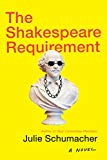
There aren’t a lot of heroes in Julie Schumacher’s new novel. SAGLRROILYBYGTH will be able to imagine my surprise when I discovered Schumacher’s surprising exception. It wasn’t really the main character, a crusty and cynical novelist and chair of the English Department. It wasn’t even the out-of-touch Shakespeare scholar who insisted on keeping the liberal arts in a liberal arts college. No, the only character that came out as truly sympathetic didn’t come out of the world of elite higher ed but rather from the closed-off world of evangelical home schooling. And it leads us to a bigger question: Do the conservative skeptics have more allies in mainstream higher-ed than they realize?
shakespeare requirement

We’re (almost) all adrift…

I don’t want to give away too much of Schumacher’s plot, so I’ll tell my own story instead. When I first took my current job, a friend in the English Department of the high school at which I worked gave me a copy of Richard Russo’s Straight Man.

“Read it,” my friend said. “You’ll need it.”

Straight Man was my introduction to the field of higher-ed satire. In the novel, a bumbling hero fights to keep college less insane. As the imagined traditions of liberal-arts education crumple in the face of careerism, credentialism, and ruthless bottom lines, Russo’s straight man can only offer ridiculousness in protest.

More recently, one of my current colleagues recommended Schumacher’s fantastic higher-ed satire, Dear Committee Members. Schumacher offered a witheringly on-point send-up of today’s higher-ed scene, with embittered English professor Jay Fitger revealing through a series of recommendation letters his dwindling influence at Payne University. Hilarious and bitterly accurate.

So it was with a lot of eagerness that I finally got my hands on The Shakespeare Requirement. In this novel, Jay Fitger is back, and Payne University is still wallowing in the unenviable position of a small liberal-arts college. In a nutshell, the plot revolves around an attempt to bring the school—and its wacky English Department—into the contemporary world of mainstream higher education.

External funding rules the campus, and notions such as knowledge for knowledge’s sake are out the window. Under pressure, the English Department eliminates its requirement of a Shakespeare class for all English majors. Antics ensue.

All told, I’m pretty disappointed by the novel. It does not capture the wit and weariness that made Dear Committee Members so good. But it does include a curious celebration. Few of the characters or types come off well in the novel. Students are lazy and selfish. Professors are either grasping or clueless. The administration is, at best, pathetic.

Given the bleak landscape, I was surprised to find Schumacher’s ray of hope. One character shines. Angela Vackrey is a freshman, from a family that didn’t want her to come to Payne. She had been homeschooled in a rigorously conservative evangelical household. Angela wanted to find out more about the world than

The pile of paperbound workbooks (Broad Horizon: A Christian’s Historical Perspective) next to the chicken-and-egg-shaped salt and pepper shakers on the maple table where she had completed her schoolwork at home.

Angela is not at all typical of Payne students. For one thing, Schumacher tells us, she still dresses as if she were at church:

Unlike most of the young women in the room, who dressed as if stopping by class on their way to a nightclub, she wore a homely denim skirt and white buttoned blouse.

Also unlike most Payne students, Angela takes her school work seriously. As Professor Fitger discovered, Angela’s writing

Evinced a startling ability to think clearly, express original ideas, and write.

At Payne University, in any case, such abilities make Angela stand out. Her modesty, temperance, and hard work are a stark and startling contrast to the rest of the student body, and even to the debauched faculty.

Indeed, if this novel were to some from some of the usual conservative suspects—higher-ed critics such as Rod Dreher or Peter Wood—it wouldn’t be very interesting at all. But as far as I can tell, Professor Schumacher is no conservative. The yearnings of her characters are not for a purer, Christian society. Rather, Jay Fitger is utterly adrift, and at times, sympathetically so.

In the end, The Shakespeare Requirement is, like Professor Fitger, rudderless. Yet even from that position of cynical drift, Schumacher seems to yearn for a better world, one that can only be maintained by fundamentalist strictures that no one can abide.
Why Can’t Facebook Fix Schools?

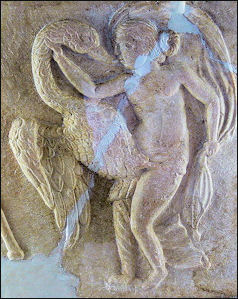
[Warning: Explicit goose-related content.]

It’s not news. Facebook founder Mark Zuckerberg and other tech-illionaires keep trying and failing to fix schools. The latest story from Connecticut gives us a few more clues about why these smartest-people-in-the-room can’t get it right. In the shocker of the year, it turns out parents don’t like having their kids read about people having sex with geese.

sex with a goose

Will this be on the test?

It’s not the first time Zuckerberg has goofed when it comes to school reform. As SAGLRROILYBYGTH may recall, he has dropped the ball in Newark and with SAT prep classes. He has mistaken the right way to think about schools, repeating centuries-old errors.

What’s the latest? Parents in an affluent section of Connecticut have rebelled against a facebook-sponsored introduction of Summit’s “personalized” learning system. These sorts of systems promise that students will be able to work productively instead of marching at lockstep with the rest of the class. They hope to use technology to allow students and teachers to learn, instead of just sitting idly in classrooms.

In towns like Cheshire, Connecticut, the Summit system was run on free student computers, sponsored by the Chan Zuckerberg Initiative, facebook’s philanthropic arm. Students in middle school and elementary school would be able to work at their own pace toward clearly delineated learning goals.

It was gonna be great.

As New York Magazine reported, it didn’t work out that way:

the implementation over the next few months collapsed into a suburban disaster, playing out in school-board meetings and, of course, on facebook. The kids who hated the new program hated it, to the point of having breakdowns, while their parents became convinced Silicon Valley was trying to take over their classrooms.

What went wrong? As anyone who knows schools could tell you, the Summit/facebook folks made a fundamental error about the nature of schools. They forgot or never knew a couple of basic, non-negotiable requirements of real schools.

First, they fell into the start-up trap. Priscilla Chan of the Chan Zuckerberg Initiative described her awe when she first saw a Summit-style school. As she gushed,

I walked into the school and I didn’t recognize where I was. . . . My question was like, ‘What is this? Where am I? Because this is what I see folks actually doing in the workplace: problem-solving on their own, applying what they’re learning in a way that’s meaningful in the real world.’

Like other techies, the facebook folks thought that schools could should look like tech companies, with maximum productivity and maximum independence. What they don’t seem to notice is that schools are not only open to those few nerds who like to work that way.

In Cheshire, teachers found that about a third of the students flourished in their new classrooms. But that left a vast majority of students floundering. As teachers do, they filled in the gaps. As New York  Magazine describes,

The teachers started holding “Thursday Night Lights” sessions, where they’d stay until about 8 p.m., helping students rush through the playlists and take assessments while the information was fresh in their memories. To make up for the rest, he said, teachers found “workarounds,” like rounding up half-points in students’ grades, or coming up with reasons to excuse students from certain segments. (The other educators confirmed this.) “Looking back,” he said, “it was grade inflation, and it was cheating the system that we had spent the whole year trying to figure out and couldn’t make work.”

Maybe even more crucially, the facebook approached crashed in Cheshire because it failed to satisfy another absolute requirement of all schools. Viz., it failed to convince parents that it was keeping children safe.

First off, parents fretted about the ways facebook was selling data about their kids. Even if the company bent over backwards to be accommodating to parents’ concerns, no parents liked the idea of putting their children’s data on the market.

More dramatically in this case, the Summit approach doesn’t try to protect kids from the informational anarchy that the interwebs can provide. Instead of textbooks and other vetted classroom content, Summit mostly provides a set of links that students can follow to read content. In this case, that lead to some dramatic difficulties. In fact, the whole controversy in Connecticut might have blown over if one concerned parent hadn’t discovered what Summit students might be reading in class.

When the parent—Mike Ulicki—followed up on some social-studies links, he came across this page from factsanddetails.com. Yes, the page explained, ancient Romans had some pretty wild sexual habits, including sex with geese.

As anyone who knows anything about real schools could have told you, that was all it took.

As NYMag reported,

Ulicki posted the image on Facebook. As outraged comments multiplied on the thread, a school-board member announced he would call for a vote at the next meeting on whether to keep the program in place. But before the meeting could happen, they all received a letter from the superintendent’s office, announcing that Summit was being removed by executive order.

Now, honestly, any parent knows that their middle-schoolers could have found those kinds of images on their own. But for a school to be sending students to a picture of man-on-goose kink blew open one of the most foundational rules of schools. [There are other not-PG-13 images available at that site that I am too prudish to share. Interested readers can follow up here, though you might not want to do it at school.]

Schools are not only about giving students information. They are not only about preparing students to be life-long learners. They are not only about math, history, English, or science. Above all, schools must promise to keep students safe. Safe from physical threats, of course, but also safe from intellectual dangers such as the wild sexual practices of ancient Rome.

Until facebook’s founders and other would-be tech saviors recognize the way schools really work, they’ll never be able to deliver on their reform promises.

Where Are All the Books about This?

It’s a question that has stumped me for the past twenty years, and Stanford’s Larry Cuban brings it up again this morning. Where are all the books about conservatism in American education?

fight for local control

There ARE great books out there…

Professor Cuban makes the crucial point: Public schools in the USA have always been driven by all the same contradictory impulses that drive political life. Some people want schools to be more progressive; others want them to be more conservative. As Cuban puts it,

The contradictory obligations of reforming schools while conserving traditional knowledge and classroom practices has been in the DNA of tax-supported public education for well over a century. It won’t go away. Those cheerleaders for the next new reform need to understand this paradox at the heart of U.S. schooling.

As I started my graduate work lo so many years ago, I was curious about the deep educational conservatism that I saw, felt, and heard as a teacher. To my surprise—and, to be perfectly frank, fueling my academic ambition—there were not shelves and shelves of scholarly work analyzing conservatism in education.

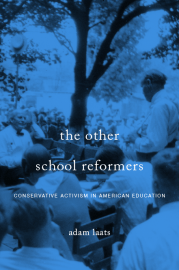
To be sure, there are some historical works out there. Prof. Cuban mentions my look at twentieth century educational conservatism and Diane Ravitch’s Left Back.

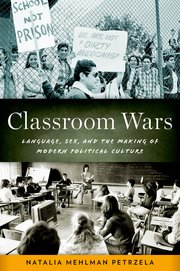
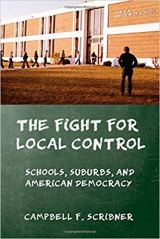
There are other books he could have mentioned. Michael Apple’s Educating the “Right” Way, or Herbert Kliebard’s Struggle for the American Curriculum, for example. Hearteningly, newish books have come out that plumb the depth and diversity of conservative activism in American education. Cam Scribner’s The Fight for Local Control, for instance, and Natalia Mehlman Petrzela’s Classroom Wars. And I’m sure SAGLRROILYBYGTH could point out another key title or two.

classroom wars

…but where are the REST of the great books?

But considering the vastness of the topic, the lack of academic work about educational conservatism still baffles me. As Prof. Cuban points out, conservative ideas and impulses have always been at least as powerful as progressive ones. As Cuban writes this morning, if the first obligation of public schools was to serve as a way to change students and society,

The second obligation was for the tax-supported school to actively conserve personal, community and national values ranging from inculcating traditional knowledge, obeying authority including that of teachers, show respect for religious beliefs, practicing honesty, and displaying patriotism.

If these conservative assumptions about the proper role of school are so very influential, where are all the academic studies of them?

Of course, it’s not at all difficult to find conservative how-to books about schools. From the Gablers to Dorothy Sayers to everyone in between, there have never been a lack of guides to make schools more conservative or more authentically conservative.

When it comes to an academic understanding of the meanings and activism of conservative thinkers and activists, though, we still have a decided gap between what happens (and happened) in schools and what academics talk about.

So where are the armies of historians, anthropologists, sociologists, and classroom researchers?

Why Didn’t Christianity Today Mention The Most Important Part?

Remember Dorothy Sayers? A lot of us don’t, but the twentieth-century writer has had enormous influence on twenty-first century evangelicalism. A recent article in Christianity Today about Sayers’ influence, though, mysteriously left out the most important part of Sayers’ legacy for American evangelicalism. Why?sayers

In the Christianity Today article, author Crystal Downing focuses on Sayers’ famous series of BBC plays about Christ. As Downing tells the story,

In 1940, the BBC asked Sayers to write a series of 12 radio plays about Jesus. Taking the commission very seriously, Sayers spent a year rereading the Gospels, studying the original Greek as well as Bible commentaries. . . . Reporters, surprised that Sayers used colloquial rather than King James English, played up the fact that some of Christ’s disciples spoke working-class slang. . . . Due to the nationwide scandal, hundreds of people tuned in to the broadcasts for titillation more than for edification. What they got was the gospel delivered in language that made sense to them. They discovered that their perceptions of Jesus had become as static as stained-glass depictions in their churches. . . . As Sayers recounted to [C.S.] Lewis in 1946, “Thousands of people write to say that they have been ‘brought back to God,’ or had their faith renewed, or returned with eagerness to reading the Bible” due to the broadcasts. Lewis himself was so impressed by the profundity of Sayers’s plays that he read the print version for his Lenten devotions every year.

It’s a well-known story and one that should be remembered. But when it comes to real influence in the world of American evangelical culture, there is a much more important side of Sayers’ that this article simply didn’t mention.

sayers lost tools of learning

Sayers’ REAL lost legacy…

Why not?

It might be simply due to ignorance. As Patrick Halbrook has explained in these pages, not many people know the story of Sayers’ indirect influence on conservative evangelical schooling in the twenty-first century. As Halbrook explained,

if you were to visit a conference on Christian education and pull aside a parent or teacher to inquire about the distinguished Ms. Sayers, more often than not she would simply be lauded as the author of a brief 1947 essay on education entitled “The Lost Tools of Learning.”

Throughout the past few decades, this essay has spread throughout the evangelical Christian community through a peculiar turn of events.  In the mid twentieth century it came to the attention of William F. Buckley, who reprinted it at various times in National Review.  In the pages of Buckley’s magazine, it was read by a pastor of a small church in Moscow, Idaho named Douglas Wilson (Wilson is now known, among other things, for debating Christopher Hitchens and writing an award-winning novel).  In the early 1980s, Wilson began a private Christian school in Moscow in which he implemented Sayers’ ideas; he later popularized them in his 1991 book, Recovering the Lost Tools of Learning.  Over the following years, hundreds of schools across the country began to form using Wilson’s school as a model.  Sayers’ ideas also appear in the pages of The Well-Trained Mind: A Guide to Classical Education at Home, an enormously popular book on homeschooling which is now in its third edition.

Perhaps the general reader might not know about this vital legacy of Dorothy Sayers, but it seems odd that it wouldn’t be mentioned in an article specifically dedicated to revealing Sayers’ oft-forgotten legacy.

What Vouchers Can Do: Florida Tax-Funded Fundamentalism

I guess we shouldn’t really call it an “exposé” because it doesn’t tell us anything we didn’t expect. Still, it can be eye-opening to see the sorts of things voucher programs can do. This week, the Orlando Sentinel explores the content of fundamentalist textbooks used at area private schools. The story prompts us to ask a tough question about voucher programs: Is it fair to limit voucher programs only to religions we like?

ACE florida 1

Should taxes pay for these textbooks?

As I’ve argued in a couple of academic articles, the history of fundamentalist textbook publishing is key to understanding both the “Christian-school” movement and the subsequent evangelical homeschooling exodus.

Without the work of school publishers such as A Beka Book, Accelerated Christian Education, and Bob Jones University Press, I believe, conservative evangelicals in the 1970s and 1980s would not have been able to open so many small private schools. And without pre-made curricular materials, evangelicals would not have been able to leave school by their millions in the 1990s to homeschool.

Plus, no one should think that these fundamentalist textbooks are static or monolithic. As I explored in a chapter in AJ Angulo’s terrific book Miseducation, ACE, A Beka, and Bob Jones are all very different from one another, and all have radically changed their treatment of topics such as US History.

It’s not just me: Dr. Jonny Scaramanga has devoted his early academic career to exploring the curriculum to which he was subjected as a youth. Dr. Scaramanga argues that Accelerated Christian Education never escaped its racist, homophobic origins, despite some surface changes and lip service to liberalization.

As the Orlando Sentinel explains, voucher programs in Florida are sending tax dollars to schools that use textbooks by the “big three” fundamentalist school publishers. As the investigators discovered, the textbooks are full of creationism, ethnocentrism, and historical denialism. As OS puts it,

[Investigators] found numerous instances of distorted history and science lessons that are outside mainstream academics. The books denounce evolution as untrue, for example, and one shows a cartoon of men and dinosaurs together, telling students the Biblical Noah likely brought baby dinosaurs onto his ark. The science books, they added, seem to discourage students from doing experiments or even asking questions. . . .

The social studies books downplay the horrors of slavery and the mistreatment of Native Americans, they said. One book, in its brief section on the civil rights movement, said that “most black and white southerners had long lived together in harmony” and that “power-hungry individuals stirred up the people.”

We have to ask: Is this sort of thing okay for a tax-funded school? After all, there is nothing in this story that should come as a surprise. If we want to allow voucher programs that send tax money to private schools, we should expect some of those dollars to pay for curricula we disagree with. Is that okay?

ace florida 2

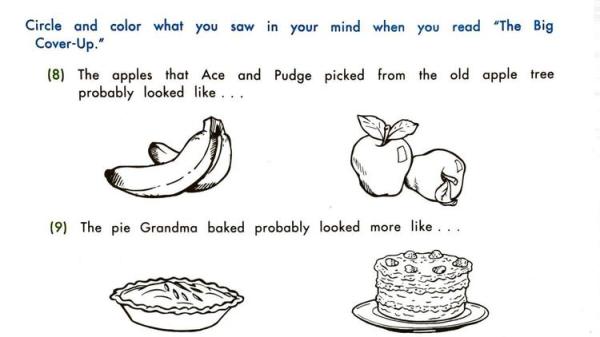
Hard-hitting curriculum for Florida’s third-graders. This sample comes from an Accelerated Christian Education reader.

Or, to put it in nerdier terms: How should policy-makers decide if religious schools qualify to participate in tax-funded programs? It can’t be simply on the basis of our own personal religious views. For example, I believe the ACE, BJU, and Abeka textbooks are terrible and I would never want my kid to use them in school. But my personal preferences can’t suffice to dictate policy. How can we decide which religious schools qualify for tax-funded voucher programs?

One option would simply be to make ALL religious schools off-limits for voucher-funded students. In some cases, though, that would seem to keep deserving kids from getting a higher-quality education than their local public schools can provide.

Another option would be to rule out schools that limit their students’ life chances. As one of the OS investigators argued, for example, using these creationist textbooks would hurt students. As the article explains,

“Students who have learned science in this kind of environment are not prepared for college experiences,” said Cynthia Bayer, a biology lecturer at the University of Central Florida who reviewed the science books. “They would be intellectually disadvantaged.”

But WOULD they? Anyone who knows the real story of American higher education knows that creationist students have plenty of creationist colleges they can attend. Is it fair to say that students can’t study creationist books because they don’t agree with mainstream science? Isn’t that the whole point of private schools in the first place?

Please don’t get me wrong: I’m firmly against using tax dollars to fund private religious schools. I think we should nix ALL religious schools from that sort of public funding. But we can’t do it only for some religious schools and not for others, based on the fact that we don’t like some of the religions. And we should not be surprised to find out that voucher programs are doing precisely what they were designed to do: Fund religious schools.

Dictating Democracy

As I was reminded last week in the Philadelphia archives, it’s the oldest educational idea in the United States. Larry Cuban points out this morning that our dream of educating a new generation of democratic citizens might take us in surprising directions.

First, my full confessions: I have progressive prejudices that are hard to shake. I want public schools to make society better. I believe that better educational opportunities for all people will help achieve that goal. And…and this is the one that matters this morning…I think what goes on in classrooms matters. As John Dewey argued a century ago, if we want a democratic society we need to start by creating democratic classrooms.

Democracy-prep-vote

I can’t vote, and I can’t speak when I want to, and I can’t put my pencil where I want to, and I can’t get out of my seat when I want to…

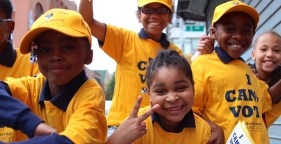
So I join Professor Cuban in wondering if a school can create democratic citizens by controlling students tightly. Cuban looked at a study of Democracy Prep, a new charter network. The schools make one of their goals the civic education of children, meaning mostly that students learn about government, about public decision-making processes, and about getting out the vote.

As one thoughtful former Democracy Prep teacher noted, it’s hard not to think that the way students are educated matters. As he puts it,

schools are invariably where students go to experience the civic engagement of others. No child thinks of it this way, but surely, he or she picks up clear signals about their place in the world, how they are regarded by authority figures who are not their parents, and how much — or how little — is expected of them. If the relationship a child has with a school is coercive, punctuated by frustration and failure, leading to no good end, then there is no reason to expect strong civic outcomes.

And yet, as Prof. Cuban points out, students at Democracy Prep feel the heavy hand of authority at all times. As one visit to a DP school revealed, students’ actions were constantly tracked and dictated. As the visitor found,

Almost everything on a recent visit to a Democracy Prep charter was highly disciplined. Students spoke only when their teachers allowed them. They could lose points for talking out of turn, or chatting in the halls between classes.

Can it really be feasible, Cuban wonders, that this sort of top-down classroom will produce active citizens? That schools can coerce students into active democratic participation? The charter network has claimed some positive results. A recent alumni study by Mathematica Policy Research found that citizens who had attended Democracy Prep were more likely to register and to vote.

I’m skeptical. Surely a school culture that eliminates any possibility of student leadership will have a depressing effect on student political participation. At least, that’s what makes sense to me. Or is it really possible that schools can control their students all the way to active citizenship?

Teachers Strike Back: Why “Left” and “Right” Don’t Work

They’re out there. In twenty-plus years of teaching and hanging around schools, I can say from experience that some of my friends and colleagues match the stereotype of the ardent, left-wing teacher, seeing their mission as introducing students to the disgusting excesses of capitalism. And maybe wearing scarves. And just as certainly, some teachers embody the tough-talking stereotype of the conservative teacher, pooh-poohing fads and frills and hoping to reach kids with the glories of self-sacrifice and flag waving. As the recent rash of teachers’ strikes has shown us, though, trite stereotypes of left and right don’t really help if we want to understand the cultural politics of teaching.

There shouldn’t be any doubt about the real reasons for these teacher strikes. In Oklahoma, West Virginia, Kentucky, and now Arizona and Colorado, teachers and public schools have faced crummy salaries and crummy conditions. Oklahoma’s teachers have shared pictures of their classrooms, textbooks, and paychecks. It’s not pretty.

oklahoma-textbooks-desks-exlarge-169

Crappy conditions, crappy paychecks….

At least one optimistic lefty has hoped that this wave of teacher strikes might be “the forefront of a major comeback by organized labor.”

I’m not so sure. But I can’t help but notice that pundits from both left and right have always assumed too quickly that teachers are somehow naturally politically progressive. In my research into the twentieth-century history of educational conservatism, for instance, I found that conservative activists assumed without even thinking about it that teachers tended to be soft on socialism.

The problem with schools and textbooks, many conservatives believed, was that too many teachers wanted to use their platform to push their students to the left. As one editorialist wrote in my local paper in 1940,

we don’t think it is fair to use taxpayer money in a democracy to teach the glory of collectivism to the budding citizens of a democracy.

Similarly, an American Legion activist at the time warned that too many teachers

will flavor their teaching with a bias in favor of the new collectivism which will subtly determine the content and method of their teaching.

We all know, of course, that some teachers really are politically progressive. Just dip a toe into the blogosphere and you’ll find plenty of examples. Some teachers really do hope to shake children free of the cruel thinking that undergirds capitalist society.

OLYMPUS DIGITAL CAMERA

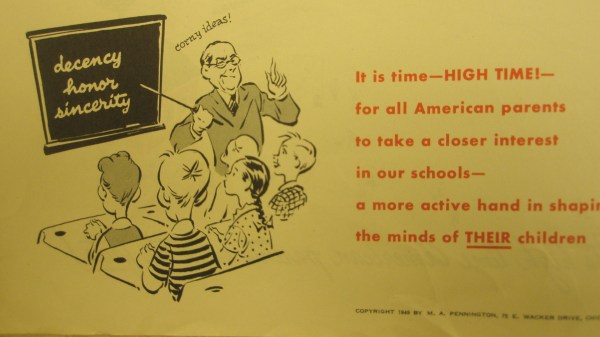
Watch out for socialist teachers, c. 1949…

With all the attention to teachers in the recent spate of strikes, though, it’s more and more clear that political stereotypes and labels just don’t help much if we want to understand the way schools and teachers really work. Are today’s striking teachers really hoping to lead a comeback of organized labor? Maybe some are. Most of them are probably trying to pay their mortgages and teach their students.

As reporters in Arizona found out when they interviewed non-striking teachers, there is no simple way to categorize teachers’ politics. Are the teachers who voted against the walkout “conservative?” Maybe. Sort of. Kinda. But that label doesn’t begin to capture the mix of reasons teachers gave for opposing the walkout.

OLYMPUS DIGITAL CAMERA

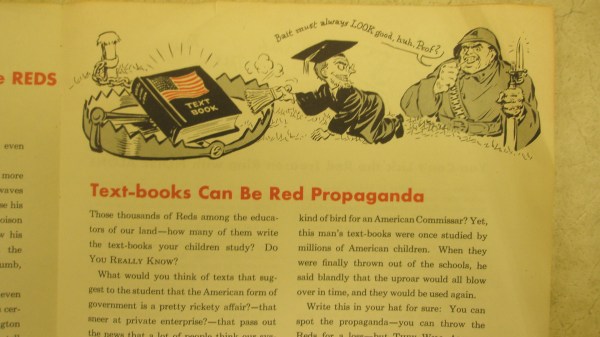
More socialists in the schoolhouse, c. 1949…

One teacher and football coach, for example, seems like he was sent straight from culture-war central casting to fulfill the stereotype of the “conservative” teacher. He told reporters he felt he needed to show his students that he honored his contract. As he put it,

Life is about not getting what you want and finding a way to get it while you continue to fulfill your obligations and for me, my obligation is my contract.

As I argued in my book about the history of educational conservatism, this notion of teaching students tough lessons about traditional morality has always been central to conservative thinking about schools and education. And of course he’s the football coach.

Other strike-opposing teachers don’t seem quite so easy to put in one box or another. As one explained, she voted against the walkout for a mix of reasons. Primarily, she couldn’t stand to leave her students in the lurch. She told reporters,

The kids that I work with are at-risk kids … (the walkout) also puts them behind. A lot of them come from homes where it’s safer for them to be at school. A lot of kids I work with have severe and profound learning disabilities and their parents both have to work to provide for them. Now they can’t.

Plus, at age 57, she can’t afford not to work. Does she want to be paid more? Sure. She currently works three jobs to make ends meet. A walkout, though, puts her finances and her students’ well-being at risk.

Is that “conservative?” To this reporter, these walkouts help show once again that teachers are just as complicated as regular people.

We’ve All Got It All Wrong

Whether you call yourself a conservative, a progressive, or something else, if you’re like me you’ve probably got it all wrong. As I was reminded in a discussion last night, those of us who try to shape schools usually make a huge mistake—one we could recognize if we just thought about it for half a second.univ of hawaii

Here’s the background: I was happy last night to talk with some graduate students at the University of Hawaii. (No, I didn’t get to go there in real life. I wish. We used cutting-edge interwebs technology to talk.) They had read my book about the history of educational conservatism and they had some great questions, ideas, and experiences to share.

As I argue in the book, it’s difficult to generalize about conservative activists. Just like progressives, conservative thinkers and doers come from a dizzying array of backgrounds and they are motivated by a huge spectrum of ideas and beliefs. But one thing they do share—at least the ones I studied—is an unexamined faith that school shapes society. I hate to quote myself, but this is how I put it in the book:

Educational conservatives have insisted, in short, on two central ideas. First, schools matter. Conservatives, like their progressive foes, have rarely questioned the notion that the schools of today generate the society of tomorrow. Second, because schools matter, their content and structure must be guarded ferociously. Ideas that challenge inherited wisdom must not be crammed down the throats of young, trusting students. And teachers must not abdicate their roles as intellectual and moral authorities. Educational conservatism, in other words, has been the long and vibrant tradition of defending tradition itself in America’s schools. Without understanding this tradition, we will never truly understand either American conservatism or American education.

One idea on which everyone can agree, in other words, is that schools shape society. The reason so many of us spend so much energy on school reform is precisely because we think it matters. For some conservatives in the twentieth century, teaching kids evolution was dangerous because it threatened to take away their moral and religious compass. For others, teaching kids about sex was a bad idea because it tended to unhinge their self-control. And for yet others, teaching kids socialist ideas was obviously terrible because it would lead to the corruption of their morals and of the entire society.

OTR COVER

You can fix schools all you want, but you can’t fix the outcomes…

Last night, the Hawaii students shared stories that helped puncture those school-reform assumptions. One student, for example, reported that he came to the realization that he was conservative in high school. He was guided to that realization by his favorite teacher. At first, I assumed that the teacher was a conservative, too, and inspired the student by reading Hayek and Burke and smoking a pipe. In fact, the student told us, his favorite teacher was a heart-on-her-sleeve liberal. She taught social studies in a progressive way, one that hoped to help students examine their own ideas and decide questions for themselves. In the student’s case, that meant he came to the realization that his ideas were apparently “conservative.” The left-y teacher, in other words, didn’t indoctrinate this student into leftism, but precisely the opposite.

Another Hawaii student told a very different story. She only realized that she was a liberal when she was teaching Sunday school at her church. The goal was to help young people deepen their religious faith, but it had the opposite effect on her. Instead of becoming more religious, teaching Sunday school convinced this student that her church was full of hooey.

What’s the takeaway? Once we hear the stories, it seems pretty obvious. School doesn’t really work the way we sometimes think it will. No matter what our politics, we can’t control the future of our students by teaching them X or Y or by keeping them away from Z or A. Students are not predictable, programmable outputs. They have their own ideas and backgrounds and sometimes our best-laid plans at shaping America’s future will come out in ways we didn’t predict.

Which of These People Will Save the Humanities?

At many colleges, humanities enrollments are down. So far down that schools such as one University of Wisconsin campus are scrapping entire humanities departments. What can academics do? Two pundits this week have suggested different solutions. We have a different proposal to make.

savior 1

…is it students reading Beowulf?

At the Chronicle of Higher Education, Mark Bauerlein makes a counterintuitive proposal. If humanities programs want to survive and thrive, Professor Bauerlein argues, they need to woo freshmen and wow their parents. As he puts it, “right now, nothing is more crucial than the preferences of 19-year-olds.”

You might think the way to do that would be to lighten up on grades and assignments. Offer an easy A and students will line up…right? Professor Bauerlein describes a program that does the opposite. Teachers at the University of Oklahoma have revived W.H. Auden’s 1940s-era syllabus. It forces students to do a ton of reading and reflection. And the students seem to like it.

Bauerlein’s conclusion? Make humanities courses unapologetically difficult. Stop apologizing for Western Civilization:

Design your Western-civ or Great Books course and ramp it up to Auden levels. Be frank about the reading challenge. Boast of the aged, uncontemporary nature of the materials. Highlight the old-fashioned themes of greatness, heroism and villainy, love and betrayal, God and Truth, and say nothing against intersectionality and other currencies. Your antagonists are mediocrity, youth culture, presentism, and the disengagement of professors and students. You occupy a competitive terrain, and your brand is Achilles, Narcissus, the Wyf of Bath, Isolde, and Bigger. Let’s see what happens. Let the undergrads decide.

Could it work? Maybe. I’ve stopped being surprised by the numbers of students who want to be challenged. Yes, many—maybe most—students approach their classes as mere hurdles to be overcome to get to the next goal. But a reliable stream of students want something else.

savior 2

…is it budget-controlling conservative hawks?

From across the pond, we get a very different prescription for saving the humanities. At Times Higher Education, Musa al-Gharbi gives us another idea. If we want to save classes in philosophy, sociology, history, literature, etc., al-Gharbi says, academics should court conservative politicians. After all, when conservatives think humanities departments have been taken over by leftists, they will not hesitate to close them down. And then progressives themselves suffer. As al-Gharbi puts it,

It is generally women and people of colour – usually progressives – who pay the cost when administrators are encouraged to weigh into political disputes. These same groups will also bear the brunt of continued erosion of public trust in institutions of higher learning.

The value of scientific fields is widely appreciated, but social research is a different matter entirely. Given that women, people of colour, LGBTQ scholars and leftists are better represented in the humanities and social sciences than in most other disciplines, they will disproportionately suffer when social research is devalued and defunded.

In other words, if we want to save the humanities, we need to help influential conservative politicians see that courses in history, literature, and so on are not merely training grounds for leftist radicals.

Could that work? In Wisconsin, at least, the shutdown of Stevens Point humanities courses was a direct result of long-simmering conservative outrage. Cultivating conservative political support for humanities classes might help maintain budgets.

I’ve got a different suggestion, though. As I argue in my new book about evangelical higher education, there is one constant truth about higher education in these United States. Whether students choose a fundamentalist college, an Ivy League redoubt, or a community-college approach, a driving factor in student decisions has always been professional credentials.

Heather Gerken

…or is it someone different?

That is, whatever college students choose, most of them (or at least, their parents) insist that their work must lead to a better career. Like all institutions, evangelical colleges fail when they can’t deliver on that promise. The same is true for humanities programs. Some humanities courses are thriving. At Yale, for example, history is back as the most popular major.

Why are students flocking to history courses at Yale? As Professor Bauerlein argues, many of them are likely attracted by the intellectual rigor and challenge of the major. And, as Prof. al-Gharbi explains, some of them are probably intrigued by the ideological diversity of academic history. The bulk, though, are hoping that the history major will situate them well to apply to law school. That’s been the tradition for long years.

So who should academics be trying to convince of the value of humanities courses? Is it freshmen looking for old-fashioned intellectual challenge? Or is it conservative politicians looking askance at faculty politics? I think both ideas have merit.

But if humanities programs really want to survive, they need to convince students, parents, and law-school deans that their programs are the best way to fulfill the most important purpose of American higher education: preparation to move up the career ladder.

The Tortuous Triumph of Progressive Education

It’s hard to know whether to cheer or cry. For people like me who want progressive schools and progressive politics, it hurts to see progressive classrooms converted into tools of the rich. But see it we do: More evidence today from Wichita that progressive education has triumphed over its conservative bête noirs, only to be turned into a tool of traditionalism.

wichita wonder koch school

The progressive vision for Wichita. Rich people only, please.

Here’s what we know: The conservative bajillionaire Koch brothers have long been interested in educational issues. Now they have funded a fancy-pants progressive school in Wichita. Second-generation Chase and Annie Koch are opening the Wonder school in Wichita. Their plans could have come straight out of a 1930s progressive-ed playbook.

Their vision? No age-graded classrooms, no report cards, no judgment. Focus on student-directed activity, guided by adult “coaches,” not teachers. As one planner put it,

We think that children are not challenged to the fullest extent that they could be right now. . . . We want to challenge them to take on new tasks and greater ownership over what they’re doing.

So far, so good. Such dreams have been around for a century now, pushed by progressive-ed leaders such as George Counts, William Heard Kilpatrick, and of course, John Dewey.

In the middle of the twentieth century, as I recount in my book about educational conservatism, traditionalists pushed back hard against such notions. These days, at least in Kansas, some of the hardest-core educational conservatives have embraced the obvious superiority of progressive classroom methods.

So we should celebrate, right? Not so fast. Those same progressive-ed-loving conservatives tend to take a very different approach when it comes to schools for the rest of us.

Yes, the Koch’s own kids get to go to schools with fabulously progressive pedagogy. But Koch money pushes a very different sort of classroom elsewhere. In Tennessee, for example, Koch funding promoted charter schools for low-income families. At some of those schools, most famously the KIPP network, students are rigidly controlled. KIPP’s “no excuses” model and “SLANT” rules (Sit up, Listen, Ask and Answer questions, Nod and Track the teacher) can feel oppressive.

At some charter schools—especially urban schools with high proportions of low-income non-white students—students are compelled to sit silently at lunch, march silently and exactly through hallways, respond rapidly and exactly to teacher prompts, and hold their heads rigidly at all times.

What a contrast to the free-wheeling, mind-expanding Koch-funded school soon to be offered to affluent kids in Wichita. Of course, for only $10,000 per year, anyone is welcome at the Wichita Wonder school. Unless, of course, a student has any sort of disability.

What are we supposed to think? I’m no conspiracy theorist, but it’s hard not to see the obvious: Some conservatives have recognized the huge benefits of progressive classroom practices, but they only want them for their own children. Or, to be more charitable, conservatives are only willing to foot the bill for progressive classrooms for their own kids.