I Love You but You Didn’t Do the Reading

[Editor’s Note: We at ILYBYGTH are happy to announce a new feature, “I Love You but You Didn’t Do the Reading.”  In this weekly column, we’ll point out stories of interest to SAGLRROILYBYGTH, a sort of “in case you missed it” list.  Will we be able to keep it up?  Who knows.  But let’s give it a try and see if people like it.  Suggestions for readings are always welcome to our editorial desk: alaats AT binghamton DOT edu .]

December First, 2015

What did you miss out there? A few stories that caught our eye this past week:

READING

Words, words, words…

Philosopher Michael Ruse warns humanists to curb their enthusiasm.

Paying for college with indentured servitude; a new program hits the streets of Purdue.

What do people think about climate change? Yale survey says that half of Americans believe it is real and that humans are causing it, but only one in ten agree that mainstream scientists are agreed about it.

No yoga in school, for a different reason.

Secret Catholics at Jamestown.

Yik Yak threats shut down campus.

What should Princeton do about progressive racists?

Where can students go for an intellectually diverse college education?

Affirmative Action for College Professors? No, But…

Thank you.  After discussions here and in real life, I’ve changed my mind.  I thought we needed affirmative action for conservative college professors, but now I agree on a different solution.

The other day, I wrote that our campuses needed more ideological diversity. Not, as some commentators have argued, mainly to provide a richer intellectual climate. Nor to be fair to conservative intellectuals. Rather, for me the compelling issue was that many students—conservative students—felt like fair game for both fellow students and professors.

Too many students, I thought (and think!) feel as if their conservative beliefs—especially religious beliefs—are the butt of jokes. They do not feel included; they do not feel like valued members of the campus community. That is not acceptable.

But following Jonathan Haidt’s advice for colleges to “actively seek out non-leftist faculty” won’t help.

Rather, we need to use existing mechanisms on campus to ease the problem.

Let me start by laying out some of the things I am not talking about:

I am not saying that students from some conservative religious backgrounds shouldn’t have their worlds shaken up by what they learn in college. For example, if students come from a young-earth creationist background, as David Long has argued, learning mainstream science will come as a profoundly disorienting experience. Colleges don’t need to protect them from that experience.

I am not saying that students should be allowed to perpetuate anti-minority attacks under the name of fairness. As some schools have experienced, “white student union” groups have argued that they, too, should have the right to be exclusive campus communities. Colleges don’t need to protect this sort of faux equality.

But colleges should protect students—even conservative students—from the sorts of ignorant, ridiculous, hateful talk that they are commonly exposed to. Let me give some examples of the kinds of thing I am talking about.

Example #1: Here in the Great State of New York, we’re divided over a recent gun-control law, the SAFE Act. It limited gun ownership in significant ways. One student told me that the subject came up in one of his classes. It wasn’t the main subject of a lecture or anything, just some side-talk that went on as part of a class discussion, the kind of talk that is a common part of every class. The instructor, according to my student, said something along the lines of, “Only total hillbilly idiots oppose the SAFE Act.” My student was a gun owner, from a family of gun owners and opponents of the SAFE Act. He didn’t say so, but I can’t help but think that the instructor’s comments made the student feel shut out.

Example #2: I was giving a talk a while back about Protestant fundamentalists and their educational campaigns. I’ll leave the host university anonymous. After my talk, one audience member shouted out a question, “What’s WRONG with these people!!??!” Many heads nodded and people giggled a little. I was flummoxed.   I couldn’t believe that such an intelligent person could simply lump together all conservative religious people as “these people.” I couldn’t believe that other audience members found such a question unremarkable. I wondered what someone in the audience would feel like if he or she was a fundamentalist. I don’t think he or she would feel welcomed. I don’t think he or she would feel like part of the campus community.

In situations like that, I think the main culprit is faculty ignorance. Too many of us have no idea about the numbers of conservative students we teach. Too many of us assume that the intelligent people in our classes agree with us on questions of religion and politics. Too many of us assume that any anti-conservatism or anti-religious jokes will be enjoyed by all our students.

I plead guilty myself. As I learn more and more about conservatism and religion, I realize how woefully ignorant I have always been. I worry that some of my off-hand comments in the past made some students feel unwelcome or insulted.

That’s why I think we need to do a better job of spreading the word.   Many of our campuses already have sensitivity-training classes. Why don’t we include conservative ideas? Why don’t we help faculty members recognize that they will be teaching students of all sorts of political and religious backgrounds? Why don’t we educate them about the beliefs of people who are very different from them, people who will likely be in their classes?

Of course, it won’t change the minds of people who really don’t want to change. I know there are some professors out there who consider it their job to belittle conservative ideas. Some academics take a positive glee in subjecting religious conservatives to hostile intellectual attack, hoping to educate them out of their unfortunate backwardness.

To some, that might be enlightenment. If it means subjecting vulnerable students to browbeating at the hands of their fellow students or even of their professors, it’s not the right sort of enlightenment.

Affirmative action for conservative professors isn’t the answer. It won’t work and it doesn’t even address the central problem. Colorado has struggled to fit in its token conservative intellectual. More important, as Neil Gross has argued, hiring on campuses is not really squeezed in a leftist death-grip. Rather, left-leaning types tend to be overrepresented among those who go into academic work in the first place.

We should prepare ourselves to welcome religious and ideological diversity just as we do other forms of diversity. We should ask instructors to attend sensitivity workshops that include a variety of ideas. Why do some creationist students believe in a young earth? Why do some religious traditions emphasize a continuing difference between proper roles for men and women?

The goal is not to avoid teaching ideas that might be startling or uncomfortable for students. In a geology class, young-earth creationists will hear that the earth is very old. A class on feminist theory will certainly shake up some students steeped in patriarchal thinking. But we can convey that information in a way that insults and belittles our students, or in a way that does not.

To me, the choice seems obvious.

When Evil Sounds Like You

No one is in favor of murder. And all of us use pretty heated language at times. That’s why all of us have an extra responsibility to denounce violence perpetrated by those who agree with us. It looks like leading GOP candidates have failed at this important culture-war responsibility.

Dear

War and Culture War

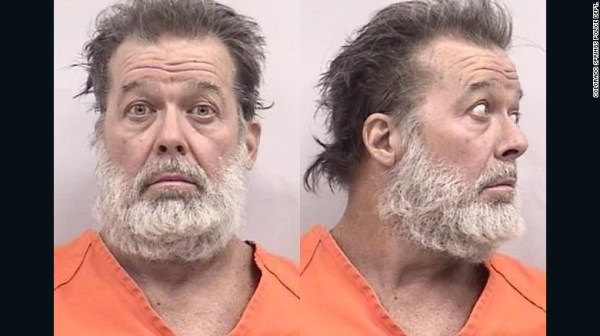
It is still early days, but it seems as if the terrible shootings at the Colorado Planned Parenthood clinic may have been inspired by anti-abortion sentiment.  Suspect Robert Dear seems to have claimed he was motivated by Planned Parenthood’s alleged sale of “baby parts.”

I would expect every prominent cultural conservative to denounce this sort of political violence in the strongest terms. Yet, as progressive sources such as The Nation and ThinkProgress have pointed out, the leading Republican Party presidential hopefuls have done no such thing.

I am truly stumped.  I would think that every politician would rush to distance him- or herself from such an atrocity.  Especially leaders such as Marco Rubio and Ted Cruz, who have campaigned against Planned Parenthood as a retailer of baby parts.

Yet they did not.  Other anti-abortion activist groups have done so, including the National Right to Life Committee, Operation Rescue, and other pro-life activists.

Precisely because they are known to share very strong anti-abortion sentiments, such folks have leaped to denounce the shootings in the strongest terms. This is as it should be. Culture-war activists, after all, stand to be accused of collusion with such crimes. They have a duty to tell the world that such violence is not and never will be part of their strategy.

As NRLC put it,

National Right to Life, which represents 50 state affiliates and more than 3,000 local chapters, unequivocally condemns unlawful activities and acts of violence regardless of motivation.  The pro-life movement works to protect the right to life and increase respect for human life.  The unlawful use of violence is directly contrary to that goal.

The National Right to Life Committee has always been involved in peaceful, legal activities to protect human lives threatened by abortion, infanticide and euthanasia.  We always have and will continue to oppose any form of violence to fight the violence of abortion.  NRLC has had a policy of forbidding violence or illegal activity by its staff, directors, officers, affiliated state organizations, and chapters.  NRLC’s sole purpose is to protect innocent human life.

This kind of talk is not political bravery, but merely common decency mixed with self-protection. Leaders such as Marco Rubio, Ted Cruz, and Donald Trump, then, could simply agree with these pro-life groups. They could work hard—and even cynically try to appear “presidential”—by weighing in against this sort of terrorist attack.

Yet they haven’t.

This is bad news for all of us, regardless of our political opinions or religious beliefs. If it is true that GOP candidates did not want to appear too energetic in their denunciation of this sort of extremist violence, then our political climate offers little hope for any sort of reasonable discussion of sensitive issues.

When simple human decency, combined with savvy political strategizing, don’t compel prominent politicians such as Marco Rubio to distance themselves in the most forceful way from folks such as accused attacker Robert Lewis Dear, we should all tremble.

Why? Because it hints at a breakdown of our implicit agreement about the fundamental nature of civil society. Aspiring GOP leaders should be falling all over themselves to demonstrate their understanding of this central idea. They should be jostling with one another to show just how leader-y they are in their denunciation of this sort of extremism.

If they don’t, we should worry that they think voters won’t like such denunciations. We should worry that these candidates, with their finely tuned political antennae, have decided that plenty of GOP voters condone or at least excuse this sort of terrorism.

If they’re right, we’re facing a frightening prospect.

We hope that in coming hours and days, GOP leaders will recognize their proper role. We hope they will see that it is their job to police their right wing, just as it falls upon progressives to police their left. Both sides, we must agree, must agree that terrorism is not part of their culture-war coalition. Once someone crosses a line into assassinations, we must all agree, they are no longer part of our civil society.

Only this implicit agreement keeps our vicious culture wars from devolving into all-too-common real culture wars.

School = Thanksgiving

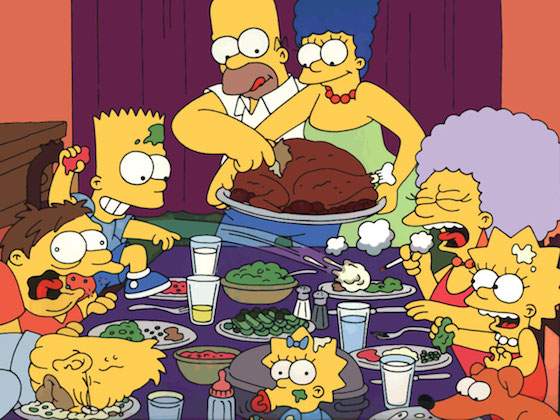
Ah, Thanksgiving! Our favorite holiday of all. No gifts, no decorations, no sweat . . . just lots of food and friends and football. Your humble editor has retreated to an undisclosed location in scenic upstate New York to share the holiday with family.
simpsonsturkey

PS 101

Before we do, however, we must give in to our unhealthy compulsion to share some Thanksgiving reflections about schooling and culture wars. In the past, we’ve noted the central role Thanksgiving has come to play in those battles. Today, though, we want to point out a more basic connection: Why do we keep having culture wars over the teaching in our public schools? Because those schools are like Thanksgiving itself.

First, a review of our ILYBYGTH reflections about culture-wars and Turkey Day:

Today, let’s consider a more fundamental idea: Thanksgiving gives us a chance to see how public schools really function and why they serve so often as lightning rods for culture-war kerfuffles. Thanksgiving dinner might just be the best analogy for the way our schools work.

Because we know they don’t work the way anyone really wants them to.

For generations, progressive activists and intellectuals have dreamed of schools that would transform society. To pick just one example from my recent book, in the 1930s Harold Rugg at Teachers College Columbia hoped his new textbooks would transform America’s kids into thoughtful authentic small-d democrats. The books would encourage students to ask fundamental questions about power and political transparency. They would help young people see that true social justice would come from a healthy transformation of society, with power devolved to the people instead of to plutocrats.

For their part, generations of conservative activists have tried to create schools that would do something very different. There is no single, simple, definition of “conservatism,” of course, but by and large, as I also argue in my recent book, activists have promoted a vision of schooling as the place to teach kids the best of America’s traditions.

As one conservative intellectual asked during a turbulent 1970s school boycott,

Does not the Judeo-Christian culture that has made the United States the envy of the world provide a value system that is worth preserving?

Other conservatives shared this vision. Max Rafferty, one-time superintendent of public instruction in California and popular syndicated columnist, yearned for a golden age when

the main job of the schools was to transmit from generation to generation the cultural heritage of Western civilization.

Max Rafferty was never satisfied. Schools, he thought, failed in their proper job as the distributor of cultural treasures.

Harold Rugg wasn’t happy either. Neither he nor his progressive colleagues in the “Social Frontier” group ever succeeded in using the schools to “build a new social order.”

Why not? Because schools will not fulfill either progressive or conservative dreams. They are not distribution points for ideological imperatives. They are not outposts of thoughtful civilization scattered among a hillbilly hinterland.

Instead, it will help us all to think about schools as a sort of Thanksgiving dinner. At a Thanksgiving dinner, people of all sorts gather together to eat. Friends, family, co-workers, neighbors. Unless you’re lucky enough to escape to an undisclosed location in scenic upstate New York with only a few beloved family members and a dog, you will likely sit at a table with people with whom you don’t share much in common, intellectually.

In every family, you are likely to find some ardent conservatives and some earnest progressives. You are likely to find strong feelings about issues such as abortion, same-sex marriage, evolution, and etc.

That’s why—until the booze kicks in, at least—most Thanksgiving dinners tend to stick with safe topics. We know we can disagree about football, for example. If my Green Bay Packers lose to the horrible Chicago Bears, my cousin knows he can tease me about that.

But we can’t disagree, out loud, at least, about things that really matter to us. If I have an imaginary uncle, for example, who thinks same-sex marriage means opening the door to pederasty and apocalypse, he knows he can’t tease me about it. Our disagreement on that issue won’t be something we can both just laugh about.

So our Thanksgiving dinner conversations, we hope, stick to fairly humdrum topics.

That might just be the best way to understand our schools, too. In spite of the dreams and hard work of intellectuals such as Max Rafferty and Harold Rugg, schools don’t push one ideological vision or another. At least, they tend not to do it very well or for very long.

Instead, they stick to the smallish circle of ideas that we as a society can roughly agree on.

This is why biology teachers tend not to teach a whole lot of evolution.

This is why health teachers tend not to teach a whole lot of sex.

This is why history teachers tend not to teach a whole lot of history.

There are plenty of exceptions, of course. But that also fits into our Thanksgiving analogy. Every once in a while, someone at Thanksgiving will insist on having it out…whatever “it” is. And our holiday turns into a smack-down, leaving everyone a little bruised and shaken.

Similarly, some teachers and some schools will occasionally push for a better vision of education, a more ideologically pure one. As I examine in my recent book, that is when we get culture-war flare-ups.

So as we sit around our tables and eat birds, let’s reflect on the ways this holiday might be the perfect analogy for schools. They are not change agents or tradition-upholders. At least, they are not only that.

Public schools are, rather, a meeting place in which we all implicitly agree to limit ourselves to non-controversial topics. We agree to keep the most interesting ideas, the most provocative ones, and, sadly, often the most educational ones, off the table.


Ignorance: The Heart of Education

I’ve said it before and I’ll say it again: Our educational culture wars are NOT battles between brutish conservatives who want to keep vital information out of the hands of children, on the one side, and scheming progressives on the other, progressives who want to dump information on hapless children, heedless of the moral consequences. Rather, all of us agree that schooling should promote and protect some forms of ignorance among kids. We only disagree on the details.

miseducation

Known unknowns and unknown unknowns…

Now at long last we will have a collection of scholarly essays about the history of ignorance and education. Thanks to editor AJ Angulo, a new volume will soon hit the libraries. Miseducation will be published in early 2016 with Johns Hopkins University Press.

As the publisher explains,

Ignorance, or the study of ignorance, is having a moment. Ignorance plays a powerful role in shaping public opinion, channeling our politics, and even directing scholarly research. The first collection of essays to grapple with the historical interplay between education and ignorance, Miseducation finds ignorance—and its social production through naïveté, passivity, and active agency—at the center of many pivotal historical developments. Ignorance allowed Americans to maintain the institution of slavery, Nazis to promote ideas of race that fomented genocide in the 1930s, and tobacco companies to downplay the dangers of cigarettes. Today, ignorance enables some to deny the fossil record and others to ignore climate science.

I was honored to be asked to contribute. In my chapter, I look at the publishing efforts of fundamentalist schools such as Bob Jones University and Pensacola Christian College. How have those textbooks, I wondered, promoted a certain form of knowledge? How have they pushed a certain form of ignorance?

Perhaps more interesting, this volume can encourage all of us to examine the ways schools have not simply distributed knowledge. Any school, any educational project, must also encourage certain forms of ignorance.

It may seem outlandish, but it’s really so obvious it can be hard to see. What would we say if a second-grade teacher showed her students a violent movie such as Saving Private Ryan? Not at all appropriate. Not because it’s a bad movie, but because it’s incredibly violent.

What would we say if a second-grade teacher traumatized her students by taking them on a field trip to a slaughterhouse? Not at all appropriate. Not because it’s not educational, but because there are some truths we want to keep from young people.

It’s obvious to most of us: Some things are not appropriate for young kids to learn in school. Not because they’re not true, but because we want children to remain ignorant of some things. We expect schools to work hard to keep them ignorant of some things.

Angulo’s collection of essays will help examine these questions in new ways. Make room on your shelves!

I’m Convinced: We Need More Conservatives on Campus

[Update: For new readers, this conversation has evolved since the post below.  In short, I’m not convinced anymore.  I now think there are better, more practical solutions to this dilemma.  Check out the developments here.]

My eyes were opened a few years back. I was offering a senior seminar in the history of American conservatism. Several students—some of whom eventually took the class and some of whom did not—came to my office and said something along the lines of “Thank God we finally have a conservative professor!” When I explained to them—sympathetically but clearly, I hope—that I was not actually conservative myself, students had a variety of reactions. Some were deflated. But another common response convinced me that Jon Shields and Jon Zimmerman are right.

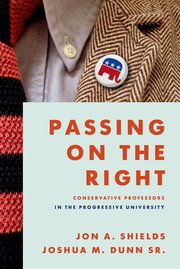
Shields Passing on the Right

Time for more affirmative action?

Shields has made the case again recently that college campuses need to recruit more professors who come from conservative backgrounds. He reviews the available research and concludes that conservatives are victims of explicit, intentional bias. As a result, there are far fewer conservative professors than we need if we want to have truly diverse campuses.

Years ago, Zimmerman made a similar argument. Like me, he’s no conservative himself. But he thinks universities need to be more inclusive places, more representative of our society’s true diversity. The best way to do that, he argued, was to reverse the trend toward intellectual homogeneity among college faculty. As he wrote back in 2012,

Race-based affirmative action has made our universities much more interesting and truly educational places, adding a range of voices and experiences that hadn’t been heard before. Hiring more conservative faculty would do the same thing.

I’m convinced, and not just because Jon Zimmerman is the smartest guy I know. The things I heard from my wonderful students told me that something was indeed wrong with our current set up.

When I told students that I wasn’t conservative myself, many of them told me something along these lines: You may not be conservative personally, but at least you don’t make fun of me or belittle me for being a conservative.   At least I can be “out” with my conservative ideas in your class. In most of my classes, I feel like I have to keep my ideas to myself or I will be attacked by students and teachers alike.

Yikes!

Please correct me if I’m off base, but isn’t that EXACTLY the problem that our campaigns for campus inclusivity have been meant to address? I know some folks think this notion of affirmative action for conservatives is a travesty, an insult to underrepresented groups that have faced historic persecution and discrimination. I understand that position and I agree that conservatives as a group cannot claim the same history as other groups.

But is there anyone out there who would want a campus climate in which students were belittled and attacked for their ideas?

Even if we want to do something about it, however, it is not at all clear how. As Neil Gross has argued, there is not really a liberal conspiracy when it comes to hiring professors. Rather, there has been a more prosaic tendency for people to go into fields in which they think they will be comfortable.

Maybe we could look to Colorado as a guide. They have had a conservative affirmative-action plan going for a while now at their flagship Boulder campus. How has it worked?

In any case, I’m looking forward to Professor Shields’s new book, scheduled for release next year. It promises to share the data gathered from 153 interviews and other sources. Maybe it will help us break out of this logjam.

Intelligent Design?  Evolution?  Depends on your Point of The View

Thanks to the ever-watchful Sensuous Curmudgeon, we notice that yesterday’s episode of The View took on the topics of creationism, evolution, and intelligent design.

The discussion had been roiling about presidential hopeful Dr. Ben Carson.  One of the personalities opined that Carson could not be considered intelligent, since he believed in creationism.

At that, Candace Cameron Bruce interrupted to point out that plenty of intelligent people—plenty of scientists—do believe in creation and do embrace intelligent design.

The panel seemed split, with two for creationism, two for evolution, and Whoopi Goldberg insisting we can have both.

Which Neighbor Should Evangelicals Love?

Evangelical Protestants are on fire to help Syrian refugees. Except, they’re not. As Chris Gehrz points out, journalists who jump too quickly to define the “evangelical” position on refugees usually miss the boat.

Franklin Graham

What Would Billy Do?

There’s no doubt that leading evangelical organizations have taken the lead on welcoming refugees. The National Association of Evangelicals, for example, has warned policy-makers not to let fear of terrorists get in the way of Christian charity. As President Leith Anderson put it,

We are horrified and heartbroken by the terrorist atrocities in Paris, but must not forget that there are thousands more victims of these same terrorists who are fleeing Syria with their families and desperately need someplace to go.

At flagship evangelical magazine Christianity Today, too, editor Mark Galli has recently reminded Americans of their moral requirement to welcome and assist refugees.

As usual, though, Professor Chris Gehrz asks a more complicated and insightful question: Do such official and quasi-official statements really represent the thinking of most evangelicals? Gehrz worries it does not. He cites recent poll data that show large majorities of white evangelicals opposing a pro-refugee policy.

Gehrz wonders if other prominent evangelical voices might have more pull than do Galli or Anderson.  For instance, what about Franklin Graham’s warning that Islam is a clear and present danger? In a Facebook post, Graham wrote,

We cannot allow Muslim immigrants to come across our borders unchecked while we are fighting this war of terror. If we continue to allow Muslim immigration, we’ll see much more of what happened in Paris – it’s on our doorstep.

Similarly, at evangelical WORLD Magazine, Cal Thomas has called a pro-refugee policy “wishful thinking.” Even US passport-holders, Thomas writes, should not be allowed back into the country if they have visited countries that host ISIS training camps.

At The Gospel Coalition, Kevin DeYoung has suggested that the entire question is not cut-and-dried for compassionate Christians. As he wrote,

Christian charity means loving the safety of the neighbor next door at least as much as loving the safe passage of the neighbor far away. It’s not unreasonable or unfeeling to think that in some cases supplying refugee camps with humanitarian aid or protecting safe havens elsewhere could be a responsible approach that avoids the risks of immediate resettlement in the United States.

Those of us who aren’t evangelical Christians should learn a couple of important lessons from this back-and-forth. First, as I’m arguing in my current book about evangelical higher education, there is no simple way to define “evangelical” in strictly religious terms. Throughout the twentieth century, at the very least, to be an evangelical has meant an irreducible blend of religious, cultural, political, and social identities. It may be tempting to try for a clean-and-clear religious definition of “evangelical,” but the term has always been and will always be a mix of things.

Second, as Professor Gehrz points out, we need to be wary when people tell us about the “evangelical” position on any question, political or even theological.

What do “evangelicals” think about refugees? All sorts of things.

Should College Classes Make Students Uncomfortable?

Whitney Cox is right on. In her classes at the University of Houston, she insists that conservative religious students be open to the idea of discomfort as they study the Bible. Can we translate her advice to college students in general?

whitney cox

Preach!

Cox tells the story of a “star pupil” who worries that her Bible class might shake up his preconceptions. It should, she replies. She doesn’t want to tell the student what to believe. In fact, she insists that she is not willing or able to do so. But she does want her class to challenge him to think about the Bible in new ways.

Hear, hear. That is the purpose of education, especially higher education. IMHO.

So here’s our question: What if we change things around a little bit? What if we replace a conservative religious student with a left-leaning social-action student?

I’ve argued lately that the recent tumults on college campuses result from an “impulse to orthodoxy” among such leftist students. Students demand an end to ideas that make them feel “unsafe.” They demand the ouster of faculty and administrators with whom they disagree.

Could such students and such campuses benefit from Cox’s advice? Here’s what she told her conservative student:

I find frustrating the too-frequent sentiment from Christians that equates interrogating and examining the texts with destroying faith. There is a strain of anti-intellectualism in modern US Christianity that is vile, unbiblical, and deadlier to faith than scholarly examination could ever be. It demands an unquestioning obedience and punishes anyone who doesn’t conform to the party line, who dares to question the people in power.

I am forever angry at the orthodoxies that demand literal belief as an all-or-nothing proposition, not only because that kind of approach makes you immune to reason, but because it means that more likely than not, that one bit of counter-information that makes it through takes down the rest like a Jenga tower. I’ve seen this a lot with people raised as strict creationists but who later realize that the scientific support for evolution is overwhelming — and because they’ve been taught they can’t doubt one part without doubting it all, they end up tossing it all out the window. Because they’ve learned that any questioning is evil, they decide they have to take all their questions elsewhere.

Fantastic, and right on.  SO right on, in fact, that we should broaden it to include other sorts of student worry as well.

What if we tweaked the wording here and there? What if we gave this advice to students?

I find frustrating the too-frequent sentiment from left-leaning students that equates interrogating and examining the texts with racism. There is a strain of anti-intellectualism in modern US society that is vile, anti-social, and deadlier to social justice than scholarly examination could ever be. It demands an unquestioning obedience and punishes anyone who doesn’t conform to the party line, who dares to question the people in power.

Please don’t misunderstand me. As I’ve said repeatedly, I support the moral impulse behind the student activism at many schools today. Like many commentators, though, I worry that the necessary tension has been leached out of campus life.

Schools must be aggressive and decisive in their efforts to make sure every student feels welcome. Incidents such as the repeated racial hazing at Mizzou, for example, are not merely over-wrought snowflake problems.

The flip side of that campus necessity, however, is that students must be intellectually challenged. They must be physically safe. More than that, they have a right to demand institutional action to help them feel confident that they are safe from demeaning microaggressions.

Too often, however, this vital goal of safe spaces has turned into an overzealous drive for intellectual safety. Nothing will kill higher education faster than that.

I’ll say it again.  We need to remember both halves of the higher-education mandate:

  • Students must be physically and even emotionally safe.
  • Students should never feel intellectually safe.

If we’re doing our jobs, as Whitney Cox is, this should apply in equal measure to conservative creationists and progressive anti-racists.

The GOP and the God of Hate

Maybe I was wrong all along. My inbox has been filling up with links to a startling article in yesterday’s New York Times. Is the GOP really under the thrall of violently anti-gay extremists?

https://vimeo.com/129707480

I’ve argued in the past that my fellow secular progressives need to relax. The chance, I’ve said, of a fractious bunch of fundamentalists uniting to do anything more complicated than hosting an end-times bake sale were slim to none. Pre-tribulationists can’t get along with post-tribulationists. Lutherans can’t stand Seventh-day Adventists. Catholics look nervously at all of them.

More important, each side in our continuing culture-war debates tends to exaggerate the clear and present danger presented by the other side. Leftists point to abortion-clinic bombers. Conservatives warn of government jackbooted thugs. In general, I think we all need to remember that these boogiemen are distortions, fantastic bugbears trotted out to demonize the opposition.

But the news from Des Moines has me scratching my head. Kevin Swanson, an Orthodox Presbyterian pastor, hosted leading GOP hopefuls Ted Cruz, Bobby Jindal, and Mike Huckabee at a National Religious Liberties Conference. Swanson has become infamous lately for his repeated calls for homosexuals to be put to death.

Put to death!

According to the New York Times, Governor Huckabee claimed not to know of Swanson’s scary positions. Ted Cruz seemed unruffled. After all, his own father was a featured speaker of the conference.

Is this a simple case of primary extremism? In every election, the far fringes of each party wield outsize influence. We might say that such extremism will expend itself before the primary campaign gets rolling.

Similar claims, after all, have been made of President Obama’s connections with atheist terrorist Bill Ayers. Ayers was a real terrorist. His radical group really did try to bomb people. But he has long since—kinda sorta—denounced violence as a political tactic.

I’m flummoxed. I find it hard to believe that any serious presidential contender would consent to be associated with such a violent extremist.