Welcome to our second edition of Fundamentalist U & Me, our occasional series of memory and reflection from people who attended evangelical colleges and universities. [Click here to see all the entries.] The history I recounted in Fundamentalist U only told one part of the complicated story of evangelical higher education. Depending on the person, the school, and the decade, going to an evangelical college has been very different for different people.
This time, we are talking with Dr. Eugene F. Douglass, MS, MDiv, PhD. Dr. Douglass has a rich experience in both evangelical and non-evangelical higher education. He currently teaches chemistry at a large public university and has had a long career teaching in a number of different institutions of higher education.
Read on and discover why Dr. Douglass thinks “Christian colleges are infested with hypocritical young people sent there by abusive parents who want the college to convert their reprobate kids.”
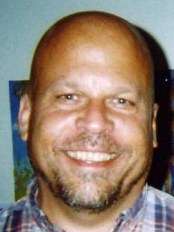
Dr. Douglass today…
ILYBYGTH: When and where did you attend your evangelical institutions?
The King’s College, formerly in Briarcliff Manor, NY, now New York City. 1975-79, BA Chemistry and Math
Theological Seminaries – started at Concordia Seminary in St Louis, summer of 1986, then switched to Covenant Seminary St Louis, August 1986 till December 1987. Bethel Theological Seminary (BGC) San Diego Campus, 1988-89 MDiv.
ILYBYGTH: How did you decide on that school? What were your other options? Did your family pressure you to go to an evangelical college?
I decided on King’s because I liked Dr. Robert A Cook on family radio which has a station in Philadelphia area, then I met two guys Roy McCandless of admissions, and Wayne Frair of the Biology Department at Jesus 1974 near Grove City PA, summer of 1974. I was looking at attending Wilkes College, founded by my grandfather Eugene Farley in Wilkes Barre, PA, considered applying to RPI, MIT, Princeton, and Swarthmore College, but decided on TKC because of its biblical standards and as a new Christian out of an intellectual, hypocritically religious family (unitarian and universalist Quaker), I wanted to learn about the Bible and the Christian faith, and have Christian friends, and liked very much their rules of behavioral expectations, as I did not want to be directly/openly exposed to public drunkenness, immoral premarital sexual relations, of which I grew up around growing up in Swarthmore College, where teenagers getting drunk/stoned and sexually acting out was open normal behavior. I expected and wanted TKC experience to be different, but I was naïve to think that fellow students did NOT live as real Christians in private. Therefore, the dating environment at TKC was bizarro world, and even severely perverted, as I was (according to most of the fellow students) a crude/vulgar infidel with a Christian label, so I was persecuted by many there, but thankfully for many of the faculty who knew why I was there, I was able to rise about that crap.
 Frankly, I loved working as a cab driver in Philadelphia for summer jobs, and most were appalled at my doing it, I found that to be very funny after the original shock of it. So, I learned to attack some people back with the fact I liked it, even describing my times where I shared my Christian faith with fellow cabbies.
No, most of my family was offended and annoyed I chose to go to a “no name” Christian college that was so culturally offensive to them. Frankly I was very surprised when I found out later that most of my classmates attended TKC because their parents MADE them go there. So, I vowed I would never do that to my own kids (which I got two sons eventually, and enabled them to choose for themselves, based on mainly who provided most financial assistance). Because in graduate school at North Dakota State University and the University of Connecticut, I had experience with campus ministries like Intervarsity (at NDSU) and then Campus Crusade at UConn. Those groups were much more what I thought TKC would be like before I attended there but I was stupidly naïve to think that. Part of me because of all history that makes me think, that any parent forcing their kid to go to a Christian college or university is real child abuse. And the only students that go to Christian colleges should be allowed to go there, because they WANT to be there, and are happy to obey/follow the Christian rules of behavior, which are good because it helps honorable people to learn self-control and behave properly privately and in public. But, I believe it was fucking horrible for some parents to force their kids to go to TKC and other Christian colleges. (Yes, I use that vocabulary on purpose, because the sexual atmosphere at TKC was perverse, which make out sessions in formal lounges etc. the norm, and students thought it was FUN to do it to show off). Secular universities are much healthier for young people, because even though much more is going on privately, the maturity level is higher with real people (without a christian façade).
ILYBYGTH: Do you think your college experience deepened your faith?
Yes, because of many of the faculty and administration I met at TKC, they were mostly good examples of adult behavior, as most were committed Christians who were there for the right reasons. I also am very thankful for the solid orthodox Christian doctrine I learned there, inter-denominational (truly evangelical) in focus, so I could decide for myself which system of doctrine I truly believed and could inculcate in my own belief structure and life. One of my favorite textbooks I used there was Buswell’s Systematic Theology, by J Oliver Buswell, who finished his career at Covenant Seminary in the 60s and 70s, I still love it as a good summary of my Christian faith. Also, because I grew up in a very broken non-christian family environment their examples of Christian men and women, and their family life gave me much hope that one day I would have a real Christian family of my own. But, the way I view many of my former classmates is a totally different matter, most had almost contempt for me. So, it is a mixture of being very grateful to God for part of it, and appalled/sickened because of it. That dichotomy was a great thing to learn, about the fact of tares among the wheat, even goats among the sheep, some wolves pretending to be sheep in most churches and organizations. Real Christians are still a minority in evangelical Protestantism. Even the falling apart of TKC in the 80s was because of the hidden moral corruption of administration and faculty, from faculty coming out as militant lesbians, drunkenness, homosexual behavior on campus covered up, to other nefarious bad administration that gutted its financial foundation, by losing students and alumni that used to support the college.
ILYBYGTH: Do you still feel connected to your alma mater?

The Douglasses, c. 1984
Yes, and no. I am very thankful to God for me going there, based on what I said above, but connected with most of my former classmates, hell no. Thankfully. Most of them fell away from any Christian faith they had when they attended there or retreated into their church cocoon/cloister, after they graduated, becoming essentially tasteless “salt of the world”. I found it very interesting, in 1984 I attended my 5 TKC reunion for my class of 1979, with my new wife of 4 months, (who also became a christian out of a very broken pagan home, 6 months before I met her.), most of my former classmates treated her very badly, because she was a very beautiful blond. Because of the very weird interactions with my female classmates I had at TKC, I thought/hoped that many had grown up and would be happy for me and my new wife, but they hated her. Very weird. Even Dr. Cook took me aside and quietly said to me that he was disappointed in me because I could have done better than Carol, picked someone better for me. Hearing that from him blew away any appreciation I had for that asshole (yes, I used that pejorative deliberately). So, instead of going to the reunion lunch the next day, I took Carol on a car tour of favorite New York City spots, that I had visited when I was at TKC. Even places that I used to have fun passing out tracts with Jews for Jesus folks in Manhattan, and witnessing I did in Central Park a small group of us went down to Manhattan some Saturdays. I got good training with Campus Crusade folks at TKC, form outreach, so in a way the Fact that Campus Crusade ended up buying the name and library/resources of TKC in the 90s was a good thing. Because now I think they have a much better perspective, in training students to go out in the world to make a difference but not be “of the world”. So, I feel more oddly connected with the newer version of TKC, than the old.
ILYBYGTH: What was the most powerful religious part of your college experience?
The good Christian doctrine I learned, that I have used and needed to be an effective Christian in a fallen world.
ILYBYGTH: Would you/did you send your kids to an evangelical college?
Based on my TKC experience I advised my sons where they should consider and encouraged them to choose for themselves if they were able. One son, my eldest Eugene Jr, chose Worcester Polytechnic Institute in Worcester, MA, because of academic reasons, he was top of his class at Concord HS, in Concord New Hampshire, he majored in Chemistry there, and then went on to get his PhD in Chemistry/Biochemistry at Yale University, in New Haven, CT. Intellectually he made good choices. But, he chose to drop the surface Christian faith he grew up with in our family as he proceeded through there, but being real and genuine was something I more wanted my sons to be, than hypocritical in believing something because I did. God will deal with Gene Jr as He did with me in 1972-3 in His own way, God does the real converting/saving, parents do NOT.
Our youngest son Robert chose to go to a different college based on recommendations I got from a family pastor friend (that I met due to my attending Concordia seminary for a brief time), and that I recommended to him, as he could not decide where he wanted to go or why, we/he decided on Bethany Lutheran College in Mankato, MN a conservative Lutheran College (connected to old Evangelical Lutheran synod, an offshoot of WELS). He had his own reasons for going there and is proud to be an alumnus of there for mixed reasons also.
ILYBYGTH: If so, why, and if not, why not?
I have no regrets for how I advised my sons.
At my older son’s Christian group on campus at WPI he attended now and then for his first couple of years at WPI, was an odd place for developing Christian friendships, because even there the girls there were not really interested in real friendship/companionship first. Perhaps that is one reason he drifted away, in his head first. The breakup of my marriage to their mother did not help either one of my sons, they handled the burdens of that in different ways. As my wife decided to go back to her old life, and old pagan family. Perhaps she had more of a surface faith too. I hope for her return. Odd that God is expecting me to live now as if one of those papers I attached in my previous email was true, I do not mind, because I believe the commitment I made to God for our marriage and to Carol means more even now, when we are estranged and have not seen here for over 13 years.
ILYBYGTH: Do you still support your alma mater, financially or otherwise? If so, how and why, and if not, why not?
No, I have never supported TKC financially, as I did not, and do not believe God wants me to use the funds He provides for me to support that college because of the more and more heterodox moral/biblical standards it began to have in the years I could afford to provide some financially for their needs. It would have been like throwing money in the trash. Even now I will not because Cru taking over TKC, for me to support them financially would be for me to put a stamp of approval on what TKC has become in its attempt to be a force in the world. It has become a warped yuppified name dropping pompous ass caricature of what it should be, even though it has good faculty and students now. Financially supporting them in any more would be for me a blank approval of everything about them.
I still pray for them and for the mission that it portends to want to share the gospel. But, like any other worldly institution it has severe flaws that give me pause.
ILYBYGTH: If you’ve had experience in both evangelical and non-evangelical institutions of higher education, what have you found to be the biggest differences?
More in emphasis, as the saying goes, blind men describing the elephant. Some conservative seminaries get in very right in one to many areas, but wrong in others. For example, I considered briefly attending Dallas Theological Seminary, because of some of the faculty there, but ruled it out because my beliefs are NOT dispensational.
Looking in from the outside, I have nothing but contempt for so-called Christian seminaries and colleges that have abandoned biblical standards easily summarized in either the Apostles or Nicaean Creed. They are merely mills for producing more and effective false prophets.
ILYBYGTH: The biggest similarities?
Good evangelical colleges/universities/seminaries like Westminster, Reformed, Knox are still good, because most of it they get right. But, looking back I am proud and thankful God had me go to seminary, because it helped me to learn to communicate effectively both in written form and verbally, so I could be effective teaching chemistry, and with the educated world. My own niche. But, in many ways it was a waste of money and time to go to any of those places because I really did not learn anything I did not already learn or know before by observing, or my own reading. Particularly, when my favorite systematic theology book I used at TKC was much more foundational than seminary ever was.
ILYBYGTH: If you studied science at your evangelical college, did you feel like it was particularly “Christian?” How so?
Yes, because foundationally my professors in Chemistry, Physics and Biology helped me to understand and appreciate fundamentally that science investigation is part of studying God’s GENERAL revelation in how He created and DESIGNED the world/universe to function, pure chance with no DESIGNER is absurd. And faith in the Creator is a spiritual step of faith, not provable empirically.
ILYBYGTH: Did you wonder at the time if it was similar to what you might learn at a non-evangelical college? Have you wondered since?
Yes, but we used standard secular textbooks for Chemistry, Physics and Biology at TKC, the scientists teachers I had were particularly good in their own areas of expertise. Even my view of creationism was changed profoundly when the Geology professor at TKC debated Duane Gish a prominent young earth proponent, at King’s and wiped the floor with him rhetorically. That day, my view changed drastically. Fundamentally, it became God created real people Adam and Eve and put them in the real Garden of Eden, and all humans are descended from them (the others, Neanderthal, Cro-Magnon, other hominids were wiped out in the great flood), and fundamentally the exact timing of those events in historically does NOT matter. What difference does it make if there is an age/gap, or literal 24-hour days before the 6th day? God’s word in Genesis is an outline all people of any education level can understand if they want to. It is NOT a full and clear description of events like a video description of an outside observer. And it is therefore, fundamentally stupid to argue about it, and split churches about it. God knows the timing and He does NOT provide us with videos for viewing on YouTube.
The reason I knew was when I graduated my education in math and chemistry was doing well in all my GRE exams, general and subject tests. 80%ile and higher. My success in earning my first master’s degree and later my doctorate are proof of that as well. God did not use those places to train me to be a scientific idiot, or ignorant in my chosen field.
ILYBYGTH: Was your social life at your evangelical college similar to the college stereotype (partying, “hooking up,” drinking, etc.) we see in mainstream media? If not, how was it different? Do you think your social experience would have been much different if you went to a secular institution?
I have already answered this question in earlier questions. It was bizarre, and perverted at TKC, and just as much for different reasons in my son Robert’s experience at Bethany Lutheran College, with similar situations he was in.
Christian colleges are infested with hypocritical young people sent there by abusive parents who want the college to convert their reprobate kids, when fundamentally it is God’s job, not a college’s job. If TKC was full of students who all wanted to be there for all the right reasons it would be a great place for young people, who wanted to be there. Even in seminaries I attended, most who went there were there because of other’s expectations of them, or the young people or older people wanted the seminary to teach them a good moral code, when they had little to none of their own. I did not even consider going to seminary until I was convinced my heart morally was prepared to be there, the Bible is clear, the criteria for Christian leadership is morally above reproach, everything else follows that. You do not go to seminary or a Christian college to fix moral flaws. They made it hell for those of us who wanted to be there again for the right reasons. I have seminary stories that would you would even find tragic or funny, depending on your point of view.
ILYBYGTH: In your experience, was the “Christian” part of your college experience a prominent part? In other words, would someone from a secular college notice differences right away if she or he visited your school?
Yes, but for most it is merely a veneer for a cess pool, white wash for a tomb as Jesus would say.
If people want to be or teach there for the right reasons they can be helpful and make an impact, positively.
ILYBYGTH: What do you think the future holds for evangelical higher education? What are the main problems looming for evangelical schools? What advantages do they have over other types of colleges?
I have no idea, that is up to God, all “Christian” still seem to follow the example of Harvard, Princeton and others that used to be orthodox. Dishonest wolves go in among the sheep and poison much of what is good there, to the point of the school falling apart into irrelevance, or uselessness (tasteless salt as Jesus Christ would say, useless for anything other than to be tread on under one’s feet). But, the good ones often go in cycles, much like the Southern Baptist Convention was overall successful in driving out the theological liberals from its denomination, colleges and seminaries, other denominations have had similar or less effective purges of the phonies, false prophets among them. The Seminex controversy in the early 1970s was great for the Missouri Synod Lutherans, but those who remained and new false prophets persist in that denomination driving it either towards liberalism or sacerdotalism. I saw that transition for myself.
Thanks, Professor Douglass!
Did YOU attend an evangelical college? Are you willing to share your experiences? If so, please get in touch with the ILYBYGTH editorial desk at alaats@binghamton.edu










 I Love You but You're Going to Hell