Inside the Belly of the Beast

Why would they do it?

Why would a group of college students physically attack a professor in order to show their disapproval of an invited speaker?

Why would students demand the resignation of a professor because his wife told them to relax about the politics of Halloween costumes?

These reactions seem extreme and mind-boggling. If we want to make sense of the new wave of repressive student activism on college campuses, we need to start with two not-so-obvious facts:

  1. Only a few college students actually behave this way—and there’s a pattern to it.
  2. There’s a long history to this sort of thing.

So, first, who are the students who are staging these sorts of shut-down-speaker protests? As usual, Jonathan Zimmerman hit the nail on the head the other day. Students at elite schools like his tend to be more aggressively united in their leftism. What seems normal at Penn and Yale, though, isn’t normal at most schools.

He’s exactly right. Richard Reeves and Dimitrios Halikias of the Brookings Institution crunched some numbers and came to the same conclusion. As they put it,

the schools where students have attempted to disinvite speakers are substantially wealthier and more expensive than average. . . . The average enrollee at a college where students have attempted to restrict free speech comes from a family with an annual income $32,000 higher than that of the average student in America.

The wonks at The Economist agree. “Colleges with richer, high-achieving students are likelier to see protests calling for controversial speakers to be disinvited,” they concluded recently. They even plotted an attractive three-color chart to prove it:bicker warning
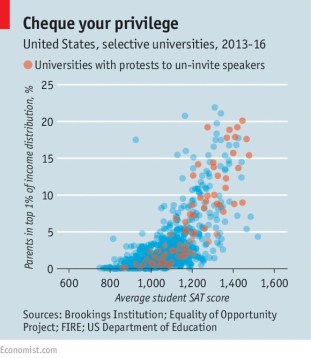
So it seems safe to say that richer students at fancier schools tend to be more likely to stage this sort of shut-up protest than college students in general. Of course, we don’t know for sure in every case, but the tendency is clear.

So what?

It adds a moral dimension to these protests that needs more attention. We’ve been down this road before.

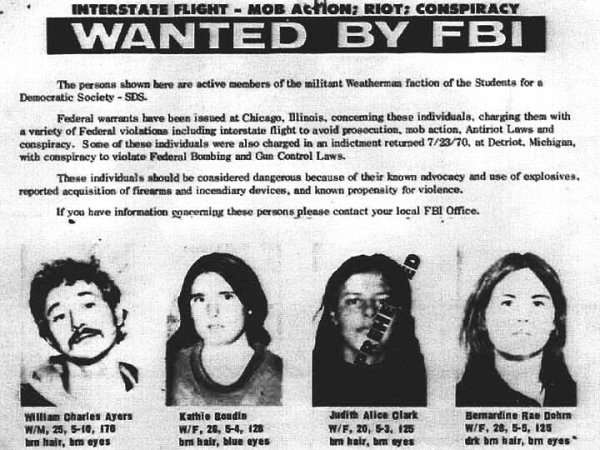
In the 1970s, a group of elite college students broke off from Students for a Democratic Society to form the violent militant group Weather Underground. They didn’t do much, but they wanted to. By the 1970s, the FBI was after them.
weather_wanted

Okay, but did they contribute to the alumni fund?

They weren’t just run-of-the-mill college students. Bill Ayers’ father, for example, was CEO of Commonwealth Edison. Ayers the Elder even has a college named after him at my alma mater. That’s not something most Americans have experienced.

Bernardine Dohrn grew up in the tony Milwaukee suburb Whitefish Bay. (When I taught high school in Milwaukee, the kids jokingly referred to it as “White Folks’ Bay.” Ha.) She graduated from the super-elite University of Chicago. Clark also attended the University of Chicago. Boudin’s father was a high-powered New York lawyer and she went to Bryn Mawr College.

Their elite backgrounds and college experiences mattered. Weather rhetoric was flush with talk about their privileged status and the need for white elites to act violently.

In 1970, for example, Dohrn issued the Weather Underground’s first “communication,” a “DECLARATION OF A STATE OF WAR.” Rich white kids, Dohrn explained, had a “strategic position behind enemy lines.” They had a chance to strike from inside the belly of the beast. And they had a moral duty to act violently in support of world-wide anti-American revolutionary movements. It was time, Dohrn wrote, for rich white kids to prove that they were not part of the problem, they were part of the violent solution. As she put it,

The parents of “privileged” kids have been saying for years that the revolution was a game for us. But the war and the racism of this society show that it is too fucked-up. We will never live peaceably under this system.

Again…so what? What does this prove?

It helps us understand college protests that don’t seem to make common sense. Why would a group of college students assault a professor to protest against racism? Why would they react so ferociously to a seemingly innocuous comment about Halloween costumes?

Because—at least in large part—students from wealthy families at elite colleges are in a peculiar pickle. If they are at all interested in moral questions, they find themselves in a tremendously compromised moral position. They are the beneficiaries of The System. They are the ones who profit from America’s imbalanced racial and economic hierarchy. They enjoy their cushy lifestyles and glittering future prospects only because they were given an enormously unfair head start in life.

If you care at all about social justice, that’s a heavy burden to bear. One way to handle the strain is to go to extreme lengths to signal your rejection of The System. Though protests at fancy colleges may seem strange to the rest of us, they make sense if we see them as demonstrations of rejection, as proof of position. In other words, some students at elite colleges—at least the ones who do the reading—are desperate to demonstrate that they are not happy with racism, sexism, and class privilege. They need to show everyone that they are not lapdogs of the exploiters. Their protests are not only about changing policies, but about proving something about themselves. And those sorts of protests will necessarily swing toward extreme actions.

In the end, we will only scratch our heads if we try to figure out why liberal students insist on illiberal policies in terms of day-to-day political strategy. Instead, we need to see these protests as shouts of separation, desperate and ultimately ill-starred attempts to prove that students from the 1% are standing with the rest of us.
Word Up

Wowzers. I just came across a doozy.

Like a lot of nerdy types, I like to find weird words. This morning, I hit one that was absolutely new to me.

I’m re-reading Brendan Pietsch’s terrific 2015 book Dispensational Modernism. In it, Pietsch makes a powerful argument that the ways early fundamentalist thinkers crafted their theology was not old at all, but profoundly new.

I’ve read it before, but now that I’m revising and polishing my Fundamentalist U manuscript, I want to walk through his book one more time to see if I need to chuck, polish, and/or revise my argument.

And there it was! Smack-dab in the middle of Pietsch’s description of the roots of the Niagara Bible Conferences on page 46:

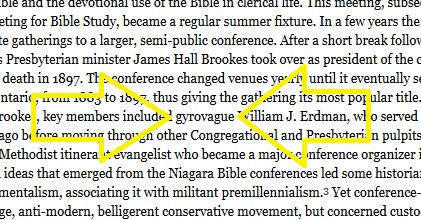
Gyrovague

“Gyrovague”…! How bout it, SAGLRROILYBYGTH? Without looking it up, can anyone offer a definition?…a guess?

I couldn’t.

Spaced Out

What can I say? I’m just a two-space guy, I guess. My recent editing work, though, has gotten me into a new habit. I’m not sure yet if I like it or not.

As SAGLRROILYBYGTH are aware, I’m putting the finishing touches these days on my new book manuscript. That means polishing, editing, talking to other nerds, and revising, revising, revising. Among my editorial tasks has been an odd-feeling switch at the end of every sentence. Instead of following every sentence with two spaces—the way God intended—I’ve been following the stylebook and changing it to only one.

In recent days, I’ve tried it out in these pages, too. Do you like it?

I know, I know, it’s a lot to take in all at once. For me, there’s something pleasant about the one-space approach. Sentences seem huddled comfortably together; punctuation marks and capital letters don’t feel so starkly divided.

Just like every issue in these pages, I’m sure this question will raise hackles on both sides. Are there any other two-space dinosaurs left out there? Or has all of America made the switch?

Florida Christians Speak Up for Satan

Have you seen them? Conservative religious folks these days like to push new school laws that would protect students’ rights to be religious in public schools. And it has led to some pretty odd bedfellows.

These laws, often called Religious Viewpoint Antidiscrimination Acts, generally insist that students can’t be stopped from expressing their religious ideas in class assignments and school activities. Several states have passed or considered similar bills.

No one disagrees that students in public schools have every right to be religious. They can pray, wear religious symbols, and join religious clubs. These bills want to take those rights one step further. If cheerleaders in Texas want to hold up Bible-based placards, for example, these laws would protect their rights to do that. If valedictorians in Tennessee want to lead a prayer at graduation, these laws say that’s okay.

On my recent trip to sunny Gainesville, Florida, some of the edu-gators (ha) were talking about a similar new bill in Florida. The state Senate just approved it, and the House will be voting next week.

Opponents are dismayed. One high-school biology teacher worried that this bill would smash any protections against religious preaching in public schools. “Does this mean,” he asked,

That a teacher or school personnel can then talk about stuff like the age of the Earth and evolution from a religious perspective, and if someone was to try to counsel them not to do that, would that be discrimination against the teacher?

Americans United for Separation of Church and State shared similar worries.  As they argued,

A student, for example, could use every assignment that includes a class presentation as an opportunity to convince any non-believers in the class that they need to accept Jesus to achieve salvation. Alternatively, students in science classes could try to turn every class discussion into a debate about evolution vs. creationism.

Supporters of Florida’s bill put it in a different light. Senate sponsor Dennis Baxley said his bill “protects everybody.” He was especially concerned about students such as Erin Shead.  As SAGLRROILYBYGTH* may recall, ten-year-old Erin was asked to write about her hero. She picked God. Her teacher asked her to pick someone else.

In Florida, and around the country, conservative Christians are pushing these types of laws in order to clarify Erin’s right to admire God in class. But the Florida debate is producing some weird rhetoric. The selling point of these bills—at least one of them—is that they are not meant to push Christianity, but rather to protect students’ rights to practice any religion.

And one Florida activist isn’t shy about spelling out what that means. Pam Olsen of the Florida Prayer Network told Florida lawmakers that the bill wasn’t just a Christian power play. Everyone, she insisted, would be protected. As she put it,

That means Christian, it means Muslim, it means Jewish, it means the Satanic people. Because that is a religion now.

Okay, so, hrmmmmm…I can’t help but wonder what would happen if a group of Satanists really did speak out in favor of this law. Or if a group of Satanist students started a “prayer circle” at their local Florida public school.

Would the Florida Prayer Network support them?

*Sophisticated and Good-Looking Regular Readers of I Love You but You’re Going to Hell, of course.


I Love You but You Didn’t Do the Reading

Stories that swirled by our editorial desk this week that might be of interest to SAGLRROILYBYGTH:

How can schools save America?  A conservative case for Head Start.

READING

Words, words, words…

Forget about fundamentalism for a second.  Is Liberty University just a good ol-fashioned scam?  Kevin Carey makes the case in the New York Times.

What happens when Ivy Leaguers hang out with the Bible-college crowd?  Jonathan Zimmerman describes the results.

Have religious conservatives really become persecuted minorities?  A review of Nelson Tebbe’s new book, Religious Freedom in an Egalitarian Age.

Was Trump University just another higher-ed scam after all?  Check out the lawsuit settlement deal.

It’s Football Season!

What do football and tattoos have to do with evolution?  We’ll find out tomorrow.  David Sloan Wilson’s Evolution Studies Program at Binghamton University continues its tradition of bringing a cavalcade of experts and celebrities to our humble burg.

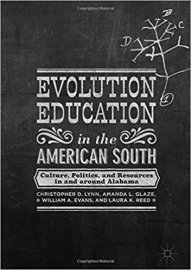
evolution education in the american south

Required reading

The roster of nerds and wonks has been impressive.  For those of us obsessed with creation/evolution debates, Evos has hosted heroes such as Dan Kahan of the Cultural Cognition Project and Michael Berkman of Penn State, among many others.

What’s on tap this week?  All the way from sunny Tuscaloosa, Alabama, Professor Christopher Lynn will be talking about his work in evolutionary anthropology. Professor Lynn just published a new edited book that SAGLRROILYBYGTH might be interested in, Evolution Education in the American South.

Tomorrow afternoon, Professor Lynn will share his work, in a talk titled “Tattooing Commitment, Quality, and Football in Southeastern North America.”  As Lynn describes it,

Tattooing appears to be a cultural and psychological pattern of behavior rooted in Darwinian processes. It is the result of an evolved tendency to manipulate human bodies in meaningful ways with distinctive benefits. Tattooing can signal group affiliation or commitment through using the body as a human canvas. Tattooing also provides cues about biological quality because it is an injury to the body, and the healing process on the surface of the skin is visible to everyone and impossible to fake. These factors make tattoos costly honest signals, consistent with evolutionary models in multiple species, including humans. I review the functions of tattooing from an evolutionary perspective, outline historic and prehistoric evidence from the North American Southeast, analyze biological implications, and discuss contemporary functions of tattooing among college football fans as a signal of commitment and quality.

For those in the Binghamton area, the talk is free and open to the public.  It will take place on the scenic campus of Binghamton University, in room G-008 in the basement of Academic Building A.  Monday, April 3rd, starting at 5:15 PM.

Hope to see you there!

The Tough Questions

How do we start?  What about students? …and isn’t it cheating to sneak in a definition after I say I’m not going to impose a definition?

floridagators3

They’ll bite!

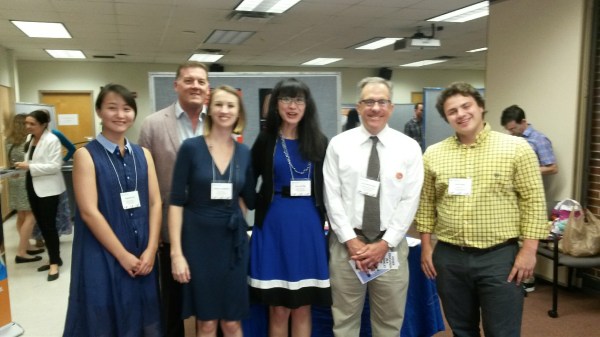
Those were some of the smart and tough questions leveled at your humble editor last night after my talk at the University of Florida’s College of Education research symposium.  The edu-Gators (ha) were a wonderful group of scholars to talk with.  I got a chance to hear about their work in schools and archives, then I got to run my mouth a little bit about the culture-war questions that keep me up at night.

The theme of the symposium was “Strengthening Dialogue through Diverse Perspectives.”  Accordingly, I targeted my talk at the difficult challenge of talking to people with whom we really disagree.  I shared my story about dealing with a conservative mom who didn’t like the way I was teaching.  Then I told some of the stories from the history of educational conservative activism from my recent research.

University of Florida

The UF crew…

What has defined “conservative” activism in school and education?  Even though there isn’t a single, all-inclusive simple definition of conservatism—any more than there is one for “progressivism” or “democracy”—we can identify themes that have animated conservative activists.  Conservatives have fought for ideas such as order, tradition, capitalism, and morality.  They have insisted that schools must be first and foremost places in which students learn useful information and have their religion and patriotic ideals reinforced.

Underlying those explicit goals, however, conservatives have also shared some unspoken assumptions about school and culture.  Time and time again, we hear conservatives lamenting the fact that they have been locked out of the real decisions about schooling.  Distant experts—often from elite colleges and New York City—have dictated the content of schools, conservatives have believed.  And those experts have been not just mistaken, but dangerously mistaken.  The types of schooling associated with progressive education have been both disastrously ineffective and duplicitously subversive, conservatives have believed.

That was my pitch, anyway.  And the audience was wonderful.  They poked the argument (politely!) to see if it would really hold.  One student asked a tough question: Given all this history, all this poisoning of our dialogue between conservatives, progressives, and other, how do we start?  A second student followed up with another humdinger: I talked about conservative parents and school board members and leaders, but what about students?  What should a teacher do if she finds herself confronted with a student who has a totally different vision of what good education should look like?  Last but not least, a sharp-eyed ed professor wondered if I wasn’t doing exactly what I promised I wouldn’t do: Impose a definition on “conservatism” by offering a list of defining ideas and attitudes.

How did I handle them?

Well, SAGLRROILYBYGTH, your humble editor did his best, but those are really tough ones.  In general, I think the way to begin conversations with people with whom we have very strong disagreements is to start by looking at ourselves.  Are we making assumptions about that person based on things he or she isn’t actually saying?  Are we seeing them through our own distorted culture-war lenses?

And if students in class disagree with us about these sorts of culture-war principles, we need to remember first and foremost that they are our students.  If a student in my class, for example, is super pro-Trump, I want her to know first and foremost that I welcome her in my class and she is a member of our learning community.  It gets tricky, though, if a student wants to exclude other students based on these sorts of religious and ideological beliefs.

Last but certainly not least, I don’t think it’s unfair to offer themes and ideas that have defined conservatism over the years.  I’d never want to impose those definitions on historical actors, Procrustes-style.  But once we take the time to listen and learn to our subjects, we can and should suggest some things that they have had in common.

On to breakfast with graduate students and a chance to participate in Dr. Terzian’s schools, society and culture colloquium.  Bring on the coffee!

Hello, Florida!

Good morning, SAGLRROILYBYGTH!

Wish me luck–I’m on my way to the Sunshine State.  Thanks to my colleague Sevan Terzian, I’ll be giving a keynote talk at the University of Florida’s research symposium this evening.  I can’t wait.

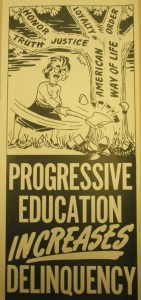
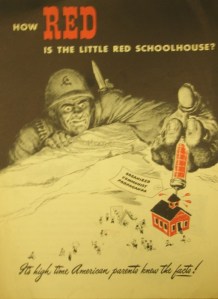
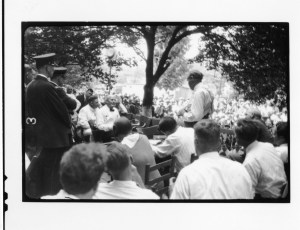
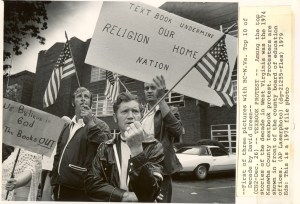
What will I be talking about?  Well, you’ll have to wait until after the talk for a synopsis, but I can tell you that I’ll be using these images from my research into twentieth-century educational conservatism.

Allen Zoll’s attack on progressive education, from Pasadena, 1950

The American Legion warns of treasonous textbooks, 1940

Watch out for communism in your local school, c. 1951

Scopes Trial, 1925

Kanawha County’s protesters, 1974

What We Don’t Know about School Is Killing Us

If someone is running toward a cliff, what should you do?  You might grab them.  You might yell at them to stop.  If you had time, you might build a wall to block them from certain death.  What would a school do?  Make available a brochure clearly describing the dangers of falling off cliffs.

It’s a stupid analogy and I’m sorry about that.  But it is not too far from the truth about school and the dunderheaded way we Americans tend to think about the relationship between school and education.  People tend to think school is a place where students line up and receive necessary information.  They think that making information mandatory in school means that they have successfully educated the populace.  That’s not really how it works and our society’s ignorance about it is literally a life-or-death problem.

Here’s the latest example: According to Politico, several states have passed new laws mandating education in public schools about the dangers of opioid addiction.  No one doubts the dangers of such drugs.  Nor do we dispute the notion that government can and should take action to help solve the problem.  We don’t even argue that schools can’t play a central role.

Too often, though, even in these sorts of life-and-death situations, government officials think they can solve problems by simply cramming new mandatory topics into school curriculums.  They think that by mandating school-based classes about opioid addiction, they have successfully educated children about it.

Consider the efforts in Michigan, for example.  Like people in a lot of states, Michiganders are rightly concerned with the dangers of opioid addiction, especially among young people.  State Senator Tonya Schuitmaker has proposed a bill to introduce information about opioids into the state’s required health curriculum.  As she puts it, “Our youth, they need to become educated upon the addictive nature of opioids.”

Fair enough.  But Senator Schuitmaker and others like her seem to be stubbornly resistant to the depressing truth.  Putting information into mandatory school curriculums does not equal education.  Just passing a law requiring schools to deliver certain information does not mean that young people have been educated about it.

That’s just not how it works.

The evidence is obvious and irrefutable for anyone who bothers to look.

Consider the case from the world of sex education.  As Jonathan Zimmerman argued in his terrific recent book Too Hot to Handle, the AIDS crisis in the 1980s prompted a uniquely American response.  In Scandinavia, governments embarked on a broad program to encourage condom usage and discourage risky sexual behaviors.  In the United States, in contrast, governments mandated information about HIV be included in school health classes. zimmerman too hot to handle

It didn’t work.  And it won’t, because in spite of what so many of us think, school curriculums are not the same thing as education.  Where do people learn about sex?  Not—NOT—from their fifth-grade Gym teacher.  No matter how comprehensive a sex-education curriculum is, no matter how carefully a state legislature insists that sex-ed classes must include true information about HIV, most young people will learn far more about sex and HIV from other sources.

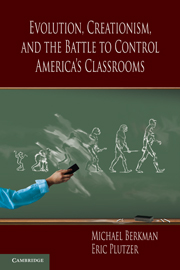
We could give more examples if we needed to.  As political scientists Michael Berkman and Eric Plutzer found when it came to teaching evolution in public schools, mandating evolution in state curriculums was not the most helpful factor.  Rather, teachers tended to teach what their community believed, no matter what the state-mandated curriculum included.

Evolution Creationism Berkman Plutzer

The same is true with the equally desperate problem of opioid addiction.  Simply cramming mandatory information about the dangers of opioids into health curriculums will not do anything to address the real problem.  It is the equivalent to the stupid analogy I started with: printing up brochures about the dangers of cliffs when someone is running straight toward one.  Mandating that those brochures be made available to every student in every public school.

This does not mean that schools cannot play a vital role in real education about the dangers of opioids.  Consider the much smarter example of West Virginia.  In that state, school-reform efforts take a much wiser view.  How are Mountaineer schools responding to the dangers of opioid abuse?  For one thing, they are paying for programs that will educate more drug counselors and encourage them to stay and work in West Virginia.  They are funding programs that help addicts deal with the full complexity of their addictions.  They are even rehabbing old schools and turning them into comprehensive treatment centers.

Such programs are much more expensive than simply mandating “coverage” of opioid information in public-school health classes.  But unlike fast-and-dirty curricular solutions, such programs actually stand a chance of helping addicts and potential addicts.

When it comes to life-and-death problems such as opioid addiction, simply insisting that schools add new curriculum is a cowardly and ineffective approach.  It only serves to let lawmakers brag that they have addressed the issue, when in fact they have done nothing at all.

I Love You but You Didn’t Do the Reading

News and views from around the interwebs that SAGLRRIOLYBYGTH might find interesting:

How can we make government ed policy more sensible?  Two Ohio legislators want to require their governor to spend time in schools.

reading pigeon

Words, words, words…

Are you against corporal punishment in schools?  Does that make you a Satanist?

What is the deal with all these campus protests?  Do college students really hate free speech?  Luther Spoehr’s review essay at HNN of four recent books offers plenty of reading options for SAGLRROILYBYGTH.

Is Trump’s signature ed policy any good?  The data debate continues: Studies confirm that charters and vouchers are terrific and terrible.

Intrigued by all the college students protesting against campus speakers?  What about their faculty supporters?  The Atlantic takes a look at Wellesley professors speaking out against an invited speaker.

How would your campus react? One anti-racist college group posted a bunch of fake racist flyers.

Can Christian colleges fire unmarried pregnant instructors?  In this case, no.  In other cases, definitely probably maybe yes.

Inside the Claremont Review of Books: Is it really the “academic home of Trumpism”?