I Love You but You Didn’t Do the Reading

Another week flown by–here are a couple of the ILYBYGTH-themed stories from around the interwebs that caught our attention this week:

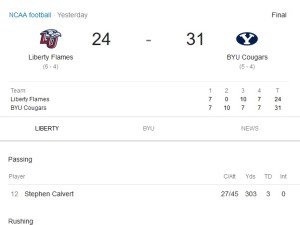
Liberty v. BYU: What does it mean? At DN.

It’s unclear exactly why football has become the sport most linked with Christianity, but it could be their shared qualities.

Its worshippers — ahem, fans — congregate weekly in grand structures adorned with posters of past glory, reminiscent of bibilical scenes depicted on stained-glass windows; games begin with a procession onto the field, often accompanied by rituals — from Miami’s fire extinguisher fog to Clemson’s run down the hill; and on the green 100-yard altar, players sacrifice their bodies, push themselves through pain and exhaustion, learning important lessons of sacrifice for a better good.

Will Democrats survive as the “party of the rich”? At FT.

The richest 15 percent of House districts are now represented by 56 Democrats and just 10 Republicans. In 2018, voters in America’s wealthiest counties, cities, and neighborhoods made a decisive turn toward the Democrats, and now America’s traditional party of the left—whether it admits it or not—is the party of the rich.

How much stuff do teachers buy for their classrooms? It’s a lot. Teacher responses at WaPo.

Why? Because every child NEEDS these items and because we are a Title 1 school; many cannot afford the necessities. Kids need to have equal supplies; including food. I don’t regret spending this money as I can teach my students when they have all the tools needed to succeed.

Heading for a breakdown? The history of civil war in America at AC.

a party system ending without a consensual replacement means that longstanding customs and norms that undergird constitutional relationships are quietly pared away. In other words, well before legal confrontations over legitimacy, the erosion of informal rules sets up adjudicating crises over formal rules. This was a feature of the final deterioration in Congress before 1860, marked by brawls on the floor of the House and a bloody assault in the Senate.

sumner-beating.jpg

Could it get this bad again…?

U Washington’s College Republicans booted out of the national organization for “hurtful and inappropriate conduct,” at CHE.

What can happen when a young-earth creationist doubts his faith? At BL.

I asked hard questions about what I believed about science, the world, and the Bible. I prayed for wisdom, battled doubts, and struggled with painful internal conflict. On one occasion, I asked myself what I would do if, to remain a Christian, I had to choose between YEC and my growing commitment to evolution. I then experienced a deep discomfort when I didn’t have an immediate answer.

What happens when a conservative Christian church tries to take over a liberal college town? At RNS.

Led by controversial pastor Douglas Wilson, Christ Church of Moscow has for years been planning a spiritual takeover of the town — transforming both its politics and its soul. Wilson is gentle and soft-spoken when not behind the pulpit but will go head-to-head with anyone in a debate.
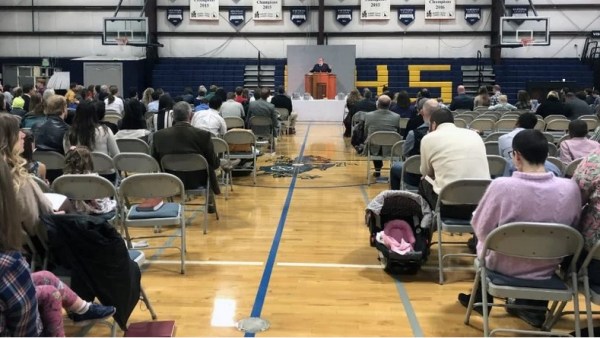
wilson logos

Town/church tensions?

Phillip Johnson, architect of intelligent-design movement, dies at 79. Obit at CT.

Johnson’s landmark book, Darwin on Trial, argued that Darwinian evolution didn’t have real evidence or good arguments, but was instead “another kind of fundamentalism.” When it was published in 1991, Darwin on Trial galvanized a group of Christians who opposed the theory of evolution, but also wanted to distance themselves from Bible-based creationism, which could not be taught in public schools.

There are “evangelicals,” and there are “evangelicals.” On the difference between “cosmopolitan” and “populist” white evangelicals at AB.

Do you hang out at an InterVarsity chapter at Harvard? Do your friends watch Huckabee on FOX News? Do you study sociology at Wheaton College? . . . Each of these persons can make an authentic claim to evangelical identity. But if you were only hanging out in the faculty lounge at an evangelical college or with humanitarians at an evangelical NGO in Phnom Penh, there’s a good chance you were shocked by the 81 percent. The election exposed the many evangelicalisms that have been there all along.

The New Deal as Social Gospel, at R&P.

R&P: Can the New Deal be understood as the political expression of Roosevelt’s faith?

JB: That’s very well put! He wasn’t alone in shaping it, of course. Harry Hopkins, who served as Roosevelt’s right-hand man throughout the administration, was a committed Social Gospel Methodist from Iowa. Eleanor Roosevelt had worked in Social Gospel programs following her return from boarding school abroad. And Frances Perkins, who served as FDR’s Secretary of the Treasury for all of his 13 years in office, was very devout and theologically informed, and she was the architect of Social Security, among other programs. She very consciously pursued her political work as an expression of her Social Gospel commitments.

FDR

When Jesus hung out on the Left…

Chicago’s teachers demanded smaller class sizes. Will that help students? A review at TC.

The results were clear: students in the smaller classes performed significantly better on math and reading tests, with a gain of 4 percentile points or more. The benefits of smaller classes were even larger in schools with low-income students.

More recent research indicates that the benefits of being taught in smaller classes persist long after students have moved on to the next grade. They become more likely to complete high school and go to college and less likely to end up becoming parents in their teens, to name some of the most compelling examples.

Queen Betsy’s speech about MI schools—fact-checked at DFP.

DeVos: “ESSA invites each state to determine their standards and develop innovative assessments that focus on achievement and excellence. States can also set aside a certain percentage of federal taxpayer funding to use in new and creative ways. There’s a student-centered funding pilot program for dollars to support students — not buildings. I like to picture kids with backpacks representing funding for their education following them wherever they go to learn.”

This is a school choice absolutist mantra, and frankly, I just don’t get it. School choice absolutists bemoan the dollars spent on buildings and administration, and sometimes on teachers, saying money should be spent on children instead. But kids learn are taught by teachers, and generally indoors. To repair Detroit’s dilapidated school buildings would cost about $500 million.

Will Chief Justice John Roberts help Trump survive impeachment? At Slate.

There’s every reason to think that Roberts—conservative, Republican, and lifelong believer in expansive executive power—is not going to want history to remember him as the guy who emptied the ashtrays of a carnival barker president.

Did teacher power put a Democrat in the KY governor’s mansion? At CHH.

Beshear’s running mate Jacqueline Coleman introduced the governor-elect shortly after all precincts reported Beshear led the race by 4,658 votes.

“It’s official,” Coleman said. “The war on public education is over.”

In his victory speech Beshear said public education will be his top priority, and a pension is a “promise.”

“To our educators, this is your victory,” Beshear said. “From now on, the doors of your state’s capitol will always be open.”

Wisconsin considers a mandatory-cursive bill for its schools, at WSJ.

the bill’s chief Senate sponsor, Sen. Luther Olsen, R-Ripon, submitted written testimony in a cursive font that he composed on a computer.

Bart Simpson on cursive: “Well, I know hell, damn, and fart.”

Can Big-Time Sports Do It Again?

[Editor’s Note: Well, they went down in flames, but Liberty football gave it a good go yesterday against Brigham Young University. As commentators scrambled to explain the cultural significance of this gridiron contest, I thought it might be worth rerunning this piece from last year. As Liberty U climbs the peaks of college respectability, it will find itself paying a higher and higher price for its stubborn refusal to accept other parts mainstream higher-ed normalcy.  We’ve seen that Liberty faces some unique pressure in its quest to retain top faculty. Will its dream to become the “Notre Dame” of the evangelical world lead it to a different sort of conformist pressure?] liberty v byu

I never thought I’d see it, but here it is. Following Brigham Young University’s tentative opening to LGBTQ+ students and issues, could the same spark change things in evangelical higher ed? After all, schools like Liberty have long yearned to follow the BYU path in one crucial area.

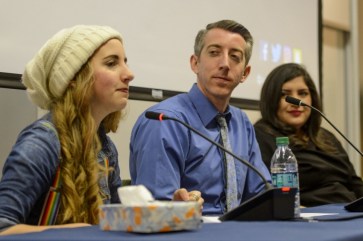
BYU LGBTQ

Here’s what we know: Liberty University in particular has always jonesed for recognition as a leading university, and sports has always been one of its preferred qualifications. As President Pierre Guillermin put it awkwardly in 1982, Liberty wanted to be “the Notre Dame of the Christian world athletically and the Harvard of the Christian world academically.”

Of course, the Catholic leaders of Notre Dame might say that they already ARE the Notre Dame of the Christian world athletically, but let’s move on. The central point is that leaders of evangelical higher education have always wanted recognition as more than just niche colleges; they have always wanted to reclaim their role as the leaders of American higher education overall.

When Liberty brilliantly and ruthlessly capitalized on the possibilities of online education, current president Jerry Falwell Jr. did not invest the money back into Liberty’s online program. No, Falwell tried to make the old Liberty dream come true. He poured money into traditional campus amenities, especially including Liberty’s athletic program.

This year, the investment paid off. Liberty beat top-ranked Baylor in football, triggering a joyous campus-wide freak-out. Which leads us to our question: Will the dream of big-time sports force Liberty to open itself to friendlier LGBTQ+ policies?

After all, that’s what seems to be happening at Brigham Young. As Chronicle of Higher Ed reports this morning, BYU’s recent tentative opening to LGBTQ+ students was sparked by BYU’s lust for athletic recognition.

As CHE recounts,

In 2016, the Big 12 Conference announced it was officially considering expansion. BYU’s administrators and athletic director jumped at the chance to join. But publicly vying to join the conference brought on national criticism of the university, which observers said did not uphold the NCAA’s stated support of inclusivity because of its treatment of LGBTQ students.

After the university’s effort to join the Big 12 failed, Tom Holmoe, the athletic director, suggested that pushback from LGBTQ advocate groups stood in its way. In response, BYU requested an invitation to the NCAA’s annual Common Ground conference, an effort begun in 2014 to provide a place where leaders and students at religious institutions can talk about LGBTQ issues and “begin exploring how to bridge these gaps and find common ground.”

Might Liberty follow a similar path?

Generations of Christian pleading for equality and recognition have scored only minor victories. As I noted in my recent book and in these pages, administrators at evangelical colleges—even the more liberal schools—are under intense pressure not to change their rules about same-sex issues.

Perhaps it will take a different sort of pressure from a different direction to really change things in evangelical higher education.

The Curse of the Cursive Curse

You can’t say the guy doesn’t have a sense of irony. Apparently cursive is back on the table for Wisconsin schools, and the legislator who introduced the bill–wait for it–wrote it out in a cursive font on his computer.

Cursive-loving educational conservatism is nothing new. SAGLRROILYBYGTH will remember similar mandatory-cursive efforts in Indiana in 2016. They might recall a similar move in Maine from earlier this year.

The drive to keep cursive alive has a longer tradition as well. As I found in the research for my book about twentieth-century educational conservatism, I kept coming across conservative complaints that schools were abandoning the traditional subject of handwriting, often called “penmanship.”

In the pages of the Pasadena Independent, for example, editor T.G. Wood complained in 1950 that “progressive” education fads had led to less learning of traditional subjects.  Parents were increasingly starting to wonder, Wood wrote acerbically,

why little Johnny puts two and three together and comes up with nine, why his penmanship shows little or no improvement, and why his reading is poor or backward.

An angry Pasadena reader agreed.  Back in the old days, one letter-writer explained, Pasadena’s schools had benefited from the work of teacher Albert P. Meub, “a penman of national note.”  Meub had tried to keep the subject of penmanship in the schools, the letter-writer complained, but to no avail.  The rush for progressivism in schools had led to the willy-nilly abandonment of traditional subjects such as penmanship.

Maybe it’s understandable that parents would want to take advantage of a nationally noted penman. Is that what’s going on in Wisconsin? The bill’s sponsor, Jeremy Thiesfeldt of Fond du Lac, was a little coy about his intentions. As he told his colleagues, he wasn’t pushing the bill for conservative reasons. According to the Wisconsin State Journal, Thiesfeldt

said studies have shown writing in cursive fosters neurological connections in students’ brains, improves retention and can help dyslexic children read because cursive letters are more distinctive than printed letters.

“This bill isn’t just about nostalgia or being able to read grandmas’ letters and primary source historical documents,” Thiesfeldt said.

I wonder if there’s more going on in Madison, or if there really are reformers who want cursive back in school for its own sake.

If it were up to you, would you mandate cursive for public schools? I don’t think it’s worth it. But then again, my grandma never wrote me any letters.

–Thanks to AP for the tip!

What Do Radical Creationists Really Care About?

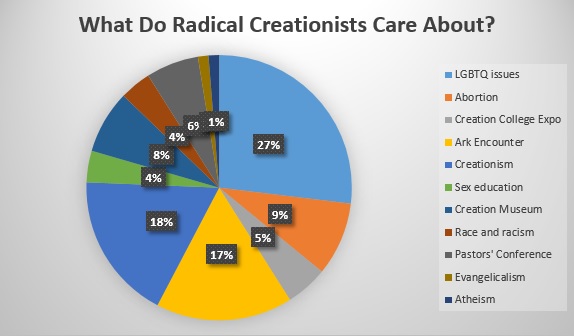
Sure, creationists care about creationism. But as SAGLRROILYBYGTH know well, radical creationists these days tend to talk a lot more about other culture-war issues. (What counts as “radical” creationism? Check out the classification system I’m using in the new book.)

what do radical creationists care about

Ken Ham’s tweets categorized: October 4, 2019–November 4, 2019.

This morning, I got curious about the relative emphases different issues got by radical creationists, so I did an unscientific little test. I perused the tweets of young-earth creationist leader Ken Ham of Answers In Genesis for the past month. I noted the top issue in each of Ham’s threads.

In some cases, issues could have been counted in different ways, but I limited each thread to what I thought was presented as the most important issue. For example, in recent tweets about the AIG Pastors’ Conference, Ham tweeted about both the topic of the conference–racism–and the proceedings of the conference. I placed each tweet in only one category, based on my reading of what Ham was presenting as the most important issue.

The results are not very surprising to people who follow the goings-on at Answers In Genesis. Sure, AIG cares about promoting its flashy Ark Encounter and Creation Museum. But by far the most important issue–at least in terms of tweet volume–is the threat posed by LGBTQ rights. Just over a quarter of Ham’s tweets warn followers of the dangers of Drag Queen Story Hour, same-sex marriage, and transgender equality.

So what? It’s not news, really, that Ken Ham should primarily be understood as a fundamentalist minister who draws a culture-war line based on young-earth creationism, rather than as a science activist who happens to have conservative religious beliefs. This tweet-chart only demonstrates the way Ham’s focus these days is anti-LGBTQ first, creationism second.

I Love You but You Didn’t Do the Reading

You’d think no one would do anything else while the History of Education Society was meeting in Columbus, Ohio, but there were still some headlines this past week:

The Chicago teachers’ strike is over, after 11 days. Was it worth it? At Vox.

The district also committed to spending $35 million to shrink oversized classrooms and to prioritize schools that serve the most at-risk students. The deal includes a 16 percent pay raise for teachers over five years, and a remarkable 40 percent raise for teaching assistants, clerks, and other lower-paid workers. The new, five-year contract will also boost investment per pupil and reduce the number of students in each class.

Teachers had wanted more, though. They also wanted more affordable housing in the city for students and teachers. That’s something no teachers union has demanded in recent contract negotiations.

chicago teachers strike againWhat happens to public schools when there are fewer students? The view from MI:
Fewer students mean less funding. But schools costs don’t drop in lockstep with enrollment declines, as school officials point out.

Another evangelical college shuts its doors, at WCPO.

[Cincinnati Christian University] did not “operate with integrity in its financial, academic, personnel and auxiliary functions” or establish processes governing fair, ethical behavior among its employees.

Didja miss the headline that Queen Betsy was held in contempt of court? Two historians explain why at WaPo.

Last week’s ruling forced the department to admit wrongdoing. But its actions were not an accident or oversight — abetting the exploitation of our nation’s most vulnerable students goes to the very core of DeVos’s vision for education.

How Trump’s Bible teacher became a shadow diplomat, at NYT.

[Ralph] Drollinger himself is aware that some foreign governments’ interests in his studies might not be entirely biblical. “I can get these guys to help me,” he told me a few weeks earlier, speaking of his allies in Washington. “And everybody overseas wants to know someone in D.C.”

Why is Liberty U’s star professor leaving? At NA.

Karen Swallow Prior, a longtime English professor at Liberty University and a high-profile voice in the evangelical movement, will leave the school next year because of mounting frustrations over what she said is an administration-led campaign toward standardization that limits academic independence.

“For me, teaching is an art and I need the freedom to express that art,” Prior, who has accepted a position at Southeastern Baptist Theological Seminary in Wake Forest, North Carolina, said in an interview this week.

“Trump cult?” Not so fast… at R&P.

Scholars of new religious movements have shown that the mythology of cultic mind-control is more rhetoric than reality. It is easy to understand why critics of the president dismiss him as a cult leader, and his political followers as brainwashed. But it says a lot more about the power of the language than it does the president himself.

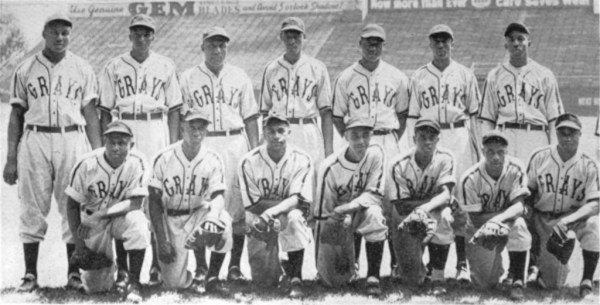
Sports page: Congrats to the Nats, but please stop saying a Washington team hasn’t played in a World Series since 1933. The Negro-League Washington Homestead Grays played in the 1948 World Series, at SUSIH. HT: PS.

BH_Grays-1024x521Jill Lepore’s This Americaresurrecting the tradition of liberal history, at The Nation.

Driving the demagogues out of the Barnes & Noble will require more than just taking back the nation as an object of serious historical inquiry. Lepore also sees a need to show that object in a more flattering light. Whereas many of her colleagues narrate US history as a tragedy and a chronicle of oppression, Lepore sets out to capture a fuller range of feeling. Her version features “a great deal of anguish,” she admits, but it also contains “decency and hope,” “prosperity and ambition,” “invention and beauty.” Lepore’s relatively upbeat tone is more than a sensibility; it’s a politics. The Bill O’Reillys of the bookshelf, she insists in This America, have not only taken control of the national story but also claimed for themselves the mantle of patriotism. Lepore wants to take it back for liberals. . . . In the end, she argues, it is liberals, not radicals, who can deliver progressive change. They do so using the most powerful tool within reach: the nation.

The Really Scary Thing about Queen Betsy

I know it’s too late for Halloween, but here’s something scary to think about: As Jack Schneider argued this week at the History of Education Society annual meeting, the reason Betsy DeVos flubs so many basic questions in interviews is not because she is dim. It is not because she is a tony socialite out of her depth, or as Stephen Colbert described her, “one of the garden-party guests from Get Out.” No, the reason Queen Betsy makes so many prominent mistakes is far more frightening for people who care about public education.

Given recent revelations from Trump’s White House, it’s easy to forget what used to seem shocking, but back in 2018 Queen Betsy astounded America with her vast ignorance about educational questions. A lot of commentators concluded that she embodied ineptitude.

Exhibit A was her interview with Lesley Stahl on 60 Minutes:

DEVOS: Well, in places where there have been — where there is — a lot of choice that’s been introduced — Florida, for example, the — studies show that when there’s a large number of students that opt to go to a different school or different schools, the traditional public schools actually — the results get better, as well.

STAHL: Now, has that happened in Michigan? We’re in Michigan. This is your home state.

DeVOS: Michi — Yes, well, there’s lots of great options and choices for students here.

STAHL: Have the public schools in Michigan gotten better?

DEVOS: I don’t know. Overall, I — I can’t say overall that they have all gotten better.

STAHL: The whole state is not doing well.

DEVOS: Well, there are certainly lots of pockets where this — the students are doing well and —

As Chris Cillizza commented for the Washington Post at the time,

If I was a boxing referee, I would have stopped this exchange about halfway through. If you are the secretary of education, you have to know you are going to be asked about the effects of school choice — particularly in your home state. So, if you’re going to argue that school choice has made public schools better, you had had better find a whole hell of a lot better spin that “I don’t know.”

As Stephen Colbert put it,

DeVos’s theory is that if you take money away from public schools and give it to charter schools, that will somehow help the public schools. It’s a system called . . . Stupid.

It’s tempting to dismiss Queen Betsy as merely ignorant, but Professor Schneider raised a more frightening prospect in his paper. Namely, Secretary DeVos is unaware of basic ideas about public education BECAUSE SHE DOES NOT CONSIDER THEM RELEVANT TO EDUCATION POLICY. schneider berkshire

The core of Secretary DeVos’s thinking about public education, Prof. Schneider argues, is that it should and can be dismantled. For more, you can now preorder Schneider’s latest book, A Wolf at the Schoolhouse Door.

And that’s the really scary aspect of Sec’y DeVos’s public ignorance about public education. As the leading federal official responsible of education policy, Queen Betsy does not think she needs to know the features of a doomed system. Why study the layout of deck chairs on the Titanic?

What Liberty’s Billions Can’t Buy

I thought it would come from the sports side. But Karen Swallow Prior’s recent decision to leave Liberty University makes me wonder if academics might do the trick instead.

Karen Swallow Prior

It’s not me, it’s you.

First, a little background: SAGLRROILYBYGTH know the unique story of Liberty’s billions. After the school’s online programs became incredibly popular, current President Jerry Falwell Jr. invested in brick-and-mortar campus improvements, football, and basketball.

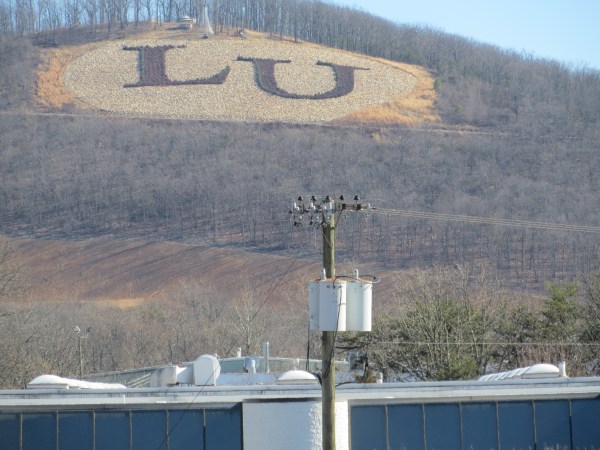
When I conducted research at Liberty for Fundamentalist U, I was agog at the lavish accoutrements. It wasn’t only the all-year snowboarding hill. It wasn’t only the fact that Liberty had purchased a nearby mountain on which to slap its logo. It was also the splendid archive facilities and professional archive staff.

LU sign on mountain

Go tell it on the mountain…

Liberty has also managed to hold on to star professors such Karen Swallow Prior, until now. Professor Prior just announced she is heading to Southeastern Baptist Theological Seminary. Why?

As she told a local newspaper,

“With the rise of Trump, I felt a lot of the values that shaped and formed me were being betrayed by many within evangelicalism. . . . I know a lot of people who voted for Trump and I understand why they did and I get that, but for me it was too much of a compromise.”

Prior said her criticism of Trump has caused tensions on Liberty’s campus and has contributed to her decision to leave the school.

If Liberty can’t hold on to academic talent, it will have squandered its billions. Though it sometimes might not feel like it, students and their families care about a top-notch academic college experience. Even top-ranked sports teams and flashy campus amenities won’t attract students if those students feel like a university is not a “real” college.

Can HBCUs and Fundamentalist U Learn from Each Other?

Is there a common denominator? It is not easy these days to be a small college or university. Both public and private colleges are closing their doors. It seems as if some purpose-built institutions, such as historically Black colleges and universities (HBCUs) and evangelical colleges might be able to learn from one another.

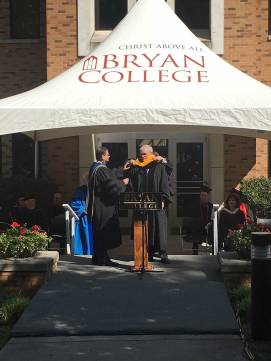
Ken Ham hooded at Bryan

Desperate times at Bryan College

Both are in tight spots. Evangelical colleges like Bryan College in Tennessee, for instance, has slashed tuition in the face of dropping enrollments. And many HBCUs find themselves, in the words of a recent report,

facing existential threats and will need to be transformed, reinvigorated, to ensure that their futures are as vibrant as their pasts.

In addition to the usual financial pressures facing all institutions of higher education, HBCUs and evangelical colleges find themselves losing students due, in part, to broader trends in American culture. Some evangelical college—like Gordon College near Boston—have had a hard time convincing evangelical families to pony up extra money for a uniquely evangelical experience. And some HBCUs find themselves in a new competition for African-American students with historically white universities.

The news is not all bad. Some evangelical institutions—like Trevecca Nazarene in Nashville—have plenty of students. And some HBCUs—like the well-endowed Spelman College—are not on the verge of closing.

spelman

Doing fine…

Moreover, both HBCUs and evangelical colleges can hope for financial fillips by taking advantage of their unique cultural niches. Gordon College, for example, recently attracted a huge donation by emphasizing the school’s cultural conservatism. And HBCUs can hope for more public support, based on the promises of leading Democratic candidates such as Elizabeth Warren.

But both types of schools would be wise to heed the advice of a recent report about HBCUs. As it recommended,

The schools will need to further engage alumni beyond homecoming events and Greek life. It may also be helpful for them to create broader marketing campaigns — to lobby school counselors and state departments of education to better explain the richness of HBCUs — explicitly encouraging students of other races to apply as well.

Similarly, evangelical colleges would be wise to explore possible pools of students who might be interested in their unique type of higher education. Beyond evangelical families, who else might be interested in a college that promises a conservative Christian consensus among its faculty? Conservative Catholics? Conservatives in mainline Protestant churches? International evangelical organizations?

The numbers don’t have to be enormous to make an enormous impact. With yet another evangelical college closing its doors this semester, evangelical leaders will need to do something, fast.

I Love You but You Didn’t Do the Reading

Another big news week here at the offices of ILYBYGTH International! Here are a few of the biggest headlines:

Has public education remained the same for a century? Not really, at WaPo.

The subjects that students studied, the way the day was organized, the size of classes, the kinds of supports young people received — these essential aspects of education were all different.

Devos and trumpQueen Betsy held in contempt of court in student-loan case. At NPR.

the department “erroneously” sent messages to more than 16,000 borrowers to pay up. Some did so voluntarily. Others had their wages garnished or tax refunds seized by the government. Ten different third-party contractors were involved in collecting the loans, and the judge’s opinion notes that the Education Department didn’t do much to make sure they followed the orders, beyond sending a few emails.

It’s rare for a judge to find a Cabinet secretary in contempt of court.

Could Latinx evangelicals decide the 2020 election? At RNS.

“We’re pro-life. We want criminal justice reform. We want educational equity. We want a healthy economy,” [President of the National Latino Evangelical Coalition Gabriel Salguero] told Religion News Service this week, noting that members of the faith group also feel strongly about immigration and foreign policy. “Because we’re not one-issue voters, people think if they come to us with talking points they’re gonna get us — no.”

What is life like at an evangelical college? One alum shares her memories at RA.

“Kind of liberal, isn’t it?” sneered a girl at my church youth group, who would be attending the ultra-conservative Master’s College.

“I don’t think so?” I said, recalling that Westmont didn’t allow drinking, smoking, or overnight guests of the opposite sex. But I secretly wanted her to be right. I hoped that Westmont would help me deal with the panic I continually felt reading the Bible, that it would help me figure out how to be a Democrat, a feminist, and a Baptist.

Top historian reviews new book about evangelicals, at CT.

As for white evangelicals’ enthusiastic embrace of the Republican Party and their overwhelming support for Donald Trump, Kidd views these trends as unfortunate but—like the Scopes Trial of the 1920s—not necessarily representative of evangelicalism as a whole. . . .[but] If evangelical theology transcends racial and political lines in ways that most other religious movements in America can’t match, shouldn’t we see clearer evidence of our racial attitudes and political stances aligning with our theology?

Has America gone too far on school safety? At the Atlantic.

We have students who feel like they’re being treated like potential criminals instead of students. . . . We’ve kind of gone overboard. Not all threats are created equal.

The big Ed news: Senator Warren reveals her K-12 plan. Some highlights:

  • Quadruple federal Title I funding for schools in high-poverty neighborhoods. . . .
  • Fund the Individuals With Disabilities Education Act at the level the federal government originally promised . . .
  • End federal investment in charter school expansion, ban for-profit charter schools and ensure existing charter schools are subject to the same transparency and accountability requirements as traditional public school districts. . . .
  • Reinstate Obama-era protections for transgender students under federal law that were revoked by Trump and take other steps to protect LGBTQ students and faculty.
  • Invest federal dollars to raise teacher pay and strengthen the bargaining power of teacher unions.
  • Eliminate use of standardized test scores for high-stakes decisions. . . .
  • Cancel student breakfast and lunch debt and provide free and nutritious school meals.
  • Ban the storing and selling of student data.
  • Expand social-emotional learning.
  • Offer $100 billion in grants to transform 25,000 public schools into community schools, which provide family support and health and social services to students.

Sen. Warren follows it up with a visit to a Chicago teachers’ picket line. At CST.

“Be strong in the Chicago teachers strike … I know you are out there fighting for the future of our children. … Stay on the picket lines as long as you need to.”

Conservative critic Chester Finn on Warren’s ed plan, at EN.

it would reverse most of the major education reforms of recent decades, drive a stake through the heart of what’s left of bipartisan federal and state policy, and re-enshrine adult interests, especially those of the teachers unions, in place of children’s, while wasting immense sums of taxpayer dollars. (The total price tag is estimated at $800 billion.)

Can progressive Christians be kinder? At RNS.

I’m not advocating for us [progressive Christians] to ignore evil and to stop seeking justice wherever we go. But our posture must be one that seeks the well-being of all people, one that aims to lovingly persuade our brothers and sisters without embracing anger, bitterness and pride.

What does the economy need? Better storytellers, at WaPo.

“It’s important we don’t just talk about numbers, coefficients and rules, but stories that people can understand,” Lowe said. “Stories about how policies are contributing to economic welfare and the things that really matter to people.”

Teaching impeachment can put history teachers in a tight spot, at NYT.

“I think social studies teachers are hesitant to teach controversial topics, past and present, due to hyperpolarization or pushback from parents,” [31-year-old teacher Chris Dier] said. “Almost all of my students will be voting in the next election; they deserve teachers who do not shy away from current events because of our partisan climate.”

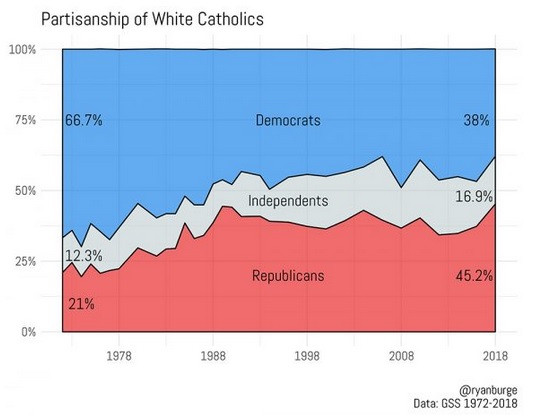
Joe Biden might not be able to bring Catholic voters to the Democrats anymore. At RNS.

burge catholicCan new leadership save struggling evangelical colleges? At CT.

Jobe [at Moody Bible Institute] sees his first job as having to “define reality.” That includes helping team members understand the institution’s identity and next steps needed to thrive. To rebuild confidence across the campus, he also attempts to engage with the basic needs of students and staff.

Will other evangelical colleges learn from the tragic lessons of Liberty U? At JGMC.

Reforming Liberty doesn’t mean compromising its mission. Nobody is demanding that Liberty become a Christian liberal arts school in the mold of Wheaton College or Hillsdale, or a carbon copy of a secular state school. In fact, Liberty is uniquely positioned as a popular university that could be a bona fide alternative to the overwhelmingly progressive status quo in academia.

Conservatives Shoot for College, but Hit Students

It’s not worth getting mad about, but it gets me mad anyway. We’re accustomed to seeing conservative pundits spouting off about how terrible college is these days. This week, Victor Davis Hanson takes this college-bashing tradition in a sad new direction in the pages of National Review. Instead of just bashing “college,” Hanson turns his spite on college students themselves.

As SAGLRROILYBYGTH are well aware, conservatives have long been anxious about the moral state of American higher education. As I argue in my book about the history of educational conservatism, we have heard these worries for almost a full century.

In the early 1920s, for example, anti-evolution celebrity William Jennings Bryan railed against trends in American higher education. In one public dispute with University of Wisconsin President Edward Birge, for example, Bryan offered the following memorable proposal. If universities continued to promote amoral ideas such as human evolution, Bryan suggested, they needed to post the following notice:

Our class rooms furnish an arena in which a brutish doctrine tears to pieces the religious faith of young men and young women; parents of the children are cordially invited to witness the spectacle.

Elite schools, Bryan warned, had begun actively to teach “moral laxity and corrosiveness.” Universities needed to warn parents that they no longer taught students right from wrong. This sense of conservative outrage at higher-educational trends was a driving force behind the culture wars of the 1920s.

Darrow and Bryan at Scopes

Attacking science and college…

It wasn’t only Bryan and it wasn’t only evolution. Since the 1920s, conservative intellectuals have voiced their sense that elite universities had gone off the moral rails. Consider the case made by some patriotic conservatives in the 1930s and 1940s against the anti-American direction of the elite higher-educational establishment.

In 1938, for instance, Daniel Doherty of the American Legion denounced elite institutions as mere “propagandists.” Universities such as Columbia had taken to “attacking the existing order and [to] disparagement of old and substantial values.”

These intense antagonistic feelings toward elite universities were widely shared among conservative thinkers in the 1930s. Bertie Forbes, for example, syndicated columnist and founder of Forbes magazine, warned that elite schools were “generally regarded as infested” with subversive and anti-moral professors.

I’m especially sorry to see Hanson join this reactionary tradition because I really like some of his books, especially Wars of the Ancient Greeks. And I’m double sorry to see Hanson take this tradition in a mean-spirited direction. Not only are universities themselves moral cesspools, Hanson warns, but students have ingested enough of the amorality that they themselves have become carriers of the moral infection. As Hanson writes,

The therapeutic mindset preps the student to consider himself a victim of cosmic forces, past and present, despite belonging to the richest, most leisured, and most technologically advanced generation in history. . . . Today’s students often combine the worst traits of bullying and cowardice. . . . The 19-year-old student is suddenly sexually mature, a Bohemian, a cosmopolitês when appetites call — only to revert to Victorian prudery and furor upon discovering that callousness, hurt, and rejection are tragically integral to crude promiscuity and sexual congress without love.

…really? I can’t help but wonder where Hanson is getting his information. There probably some college students out there who embody Hanson’s calumnies. But among the students I work with, the vast majority are hard-working, earnest, thoughtful, open to ambiguity and contradiction, and often self-sacrificing.

It’s one thing to bemoan the intellectual trends that are dominating elite universities. But I wish the conservative college Cassandras would leave the students out of it. As anyone who works with college students knows, they don’t deserve this sort of abuse.