Required Reading: Wal-Mart and Fundamentalist U

A recent exposé in the New York Times attacked Wal-Mart’s funding of charter schools. Conservative pundits defended Wal-Mart. But neither side took notice of a more profound tradition of educational activism by the leaders of the mega-retailer.

Historian Bethany Moreton, in her not-so-recent-anymore book To Serve God and Wal-Mart, describes a different sort of educational work by the founders and leaders of Wal-Mart. In addition to funding charter schools, the Waltons and Wal-Mart developed a network of fundamentalist colleges and universities that may have had far more long-term impact on American society and culture than any charter school.

How did capitalism, Christianity, and college combine?

How did capitalism, Christianity, and college combine?

The 2009 book garnered plenty of rave reviews from academic historians. I won’t try to offer a full review here, but if you’re interested, you can check out this one in Church History, or this one in the American Historical Review. Instead, I’ll sketch a few of Moreton’s points about the links between the Wal-Mart fortune and a network of evangelical colleges in the Ozark region. As I move into the research for my next academic book, a twentieth-century history of conservative evangelical colleges and universities, it seems clearer and clearer to me that these colleges have played a huge role in determining some of the basic culture-war landscape of recent United States history.

As Moreton describes, Wal-Mart and Walton money helped support some schools that desperately needed financial help. Especially close to Wal-Mart were the University of the Ozarks, John Brown University, and Harding University. Each of these schools embraced a Wal-Mart friendly combination of evangelical Protestantism and free-marketeering. And each benefited from substantial financial support from the Wal-Mart empire. Indeed, as Moreton relates, University of the Ozarks students joked that they should just change the name of their school to “Wal-Mart U” (pg. 144).

In the mid-1980s, as Moreton tells the story, with help from the Waltons, the faculty of the University of Ozarks spelled out the connections between traditional evangelical higher education and an intellectual embrace of the values of capitalism. In 1983, Mrs. Walton launched a series of “Free Enterprise Symposia” to trumpet the achievements—both moral and economic—of capitalism (pg. 154). A few years later, the faculty agreed that a new student concentration in entrepreneurship would include traditional courses in Old and New Testament, government, and liberal-arts electives. But the focus would be on business and the moral triumph of capitalism over “socialism/marxism” (pg. 155).

Students at these capitalist/Christian colleges embodied a very different sort of student identity from those of the hippies and leftists dominating headlines at other schools. For instance, Moreton describes one example of student activism at the University of the Ozarks in the late 1970s. Students joined with downtown merchants to encourage Christmas shopping. Students combined patriotic displays of red, white, and blue with traditional Santas to connect Jesus, America, and consumerism (pg. 143).

Wal-Mart also supported student organizations such as Students In Free Enterprise (SIFE). These pro-Christian, pro-capitalism student groups claimed to enroll 40,000 college students at 150 campuses nationwide. Together, SIFE bragged that it reached 100,000,000 people with its message of Christian free enterprise. Moreton described one example of that sort of student outreach by the SIFE chapter at Harding. Harding students tromped about the region with a student in a giant pencil costume. They spoke at schools, club meetings, and any other venue that would have them. Their message? Following the work of pundit Leonard Read, the students explained that worldwide capitalism managed to produce goods and services for all without central guidance. The humble pencil, for example, took materials and know-how from all around the world, bringing profit and uplift to all involved. Yet the invisible hand of the market accomplished this incredibly complex task without oversight from bumbling and greedy governments (pp. 193-197).

Leonard Read's Free-Enterprise Tale

Leonard Read’s Free-Enterprise Tale

As Moreton tells it, Wal-Mart’s college activism did not limit itself to the borders of the United States. In the late 1980s, the Waltons funded scholarships for students from Central America to study at colleges such as Harding, John Brown, and the University of the Ozarks. The goal was to train managers and workers in the pro-business, pro-Christian approach to big-block retailing and worldwide supply chains (pp. 222-247).

Moreton rightly emphasizes the centrality of higher-educational activism by conservatives such as the Waltons. Throughout the twentieth century, as I argue in both my 1920s book and my upcoming book on educational conservatism more broadly, the nature and purpose of higher education remained a central focus of American conservatism. As Moreton’s study reveals, the brains behind the Wal-Mart phenomenon took an active part in sponsoring the sorts of college and university “experience” that they thought would promote proper, traditional Americanism.

If I were to quibble with this book, I’d note that Moreton sometimes seems unaware of the longer, broader connections between pro-business groups and educational institutions. She describes what she calls the “national context of business colonization of education generally” (pg. 151) in the 1970s, but she doesn’t adequately note that the roots of that colonization go back into the 1930s, at least. Groups such as the National Association of Manufacturers, for example, actively conducted the same sorts of pro-business educational outreach that Moreton describes. A quick consult with Jon Zimmerman’s Whose America? would have helped Moreton flesh out the longer history.

But this sort of historian’s quibble does not detract from the importance of Moreton’s book. As the recent New York Times attack makes clear, conservative activism in K-12 education will always get plenty of attention. But the more profound cultural work of changing higher education may have much bigger impact on the nature of America’s culture wars. Who teaches the many conservative teachers in K-12 schools, for instance? Where do Christian executives learn to combine Jesus with Milton Friedman? Moreton’s look at the connections between Wal-Mart and higher education help illuminate the core intellectual premises of Christian capitalism.
 

Evangelicals and Evolution: A Closer Look

We all know large numbers of evangelical Protestants disbelieve in evolution, right? But among evangelicals, who does and who doesn’t? Thanks to Professor Thomas Jay Oord and the Nazarenes Exploring Evolution project, we can see a breakdown of evolutionary disbelief in one large evangelical denomination. In the Church of the Nazarene, at least, most academics allow for God-guided evolution and an ancient earth, while among the laity there is a more pronounced split.

For those outside of the kaleidoscopic world of American evangelicalism, the Church of the Nazarene is part of the Holiness tradition. That means, in a very crude nutshell, they are part of a tradition that emphasizes an experience of sanctification and sanctified work. In the analogy of one early holiness evangelist, sinful human nature is like a weight, but that weight can be lifted up by the hot-air balloon of the Holy Spirit. The sin is still there, but earnest Christians can be buoyed up to perform missionary work if they open themselves to the Holy Spirit.

In more mundane terms, according to its Wikipedia page, the Church of the Nazarene claims 2,263,249 members in 29,007 churches around the world. That’s a lotta Nazarenes. And while we can’t make any claims that Nazarenes somehow represent the totality of evangelicals, we can learn something about evangelicalism and evolution by looking in close detail at what Nazarenes say on the subject.

In general, American evangelicals are one of the most skeptical groups about evolution. As a recent Pew survey found, sixty-four percent of white evangelical Protestants believe that humans “have existed in their present form since the beginning of time.” Only a small minority (15%) of white mainline Protestants hold that view. And while it is notable that so many self-identified “evangelicals” don’t believe in human evolution, we can see that a significant minority of evangelicals DO believe.

Oord’s more nuanced look at one evangelical denomination allows us to get a better inside scoop on this breakdown.

In brief, Oord and his colleagues found that most Nazarene academics believed that evangelicalism and evolution could co-exist without traumatizing Nazarene theology. Your regular Nazarene-in-the-street, however, is much more likely to insist on a young earth and on hostility to evolutionary theory.

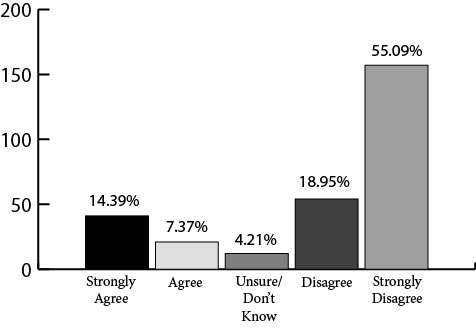
For example, among Nazarenes as a whole, 14.39% strongly agree, and 7.37% agree, that the Bible requires “Christians to believe the earth was created less than 15 thousand years ago.” Among lay Nazarenes, 18.95% disagree with that statement, and 55.09% strongly disagree. We see that this evangelical denomination does not, by and large, go in for “young-earth” creationism, though clearly a significant minority of its members does.

Lay Nazarenes and a young earth

Lay Nazarenes and a young earth

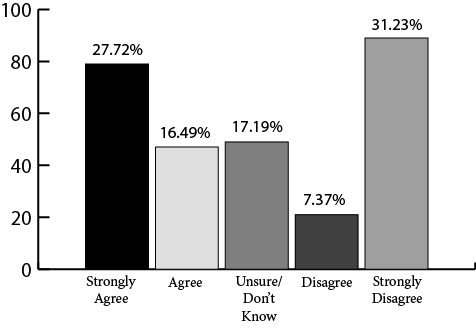
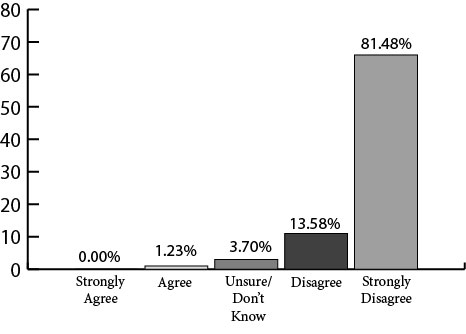
But look at the results when Nazarene academics answer that same question. Absolutely ZERO strongly agreed that biblical beliefs require belief in a young earth, and only 1.23% agreed. In contrast, a whopping 81.48% strongly disagreed with the notion that Christianity requires belief in a young earth.

Academic Nazarenes and a Young Earth

Academic Nazarenes and a Young Earth

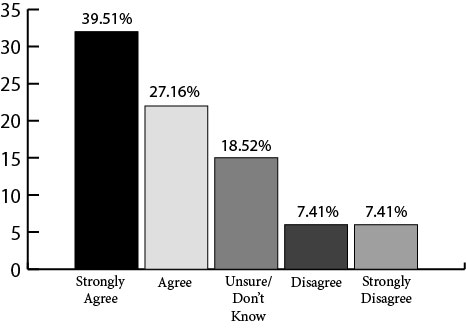
Check out Professor Oord’s essay in the BioLogos Forum for more details. You will see, for example, that among lay Nazarenes there is much more hostility to the notion that “Humans likely became a species as God worked with the evolutionary process.” Academic Nazarenes feel much more comfortable and confident with that idea.

Lay Nazarenes on God-guided Human Evolution

Lay Nazarenes on God-guided Human Evolution

Academic Nazarenes on God-guided Human Evolution

Academic Nazarenes on God-guided Human Evolution

The Supreme Court Just Kicked God Back Into America

Does America have a religion?  Many religious conservatives insist that the United States has always been a Christian country.  Yet some religious folks complain that the Supreme Court has “kicked God out of public schools” and public meetings.  In a ruling today, a slim majority on the US Supreme Court ruled that public meetings CAN be opened with a prayer, even if those prayers tend to represent mostly Christianity.

ILYBYGTH readers may remember this case from my upstate New York neighborhood.  The town of Greece held prayers before its meetings.  Though the town tried to open the prayers to a wide group of religions, complainants argued that the prayers tended to cluster around Christianity.  As SCOTUS had ruled in a 1983 ruling, Marsh v. Chambers, public meetings could constitutionally open with a prayer, as long as those prayers did not favor any one religion over another.

In the case of Greece v. Galloway, today’s ruling allows towns to continue with public prayers, even if those prayers tip toward Christianity.  And even if those prayers use explicitly Christian language.  As Adam Liptak noted in the New York Times, Justice Kennedy’s majority decision insisted that public prayers could even invoke sectarian ideas, such as the specific invocation of a sacrificial Jesus.  As Liptak summarized Kennedy’s decision, “it would be perilous for courts to decide when those prayers crossed a constitutional line and became impermissibly sectarian.”

According to Lyle Denniston on the SCOTUS blog, today’s ruling hinged on a distinction between “coercion” and “endorsement” as a rule of thumb in public-meeting prayers.  Such prayers, the majority held, are not constitutional if they imply coercion.  If non-believers are made to feel less welcome, for instance, coercion might be at play.  “Endorsement” is a lower hurdle.  Dissenting justices felt that any prayer in which government looked to be endorsing any religion must be unconstitutional.  Today’s majority ruling implies that “coercion” might become the new standard in judging questions of public religiosity.

As I’ve argued in the Journal of Religious History about the landmark school-prayer rulings Engel v. Vitale (1962) and Abington v. Schempp (1963), the status of public prayer has long served a crucial symbolic role in evangelical understandings of their role in American culture.  There is a tension at the heart of evangelicalism.  Believers in this tradition can consider themselves both the definition of true Americanism and a beleaguered minority in a sinful or secular land.  When the Supreme Court rules for or against public prayer, evangelicals tend to respond forcefully.

Will conservative religious folks celebrate this case as the time that the Supreme Court kicked God back INTO American public life?  The Alliance Defending Freedom, an Arizona-based group that defended the town’s prayer practice, calls today’s ruling an “Answered Prayer.”  As they put it, today’s ruling

Preserves the public prayer tradition that began with our founding.

Protects the freedom of community volunteers to pray according to their faith in a public setting, without censorship

Defends the prayer giver’s freedom of speech over an “offended” person’s demands for censorship

Writing in the evangelical WORLD magazine, Emily Belz took a more circumspect tone.  “The Greece case,” Belz opined,

doesn’t have huge immediate implications but puts the high court’s Establishment Clause jurisprudence on friendlier ground toward religion in the public square.

In the pages of the evangelical flagship publication Christianity Today, Ted Olsen insisted that SCOTUS got it right.  But not because this decision endorses the notion of the US as a Christian nation.  Rather, Olsen argued that sectarian prayers—whether to Jesus or to Apollo—represent the real faiths of real Americans.  “For Christians,” Olsen wrote,

such invocations let us bear witness to our own submission, to our gratefulness for God’s provision on a community level, and to our need for his wisdom and guidance. We needn’t “proselytize or disparage” in these prayers, just as we don’t do so in our prayers before meals, or with our families before bed. And we need not protest pagan prayers in our city council meetings any more than we protest them at our pagan neighbor’s apartment. Instead, we should see their prayers as a triumph of religious freedom (and as reminders to compassionately share the gospel with them).

Does it turn public meetings into Christian-fests if they are opened with prayers that specify the centrality of “the saving sacrifice of Jesus Christ on the cross?”  Or is it okay to have prayers, as long as everyone is invited to have a chance to lead them?  The Supreme Court says yes.


Pre-Orders Now Available!

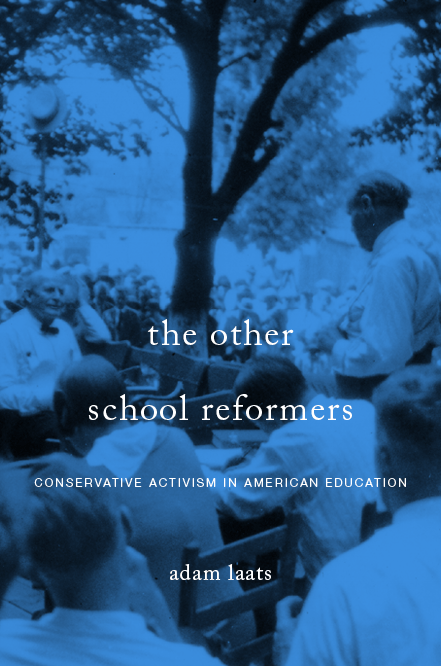
Want to be the first on your block to get your copy of The Other School Reformers?  Then pre-order your copy today!

Pre-order your copy today!

Pre-order your copy today!

As I was happy to announce recently, Harvard University Press will be releasing the book in early 2015.  But the pre-order just became available on sites such as Amazon.  The hardcover won’t be available until January 12, 2015, but if you pre-order today, you’ll be sure to WOW your friends and family by getting your hands on it first.

Friday Night Lights: Evolution in Schools

How can evolutionary ideas help education?  This Friday, biologists and evolution mavens David Sloan Wilson and Richard Kauffman of Binghamton University’s Evolutionary Studies Program will be giving a talk about using evolutionary theory to improve education.  And you’re invited.

Professors Wilson and Kauffman will not just be talking about teaching evolution as a subject, but about ways to use evolutionary ideas to help increase learning in all subjects.  As they put it,

Evolutionary theory is highly relevant to education in ways that go beyond the need to teach evolution in public schools. We will make two additional evolution-education connections in our talk. First, evolutionary theory can be used to design social environments that are maximally conducive to learning all subjects. Second, evolutionary training can increase general cognitive thinking skills, including the ability to transfer knowledge across domains. We will illustrate these points with two studies, involving a program for at risk-high school students and a college course that teaches evolution across the curriculum, respectively.

The talk will take place on the scenic campus of Binghamton University, Friday, May 9, between 5-7 PM, in room 124 of Academic Building B.  All are welcome, but the talk will be targeted toward graduate students and science educators.  There is no need to register and the event is free.

For those of you who are unable to travel to Sunny Binghamton, the presenters will be talking about two academic studies: “A Program for At-Rish High School Students Informed by Evolutionary Science,” and “The Evolutionary Biology of Education: How Our Hunter-Gatherer Educative Instincts Could Form the Basis for Education Today.”


Bill Nye Misses the Boat on Creationism

What does it mean to be a creationist?  Especially a young-earth creationist of the Ken Ham sort?  “Science Guy” Bill Nye argued the other day that creationism represents “striking science illiteracy.”

I like Bill Nye.  I like science.  But Nye’s statement represents a lamentable cultural illiteracy.  In the long run, it doesn’t help the cause of evolution education.  It does not help to bridge the culture-war trenches.

Around minute five of the video above, Nye begins to discuss his recent debate with young-earth creationist leader Ken Ham.  Nye humbly acknowledges that it might not have been a good idea to debate Ham.  But he went ahead with the debate.  Why?  Because Nye worries about the “striking science illiteracy” represented by young-earth creationism in the United States (around 6:23 in the video clip above).  Without science, Nye goes on, there would be no internet.  There would not be enough food for everyone.  Science and especially science education represent basic building blocks of a just and prosperous society.  Nye hopes that high-profile debates might help voters and taxpayers de-fund and delegitimize creationism in America’s public schools.

For the record, I agree that the “Ham-on-Nye” debate was a good thing for those of us who want more and better evolution education in America’s schools.  I applaud Nye’s bravery and his presentation skills.  But I wish he would not rely on this false notion that young-earth creationism represents a simple lack of knowledge about evolution.  It is not true, and it suggests bad policy approaches to improving evolution education.

Consider, for example, our best recent polls about science literacy and creationism.  As political scientists Eric Plutzer and Michael Berkman recount in their book Evolution, Creationism and the Battle to Control America’s Classrooms, creationists are not less scientifically literate than non-creationists.

For instance, one Pew poll from 2005 found that Americans who know about the scientific consensus in favor of evolution still support the teaching of creationism in public schools.  You read that right: Among the 54% of Americans who agree that scientists agree about evolution, large majorities (74%) supported teaching creationism, intelligent design, or some mix of evolution, ID, and creationism in public-school science classes.

Another poll that Berkman and Plutzer summarize found that general scientific literacy was not correlated with belief in evolution.  That is, whether or not one was aware of general scientific information had no relation to whether or not one evinced a belief in evolution.

As Dan Kahan noted recently, even the National Science Foundation has considered removing a question about evolution from its science-literacy poll.  Why?  Because there is no correlation between general scientific knowledge and beliefs about evolution.  What people know or don’t know about evolution does not give us any information about whether they believe it or don’t.

Knowledge is distinct from belief.

Bill Nye’s assumption that young-earth creationism represents a lack of scientific knowledge is more than just an embarrassing ignorance on Nye’s part.  The educational and political tasks in cases of naïve non-knowledge are worlds apart from the educational and political tasks in cases of intentional or constructed non-knowledge.  In the case of evolution education, if creationists were simply unaware of evolutionary science, then outreach programs would have a good chance of success.  The task would be simply to spread information.  But in reality, evolution education must recognize that many students and families are not simply ignorant, but resistant to this form of knowledge.  Educational efforts must strive first to understand the reasons for this resistance.  Only then can evolution educators hope to develop effective strategies to teach evolution.

Consider an example from outside the world of evolution education.  Imagine your task is to deliver polio vaccine in a rural area.  If the people in the area did not know about the vaccine, you could simply publicize the benefits and the location of the vaccination clinic.  Then people would bring their children to receive the vaccine.

But if the people in the area thought that the vaccine was dangerous, you couldn’t simply put up posters and distribute flyers.  You would have to engage in a very different task.  You would have to understand why people thought the vaccine was dangerous.  You would have to get to know the reasoning involved in order to offer counter-arguments that would be convincing.  Only if you could convince people that the vaccine was helpful and not dangerous could you ever hope to vaccinate large percentages of the population.

Bill Nye is talented.  Bill Nye is brave.  Bill Nye is smart.

But he continues to display a puzzling ignorance about the contours of creationism in America.  Instead of using his considerable influence to suggest pragmatic policies to spread evolution education, he continues to misdirect evolution education policy.  He needs to learn about creationism if he wants to debate it intelligently.


What Mormons Want Evangelicals to Learn in College

College is about fulfilling God’s mission.

That’s what Glenn Beck told the crowd at Liberty University the other day.  As Jonathan Merritt notes in Religious News Service, it is remarkable historically that Beck, a member of the Church of Jesus Christ of Latter-Day Saints—the Mormons—was invited to preach to the evangelical community of Liberty University.  Traditionally, as we saw in the presidential candidacy of LDS member Mitt Romney, evangelicals have looked askance at Mormonism.

As Merritt reports, Beck did not hide his LDS beliefs.  Rather, he flouted them, displaying Mormon relics such as Joseph Smith’s watch.

But that was not the only remarkable part of Beck’s talk.  Beck offered Liberty students a vision of the purpose of higher education.  You may have come here to help you get a job, Beck told the college crowd, but that’s not really what your education is for.  “You are at this university for a reason,” Beck reported.  What is God’s reason for higher education?  God did not say, Beck insisted, “I’m gonna send you down because you need to be . . . an accountant.”  [26:56]

The purpose of a university education, Beck told the audience, was not merely professional.  “You came to this university thinking, maybe,

I have to have an education to get a job.  You need this education from Liberty University because of your only true job.  The purpose that you were sent here for.  To magnify Him.  To bring Him to others.  To do what it is that you’re supposed to do.  To preserve liberty, the liberty of all mankind.

According to Beck, that sort of education is the true aim of education, whether students are LDS, Baptists, Mennonites, or whatever.  Life is a mission from God.  Higher education is simply further training for that mission.

Of course, Liberty University itself has a more ecumenical attitude toward the true purpose of education.  On Liberty’s website this morning, for instance, the casual reader is quickly reassured that Liberty certainly wants to train “Champions for Christ.”  But another of the four circulating mottos declares that Liberty “helps students and alumni find the right job or internship.”

Glenn Beck may be confident about the real purpose of Christian higher education.  But evangelical college students seem to want their college to walk both sides of the line.


Should the Poor Study Philosophy?

Why do people need an education?  In the memorable words of Chris Farley, kids need to learn a profession, or they’ll end up living in a van, down by the river.

But that’s not the whole picture.  As Scott Samuelson argues in The Atlantic, education must do more than help people get a job; education should help people be more human.  Samuelson raises a question at the heart of conservative educational thinking.

Too often in American educational history, the sort of education Samuelson’s talking about has been reserved for an economic elite.  As historian James Anderson argued in his 1988 book, for example, African Americans have been told time and again to educate their kids for the kinds of jobs they could get: laborers, maids, carpenters, doormen.  It was cruel and a waste of time, well-intentioned white philanthropists insisted, for African American youth to study Latin, Greek, and higher mathematics.  Such things would only expose them to a world in which they could not survive economically.

Samuelson agrees that liberal-arts education has traditionally been reserved for the upper crust.  As he describes,

There are three big reasons for this. First, it befits the leisure time of an upper class to explore the higher goods of human life: to play Beethoven, to study botany, to read Aristotle, to go on an imagination-expanding tour of Italy. Second, because their birthright is to occupy leadership positions in politics and the marketplace, members of the aristocratic class require the skills to think for themselves. Whereas those in the lower classes are assessed exclusively on how well they meet various prescribed outcomes, those in the upper class must know how to evaluate outcomes and consider them against a horizon of values. Finally (and this reason generally goes unspoken), the goods of the liberal arts get coded as markers of privilege and prestige, so that the upper class can demarcate themselves clearly from those who must work in order to make their leisure and wealth possible.

Samuelson insists that America’s tradition of preserving this sort of education for the already privileged gets the equation exactly backward.  In order for a society to remain free, he writes, all members must have the chance to study the basic ideas of freedom and humanity.  As Samuelson puts it,

there are among future plumbers as many devotees of Plato as among the future wizards of Silicon Valley, and that there are among nurses’ aides and soldiers as many important voices for our democracy as among doctors and business moguls.

Samuelson is not making a “conservative” argument, but his essay raises questions of perennial interest to conservative educational thinkers.  What does it mean to be “conservative” about education?  Leading conservatives push both for traditional visions of education that expose students to the great thinkers of our tradition.  But leading conservatives also fight for an education that will improve test scores of low-income students, an education that will leave no child behind.


Jesus Is the Answer

We Americans don’t have any confidence in evolution.  But we might if Jesus told us about it.  That’s the implication I get from Dan Kahan at the Cultural Cognition Project.

This fits with anecdotal evidence we hear from our evangelical friends and colleagues.  Many folks who grew up in strict young-earth creationist homes reported a life-changing experience at a Christian college.  When they heard about evolutionary theory from a science professor who was ALSO a devoted evangelical Christian, it changed the equation.  Instead of being forced to choose between their religious identity and evolutionary theory, they could accept both without facing a crisis.

Professor Kahan argued yesterday that Americans, in general, do not distrust science or scientists.  Skeptics who complain that Americans do not listen to scientific truth, Kahan says, simply don’t know what they’re talking about.  The evidence just doesn’t show it.  In case after case, Kahan shows, Americans love science.  We want more science and more funding for science.

With issues of climate change and vaccinations, people don’t argue against science.  Rather, Kahan says, people argue about who is a legitimate scientific expert.  People tend to trust more in the credentials of “experts” with whom they agree, or, more precisely, in the credentials of experts with whom they can identify.  As Kahan puts it,

If subjects observed the position that they were culturally predisposed to accept being advanced by the “expert” they were likely to perceive as having values akin to theirs, and the position they were predisposed to reject being advanced by the “expert” they were likely to perceive as having values alien to their own, then polarization was amplified all the more. . . . polarization disappeared when experts whom culturally diverse subjects trusted told them the position they were predisposed to accept was wrong.

When it comes to evolution, creationism, and evolution education, we can’t help but conclude that Jesus should do it.  That is, evangelical Christians and other resistant populations will be more amenable to learning about evolution if they can learn from someone who seems to share their religion.  It makes sense, then, to support the evangelical-friendly approach of organizations such as BioLogos.

On the other hand, Kahan’s argument implies that the angry-atheist approach will actually INCREASE creationist belief.  When evolutionary theory is associated with an anti-religious personality, religious people will tend to reject evolution entirely.


What If Stories, Part VII: Last but not Least

We always save the best for last, right?  Today at the blog of the National Center for Science Education, I make my case: How would the history of creationism be different without World War I?

For those who haven’t been keeping up, the NCSE has asked a handful of historians to give their best guesses.  How did World War I influence the development of creationism?  Of evolutionary theory?

We’ve read about creationism in Turkey and the Netherlands. We’ve read about the influence of the war on German intellectual life.  And about textbooks, the 1920s, and William Jennings Bryan.

So what did yours truly have to add to this discussion?  How do I think World War I changed the course of creation/evolution history?  You’ll have to read my post on the NCSE blog to find out.