Evolution Rock

I ran into some mysterious evolution-related lyrics in a trademark song by my favorite band ever.

Of course, this is not the first time rockers have messed with evolutionary themes.  ILYBYGTH readers may remember our ponderings about Bruce Springsteen’s muddled ideas about evolution.  And thanks to Jonny Scaramanga we all learned something about the vibrant creation-rock scene.

But I guess I had never listened closely enough to the lyrics of MC5’s “Sister Anne.”  The Detroit outfit’s signature song starts out like this, the best I can decode:

Sister Anne don’t give a damn about evolution

She’s a liberated woman, she’s got her solution

Like a dinosaur, she’s going off the wall

She’s gonna make it her own crusade

It raises two obvious and difficult questions.  First, how much more evolution-rock is out there?  Not to be too nerdy about it, but how deeply do the questions of evolution and creationism sink into the marrow of American culture?  If we hear the echoes of creationism even in the skudjiest of Motor City rock anthems, is there anywhere we won’t find them?

The second question is much simpler: What the *@#% do these “Sister Anne” lyrics mean?  The title character seems to be some sort of soul-saving, evolution-hating, sexy Catholic nun.  I know she can…but can what?


Bryan College and the Grey Lady

Bryan College is in the news again. A recent New York Times article describes the hullabaloo over creationism and college creeds. But here’s the problem: journalist Alan Blinder seems all too willing to cast today’s struggles as only warmed-over reiterations of the 1925 Scopes trial. That doesn’t do justice to the history nor does it help today’s readers understand the kaleidoscopic world of evangelical higher education.

ILYBYGTH readers will remember that Bryan has been back-and-forth on the issue of Adam and Eve. The school has always been friendly to young-earth creationism. But President Stephen Livesay pushed through a clarification of the school’s traditional creed. From here on out, faculty members must affirm their belief in a literal, historic Adam and Eve. Most recently, the college has been sued by two faculty members who have refused to sign the clarified statement of faith.

I’m glad to see that journalist Alan Blinder has paid some attention to the controversy in the pages of the New York Times. But I can’t help but complain about Blinder’s framing of today’s story. For instance, Blinder calls today’s fight a “similar debate” to the 1925 Scopes trial. He says, “The continuing debate at Bryan College and beyond is a reminder of how divisive the issues of the Scopes trial still are…”

I’m not complaining because Blinder does not name the two professors who are actually suing Bryan—Stephen Barnett and Steven DeGeorge. I’m not complaining because Blinder focuses instead on Brian Eisenback, who had become controversial due to his evolutionary creationism.

No, I’m complaining because this sort of coverage implies that the issue at hand is the teaching of evolution or the teaching of creationism. I’m complaining because so many writers—not just Blinder—feel a need to call every new example of evolution/creation controversy “Scopes II” or something similar.

It would be entirely plausible, I think, for a casual reader to walk away from Blinder’s article thinking that Bryan College is becoming a religious school that teaches creationism, when it used to be a more secular school that taught evolution. It would also be plausible for readers to think that the issue at Bryan College today is the same issue that motivated the Scopes trial so many years ago. Both of these are woefully misleading implications.

First of all, Bryan College is now and has always been a friendly environment for young-earth creationism. Until recently, Bryan hosted the Center for Origins Research and Education. This center was lead in turn by prominent YEC intellectuals such as Kurt Wise and Todd Wood. Today’s controversy at Bryan College is decidedly not between a “creationist” mindset and a “secular” one. Today’s controversy is between a pluralist sort of big-tent creationism and a stricter young-earth-only vision. The school may be tightening its definition of acceptable sorts of creationism, but that is a very different thing than imposing creationism on a pluralist school.

Also, the controversy in 1925 was about whether or not evolution could be banned from public schools. As I argued in my 1920s book and in my upcoming Other School Reformers, due to such controversies, many conservative Christians founded schools like Bryan College. But today’s debate is vastly different. The debate today is over what sort of creationism counts as creationism at a private evangelical college.

Just because it brings journalists from New York down to Dayton again, there is no need to imply that this is somehow a return engagement for Clarence Darrow, H.L. Mencken, William Jennings Bryan, and John Scopes. What we’re seeing today is worlds apart from what Dayton saw in 1925.


The Creation Debate We Need

Ken Ham, creationist debater extraordinaire, has again thrown down the gauntlet. This time, Ham has challenged conservative evangelist Pat Robertson. More than watching Ham battle Science Guy Bill Nye, America needs to hear this debate between conservative evangelical Protestant creationists.

Apparently, according to Mr. Ham and the folks at Right Wing Watch, Robertson has been taking pot-shots at young-earth creationism lately. On his television show The 700 Club, Robertson recently announced, “You have to be deaf, dumb and blind to think that this Earth that we live in only has 6,000 years of existence.”

As he has done recently with other conservative colleges such as Calvin and Bryan, Ham wondered pointedly if Robertson’s colleagues at Regent University really support Robertson’s old-earth position. Ham asked if the school followed Robertson in “compromis[ing] the Word of God with the pagan ideas of fallible men.”

Ham offered to debate these issues with Robertson. As Ham put it,

I wonder if Pat Robertson would be prepared to discuss these issues with me or one of our AiG scientists on the 700 Club? Or maybe in some sort of debate format at Regent University? We are certainly willing to do that…. I wonder if Pat Robertson, who is allowed to state these things so publicly through CBN will agree to have his statements publicly challenged and tested!

Both conservative religious folks and outsiders like me would benefit from such a debate. We outsiders would learn more about the issues that matter to creationists. None of us were particularly surprised by the arguments Bill Nye put forward. But many of us would be enlightened to hear the reasons for and against belief in a young earth, since both sides would be arguing from a relatively similar religious perspective. We outsiders could learn about the kaleidoscopic world of creationism. For some people, this might be the first time they heard that not every creationist embraces the idea of a young earth.

And evangelicals would benefit enormously. After all, belief in a young-earth as creationist orthodoxy is a very recent phenomenon. As historian Ron Numbers demonstrated so powerfully, until the second half of the twentieth century, belief in a young earth was restricted to a relatively small percentage of conservative evangelicals. At the time of the Scopes trial in 1925, for example, leading fundamentalists differed in their beliefs about the age of the earth. At that time, no one looked askance at anti-evolutionist leaders such as William Jennings Bryan who believed in an ancient earth. Only with the publication of Henry Morris’ and John Whitcomb’s creationist blockbuster The Genesis Flood did young-earth creationism become a dominant theme in conservative American evangelical thought.

Many young evangelicals these days don’t know this history. They often assume they must either accept the doctrine of a young earth or abandon their religion entirely. A debate between two conservative evangelical leaders would demonstrate the possibilities.


Holocaust Denial, Evolution Denial, and “Teaching the Controversy”

Should students learn to think critically in schools?  Should they learn about both sides of controversial issues?  This morning at the National Center for Science Education blog, Glenn Branch compares creationists’ fondness for “teaching the controversy” to an explosively controversial history lesson from California.  For those of us interested in conservative ideas about schooling, this recent flap again demonstrates the ways “conservative” and “progressives” have swapped sides on this issue.

In the Rialto (California) Unified School District, eighth-grade students were asked to evaluate the arguments for and against the existence of the Holocaust.  “When tragic events occur in history, there is often debate about their actual existence,” the assignment reads, according to the San Bernardino County Sun.

For example, some people claim the Holocaust is not an actual historical event, but instead is a propaganda tool that was used for political and monetary gain. Based upon your research on this issue, write an argumentative essay, utilizing cited textual evidence, in which you explain whether or not you believe the Holocaust was an actual event in history, or merely a political scheme created to influence public emotion and gain. Remember to address counterclaims (rebuttals) to your stated claim. You are also required to use parenthetical (internal) citations and to provide a Works Cited page.

When the story came out about ten days ago, some conservative pundits tried to use this as proof of the moral monstrosity concealed in the Common Core State Standards.  The standards, some said, pushed school districts into adopting such terrible ideas as Holocaust denial.

Glenn Branch asks a different question.  How is this example of teaching “critical thinking” any different from creationist attempts to have students evaluate evolution and creationism side by side?  In both cases, students are encouraged to look at evidence.  Students are prompted to evaluate arguments and come to their own decisions.

But in the case of Holocaust denial, one side of the balance sheet has been thoroughly discredited.  It is not morally or educationally appropriate to ask students to decide whether or not the Holocaust happened, critics insist.  One of the sources students were given in this assignment stated the following:

With all this money at stake for Israel, it is easy to comprehend why this Holocaust hoax is so secretly guarded. In whatever way you can, please help shatter this profitable myth. It is time we stop sacrificing America’s welfare for the sake of Israel and spend our hard-earned dollars on Americans.

Offering students these sorts of false, hateful lies as “sources,” critics say, demeans the idea of pushing students to think critically.  If creationists thought that students should really explore every side of every issue, even sides with no intellectual or moral legitimacy, Branch argues,

then they should have been enthusiastically supporting the Rialto assignment. It’s to their moral credit that they weren’t, of course, but it proves—as if proof were needed by now—that “teach the controversy” and the like are merely rhetorical legerdemain intended to distract the spectator from the intellectual hollowness of the proposals they are supposed to support.

To suggest that schools ought to “teach the controversy” when there is in fact no controversy among mainstream scientists, Branch concludes, is just as bogus as having students evaluate the claims of Holocaust deniers.

The historian in me can’t help but notice the flip-flop we’ve seen over the course of the twentieth century.  In 1925, it was the pro-evolution side who pleaded with America to consider both sides in public schools.  Most famously, Scopes-trial attorney Dudley Field Malone begged the nation to allow the teaching of evolution.  “For God’s sake,” Malone implored, “let the children have their minds kept open.”  Ironically, as historian Ronald Numbers pointed out in Darwin Comes to America (pg. 91), later creationists adopted Malone’s plea as their own.

This is one of the themes I’m working with in my upcoming book.  Back in the 1920s, it was the conservative side of school battles who protested that these were false choices.  In 1929, for instance, the staunchly conservative leader of the Daughters of the American Revolution warned DAR members that progressives sneakily insisted on teaching both sides of every issue.  Such choices, she warned, were false ones.  Even to ask the questions tipped students away from truth and morality.  As she memorably argued,

Flagrant cases of un-American tendencies have been brought to light and exposed.  Exotic theories are promulgated in the name of science.  Disdain for law and order, and contempt for our accepted form of Government are subtly injected into the teachings of history.  Such practices are defended by the advancement of the decrepit theory that both sides of the question should be presented to permit the forming of unbiased opinions.  This may be the proper system for the seasoned adult who presumably can, if he will, revoke his errors when faced with the consequences of an unwise choice.  With the young, the chances are too great, for there a dangerous inequality exists.  One does not place before a delicate child a cup of strong black coffee and a glass of milk; or a big cigar and a stick of barley candy; or a narcotic and an orange, and in the name of progress and freedom insist that both must be tested in order that the child be given the right of choice.  Instead, one carefully supplies only what will make for the development of the young body and assure its normal growth.  Why then apply the very opposite theory when dealing with the delicate and impressionable fabric of the mind? (Emphasis added.)

With this historical lens, it seems doubly apparent that the argument for teaching both sides of any tricky issue has always been politically popular among Americans.  If there’s a controversy, many Americans have always agreed, let children hear both sides.

Back in the 1920s, progressives and evolution educators tried to make this case.  Let children hear about socialism and evolution, progressives pleaded.  At least allow schools to teach the controversy.  Back then, conservatives made the case that one side of those ideas was not equal.  To offer students both candy and cigars to choose from, as our DAR leader insisted, was a false choice, a false controversy.

Today, the sides have switched but the argument has not.  One side argues to let children hear both sides of a controversial issue and decide for themselves.  The other side insists that only one side has any truth, any intellectual legitimacy.

Me personally, I agree that Holocaust denial and evolution denial ought not be offered as equals to better history and better science.  But I know many readers might disagree.  How can creationists defend the legitimacy of “teaching the controversy” when most scientists agree that there is no controversy?  Is it like offering children a choice between heroin and citrus fruits?  Milk and coffee?  Candy or cigars?


Evangelicals and Evolution: A Closer Look

We all know large numbers of evangelical Protestants disbelieve in evolution, right? But among evangelicals, who does and who doesn’t? Thanks to Professor Thomas Jay Oord and the Nazarenes Exploring Evolution project, we can see a breakdown of evolutionary disbelief in one large evangelical denomination. In the Church of the Nazarene, at least, most academics allow for God-guided evolution and an ancient earth, while among the laity there is a more pronounced split.

For those outside of the kaleidoscopic world of American evangelicalism, the Church of the Nazarene is part of the Holiness tradition. That means, in a very crude nutshell, they are part of a tradition that emphasizes an experience of sanctification and sanctified work. In the analogy of one early holiness evangelist, sinful human nature is like a weight, but that weight can be lifted up by the hot-air balloon of the Holy Spirit. The sin is still there, but earnest Christians can be buoyed up to perform missionary work if they open themselves to the Holy Spirit.

In more mundane terms, according to its Wikipedia page, the Church of the Nazarene claims 2,263,249 members in 29,007 churches around the world. That’s a lotta Nazarenes. And while we can’t make any claims that Nazarenes somehow represent the totality of evangelicals, we can learn something about evangelicalism and evolution by looking in close detail at what Nazarenes say on the subject.

In general, American evangelicals are one of the most skeptical groups about evolution. As a recent Pew survey found, sixty-four percent of white evangelical Protestants believe that humans “have existed in their present form since the beginning of time.” Only a small minority (15%) of white mainline Protestants hold that view. And while it is notable that so many self-identified “evangelicals” don’t believe in human evolution, we can see that a significant minority of evangelicals DO believe.

Oord’s more nuanced look at one evangelical denomination allows us to get a better inside scoop on this breakdown.

In brief, Oord and his colleagues found that most Nazarene academics believed that evangelicalism and evolution could co-exist without traumatizing Nazarene theology. Your regular Nazarene-in-the-street, however, is much more likely to insist on a young earth and on hostility to evolutionary theory.

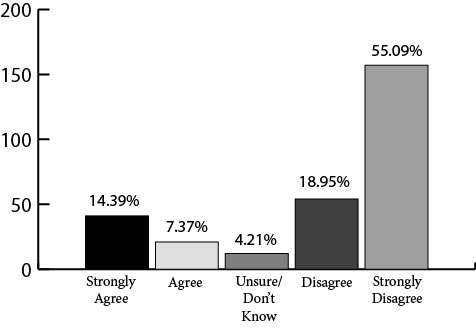
For example, among Nazarenes as a whole, 14.39% strongly agree, and 7.37% agree, that the Bible requires “Christians to believe the earth was created less than 15 thousand years ago.” Among lay Nazarenes, 18.95% disagree with that statement, and 55.09% strongly disagree. We see that this evangelical denomination does not, by and large, go in for “young-earth” creationism, though clearly a significant minority of its members does.

Lay Nazarenes and a young earth

Lay Nazarenes and a young earth

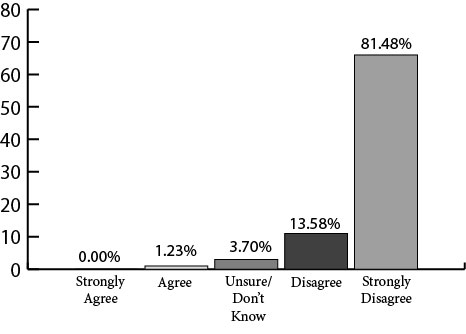
But look at the results when Nazarene academics answer that same question. Absolutely ZERO strongly agreed that biblical beliefs require belief in a young earth, and only 1.23% agreed. In contrast, a whopping 81.48% strongly disagreed with the notion that Christianity requires belief in a young earth.

Academic Nazarenes and a Young Earth

Academic Nazarenes and a Young Earth

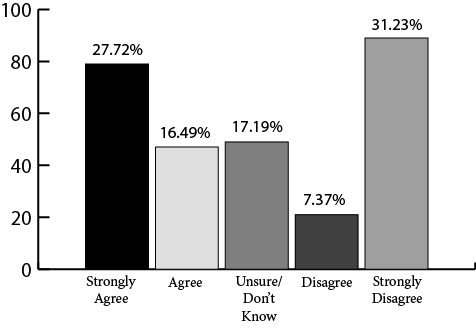
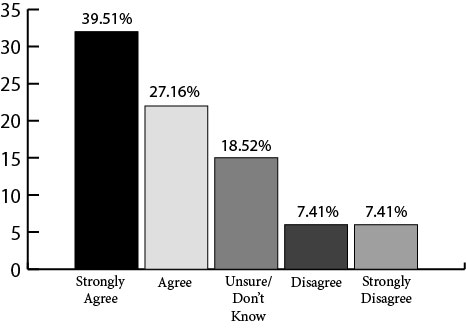
Check out Professor Oord’s essay in the BioLogos Forum for more details. You will see, for example, that among lay Nazarenes there is much more hostility to the notion that “Humans likely became a species as God worked with the evolutionary process.” Academic Nazarenes feel much more comfortable and confident with that idea.

Lay Nazarenes on God-guided Human Evolution

Lay Nazarenes on God-guided Human Evolution

Academic Nazarenes on God-guided Human Evolution

Academic Nazarenes on God-guided Human Evolution

Pre-Orders Now Available!

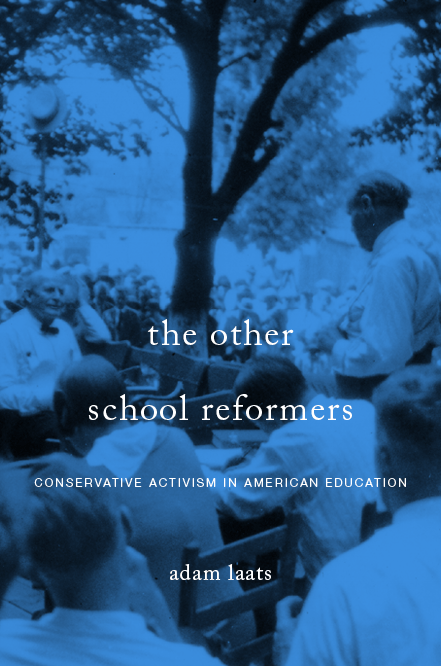
Want to be the first on your block to get your copy of The Other School Reformers?  Then pre-order your copy today!

Pre-order your copy today!

Pre-order your copy today!

As I was happy to announce recently, Harvard University Press will be releasing the book in early 2015.  But the pre-order just became available on sites such as Amazon.  The hardcover won’t be available until January 12, 2015, but if you pre-order today, you’ll be sure to WOW your friends and family by getting your hands on it first.

Friday Night Lights: Evolution in Schools

How can evolutionary ideas help education?  This Friday, biologists and evolution mavens David Sloan Wilson and Richard Kauffman of Binghamton University’s Evolutionary Studies Program will be giving a talk about using evolutionary theory to improve education.  And you’re invited.

Professors Wilson and Kauffman will not just be talking about teaching evolution as a subject, but about ways to use evolutionary ideas to help increase learning in all subjects.  As they put it,

Evolutionary theory is highly relevant to education in ways that go beyond the need to teach evolution in public schools. We will make two additional evolution-education connections in our talk. First, evolutionary theory can be used to design social environments that are maximally conducive to learning all subjects. Second, evolutionary training can increase general cognitive thinking skills, including the ability to transfer knowledge across domains. We will illustrate these points with two studies, involving a program for at risk-high school students and a college course that teaches evolution across the curriculum, respectively.

The talk will take place on the scenic campus of Binghamton University, Friday, May 9, between 5-7 PM, in room 124 of Academic Building B.  All are welcome, but the talk will be targeted toward graduate students and science educators.  There is no need to register and the event is free.

For those of you who are unable to travel to Sunny Binghamton, the presenters will be talking about two academic studies: “A Program for At-Rish High School Students Informed by Evolutionary Science,” and “The Evolutionary Biology of Education: How Our Hunter-Gatherer Educative Instincts Could Form the Basis for Education Today.”


Bill Nye Misses the Boat on Creationism

What does it mean to be a creationist?  Especially a young-earth creationist of the Ken Ham sort?  “Science Guy” Bill Nye argued the other day that creationism represents “striking science illiteracy.”

I like Bill Nye.  I like science.  But Nye’s statement represents a lamentable cultural illiteracy.  In the long run, it doesn’t help the cause of evolution education.  It does not help to bridge the culture-war trenches.

Around minute five of the video above, Nye begins to discuss his recent debate with young-earth creationist leader Ken Ham.  Nye humbly acknowledges that it might not have been a good idea to debate Ham.  But he went ahead with the debate.  Why?  Because Nye worries about the “striking science illiteracy” represented by young-earth creationism in the United States (around 6:23 in the video clip above).  Without science, Nye goes on, there would be no internet.  There would not be enough food for everyone.  Science and especially science education represent basic building blocks of a just and prosperous society.  Nye hopes that high-profile debates might help voters and taxpayers de-fund and delegitimize creationism in America’s public schools.

For the record, I agree that the “Ham-on-Nye” debate was a good thing for those of us who want more and better evolution education in America’s schools.  I applaud Nye’s bravery and his presentation skills.  But I wish he would not rely on this false notion that young-earth creationism represents a simple lack of knowledge about evolution.  It is not true, and it suggests bad policy approaches to improving evolution education.

Consider, for example, our best recent polls about science literacy and creationism.  As political scientists Eric Plutzer and Michael Berkman recount in their book Evolution, Creationism and the Battle to Control America’s Classrooms, creationists are not less scientifically literate than non-creationists.

For instance, one Pew poll from 2005 found that Americans who know about the scientific consensus in favor of evolution still support the teaching of creationism in public schools.  You read that right: Among the 54% of Americans who agree that scientists agree about evolution, large majorities (74%) supported teaching creationism, intelligent design, or some mix of evolution, ID, and creationism in public-school science classes.

Another poll that Berkman and Plutzer summarize found that general scientific literacy was not correlated with belief in evolution.  That is, whether or not one was aware of general scientific information had no relation to whether or not one evinced a belief in evolution.

As Dan Kahan noted recently, even the National Science Foundation has considered removing a question about evolution from its science-literacy poll.  Why?  Because there is no correlation between general scientific knowledge and beliefs about evolution.  What people know or don’t know about evolution does not give us any information about whether they believe it or don’t.

Knowledge is distinct from belief.

Bill Nye’s assumption that young-earth creationism represents a lack of scientific knowledge is more than just an embarrassing ignorance on Nye’s part.  The educational and political tasks in cases of naïve non-knowledge are worlds apart from the educational and political tasks in cases of intentional or constructed non-knowledge.  In the case of evolution education, if creationists were simply unaware of evolutionary science, then outreach programs would have a good chance of success.  The task would be simply to spread information.  But in reality, evolution education must recognize that many students and families are not simply ignorant, but resistant to this form of knowledge.  Educational efforts must strive first to understand the reasons for this resistance.  Only then can evolution educators hope to develop effective strategies to teach evolution.

Consider an example from outside the world of evolution education.  Imagine your task is to deliver polio vaccine in a rural area.  If the people in the area did not know about the vaccine, you could simply publicize the benefits and the location of the vaccination clinic.  Then people would bring their children to receive the vaccine.

But if the people in the area thought that the vaccine was dangerous, you couldn’t simply put up posters and distribute flyers.  You would have to engage in a very different task.  You would have to understand why people thought the vaccine was dangerous.  You would have to get to know the reasoning involved in order to offer counter-arguments that would be convincing.  Only if you could convince people that the vaccine was helpful and not dangerous could you ever hope to vaccinate large percentages of the population.

Bill Nye is talented.  Bill Nye is brave.  Bill Nye is smart.

But he continues to display a puzzling ignorance about the contours of creationism in America.  Instead of using his considerable influence to suggest pragmatic policies to spread evolution education, he continues to misdirect evolution education policy.  He needs to learn about creationism if he wants to debate it intelligently.


Jesus Is the Answer

We Americans don’t have any confidence in evolution.  But we might if Jesus told us about it.  That’s the implication I get from Dan Kahan at the Cultural Cognition Project.

This fits with anecdotal evidence we hear from our evangelical friends and colleagues.  Many folks who grew up in strict young-earth creationist homes reported a life-changing experience at a Christian college.  When they heard about evolutionary theory from a science professor who was ALSO a devoted evangelical Christian, it changed the equation.  Instead of being forced to choose between their religious identity and evolutionary theory, they could accept both without facing a crisis.

Professor Kahan argued yesterday that Americans, in general, do not distrust science or scientists.  Skeptics who complain that Americans do not listen to scientific truth, Kahan says, simply don’t know what they’re talking about.  The evidence just doesn’t show it.  In case after case, Kahan shows, Americans love science.  We want more science and more funding for science.

With issues of climate change and vaccinations, people don’t argue against science.  Rather, Kahan says, people argue about who is a legitimate scientific expert.  People tend to trust more in the credentials of “experts” with whom they agree, or, more precisely, in the credentials of experts with whom they can identify.  As Kahan puts it,

If subjects observed the position that they were culturally predisposed to accept being advanced by the “expert” they were likely to perceive as having values akin to theirs, and the position they were predisposed to reject being advanced by the “expert” they were likely to perceive as having values alien to their own, then polarization was amplified all the more. . . . polarization disappeared when experts whom culturally diverse subjects trusted told them the position they were predisposed to accept was wrong.

When it comes to evolution, creationism, and evolution education, we can’t help but conclude that Jesus should do it.  That is, evangelical Christians and other resistant populations will be more amenable to learning about evolution if they can learn from someone who seems to share their religion.  It makes sense, then, to support the evangelical-friendly approach of organizations such as BioLogos.

On the other hand, Kahan’s argument implies that the angry-atheist approach will actually INCREASE creationist belief.  When evolutionary theory is associated with an anti-religious personality, religious people will tend to reject evolution entirely.


What If Stories, Part VII: Last but not Least

We always save the best for last, right?  Today at the blog of the National Center for Science Education, I make my case: How would the history of creationism be different without World War I?

For those who haven’t been keeping up, the NCSE has asked a handful of historians to give their best guesses.  How did World War I influence the development of creationism?  Of evolutionary theory?

We’ve read about creationism in Turkey and the Netherlands. We’ve read about the influence of the war on German intellectual life.  And about textbooks, the 1920s, and William Jennings Bryan.

So what did yours truly have to add to this discussion?  How do I think World War I changed the course of creation/evolution history?  You’ll have to read my post on the NCSE blog to find out.