A Trump Victory We Didn’t Expect

Maybe not out of left field, specifically, but out of a field somewhere: Trump’s shocking electoral victory and surprising pockets of continuing popularity have left wonks of all sorts scratching their heads. Here at ILYBYGTH, we’re agog to see some odd recent poll results that show yet another surprising result of Trumpism.

trump supporters

Take my tuition dollars!

The poll we’re talking about would seem to be worlds removed from Trumpism and its unpredictable path. But the Inside Higher Education/Gallup survey of college admissions officials has come up with some intriguing political results.

Some are predictable. Many schools these days are struggling to attract students. Only 34% of the schools surveyed met their enrollment goals this year, down from the last two years. That hits schools hard, right in the pocketbook. Without tuition dollars, most schools would have to pull a Sweet Briar, and few institutions have the wealthy alumni base to hope for a last-minute SB rescue.

One of the most attractive type of student, from a financial perspective, has long been international students. They often pay full tuition. At public state schools, they often pay even more than out-of-state students.

Trump’s anti-immigrant bluster has made it harder for American schools to attract these types of students. Eighty-six percent of admissions officers thought “the statements and policies of President Trump make it more difficult to recruit international students.”

That’s not surprising.

What is a Trump shocker, to us at least, is a different consensus among the admissions bureaucrats. Trump’s victory, many agreed, served as proof that they have been looking in the wrong directions for students. As the IHE report put it,

In the months following the election and the inauguration of President Trump, many educators have been discussing whether the results suggest that higher education is out of touch with the public, and how the image of higher education (fair or not) impacts colleges and their admissions strategies. At a gathering of private college counselors in June, many said that they were seeing an increase in parents vetoing their children’s college choices over the perceived political orientation of institutions, with one counselor saying, “Brown is completely off the table.”

As a result, many schools have begun a new sort of recruitment. In addition to their traditions of recruiting athletes, high-flying nerds, and underrepresented racial and ethnic groups, many schools want to start reaching out to rural, white, and—get this—conservative students.

Admissions Directors Agreeing With Statements on Higher Education, Postelection

Statement Public Private Nonprofit
Higher education needs to redouble its efforts to recruit and retain underrepresented minority groups. 86% 66%
The election outcome suggests Americans are less committed than they were in the past to increasing the number of racial and ethnic minority students who attend college. 44% 35%
The election outcome indicates that colleges — especially elite colleges — should recruit more students from rural areas. 42% 32%
The election outcome indicates that colleges — especially elite colleges — should recruit more low-income white students. 32% 24%
Colleges with overwhelmingly liberal student bodies should increase recruiting efforts, including affirmative action, for conservative students. 16% 12%

In other words, Trump’s victory has convinced some admissions officials—like some ILYBYGTH editors—that they just don’t “get” America. They want to include more students who might be likely to support Trump. They want to expand their notion of “diversity” to include conservative, rural, white students.

Colleges That Are Stepping Up Recruitment of Certain Groups in Wake of Election

  Public Private
Rural students 52% 28%
Low-income white students 41% 22%
Conservative students 9% 8%


We can’t say we haven’t wondered about this sort of thing. For a while now, we at ILYBYGTH have been worried about higher-education’s lack of knowledge and interest in conservative students. But we CAN say it is something we didn’t predict, one more example of the ways the Trump earthquake has changed the political landscape.

The Pornographer’s Preschool and the Perils of Public Funding

The feel-good story of the superstorm: Super-rich guy allows a bunch of adorable orphans to shelter in his swanky mansion after Irma knocked out power to their group home. From Lil Orphan Annie to The Simpsons to Fresh Prince of Bel Air, we Americans love it when a spunky kid is plucked from poverty and given a brief taste of the good life. And I hate to be “that guy,” but I can’t help but remind us about the underlying social malfunction that underlies this storyline: Instead of hoping for a well-intentioned generous savior, we should be making sure that all kids are getting the kinds of shelter and support they deserve.

lil orphan annie

I’ll help this one because it amuses me…

In case you missed the story, here it is in a nutshell: After Irma blew through Florida, about seventy kids of all ages at the SOS Children’s Village Florida were left homeless. Marc Bell, former owner of Penthouse magazine and board member of the group home, offered to let them stay at his mansion. They ended up staying for a couple of days. Bell hired clowns and bought pizza.

Cute story, right? If you watched only the Inside Edition version, you’d think so.

I know Inside Edition isn’t about hard-hitting journalism, but it’s hard not to cringe at the way the story is being told. Yes, it was kind of Bell to spend some of his hard-won pornography dollars on helping these children. And yes, it was an emergency situation that strained all public services far past the breaking point.

The real headline here isn’t a happy one, however. The real headline is that our institutional structure to provide basic services for the most vulnerable members of our society is fragile and battered in the best of circumstances. When emergency strikes—as we know it will even if we don’t know the details—people in these institutions are left hopeless and helpless.

Without the lucky and accidental intervention of the Bell family in this case, these seventy children would have been forced to endure more days without food, water, or shelter.

And that’s the real headline, the depressing headline, the headline no one wants to see and no one would click on: Children from Low-Income Homes Get Worse Treatment.

Decent funding for schools, housing, and other basic needs shouldn’t be a special plea that sometimes is met when generous individuals decide to step in. Schools should not need to plead for special treatment in order to have adequate supplies. Shelters shouldn’t need to beg for one-time favors in order to keep the lights on.

We Need More Wax in America’s Ears

Jonathan Zimmerman says let her talk. When we defend academic speech we disagree with, we defend ALL academic speech. Jonathan Haidt says let her talk, because she’s right. Stable marriages and “bourgeois culture,” Haidt agrees, really do help people improve their economic conditions. We here at ILYBYGTH want Professor Wax to have her say for different reasons. In short, we think we won’t be able to truly reform public education until we do. We’ll make our case this morning and we’re going for bonus points by working in both creationism and the Green Bay Packers.

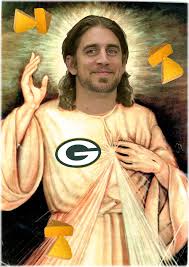
aaron rodgers jesus

I don’t think St. Aaron attended Penn Law…

If you haven’t been following the frouforole emanating out of Philadelphia, here it is in a nutshell: Professor Amy Wax of Penn Law and Professor Larry Alexander of UCLA penned a provocative piece at Philly.com. If we really want to ease the burdens of poverty, they reasoned, we should encourage more people to embrace “bourgeois culture.” Such ideas have gotten a bum rap, Wax and Alexander said, but the notions of deferred gratification, stable two-parent households, and patriotic clean living are of enormous economic value.

The outcry was loud and predictable. Penn students rallied to shut down such “white supremacist” notions. Wax’s colleagues denounced her ideas in more nuanced form.

Any progressive historians in the room surely share Professor Zimmerman’s concern. After all, when academic speech has been banned and persecuted in this country, it has been progressive and leftist scholars who have borne the brunt of such punishment.

There is a more important reason to allow and encourage a frank and open airing of Professor Wax’s arguments. As recent polls have reminded us, Americans in general are profoundly divided about the meaning of poverty. For argument’s sake, we might say there are two general sides. Lots of us think that the most important cause of poverty is a social system that defends its own built-in hierarchies. Rich people stay rich and poor people stay poor. Lots of other people disagree. Many Americans tend to blame individuals for their poverty, to assume that personal characteristics such as grit and gumption are enough to solve the problem of poverty.

Professor Wax’s argument tends to support the latter view. And if you disagree with her, you might be tempted to try to shut her down.

That’s a mistake.

Why? Because her arguments just don’t hold water. And because the more often we can get discussions of poverty on the front pages, the more chances we’ll have to make better arguments, to explain that America’s anxiously held Horatio-Alger notions don’t match reality.

In other words, when it comes to tackling the problem of poverty in America, the biggest challenge is that people simply don’t want to talk about it. They want to rest in their comfortable assumptions that the system is fundamentally fair even if some people don’t have what it takes to get ahead.

I’m convinced that the truth is different. Personal characteristics matter, of course. Far more important, however, is the whole picture—the social system that puts some kids on a smooth escalator to riches and others in a deep economic pit with a broken ladder.

Because I’m convinced that the best social-science evidence supports my position, I want to hear more from people like Professor Wax. I want to encourage people who disagree to make their cases in the front pages of every newspaper in the country.

Sound nutty? Consider a couple of examples from near and far.

Radical creationists like Ken Ham want to protect children from the idea of evolution. They fear, in short, that students who hear the evidence for evolution will find it convincing. With a few prominent exceptions, radical creationists want to cut evolution from textbooks and inoculate students against evolution’s powerful intellectual allure.

Those of us who want to help children learn more and better science should welcome every chance to put the evidence for mainstream evolutionary theory up against the evidence for radical young-earth creationism. Mainstream science should never try to shut down dissident creationist science. That’s counter-productive. Rather, mainstream science should encourage frank and open discussions, knowing that exposure to the arguments on both sides will convince more and more people of the power of mainstream thinking.

Or, for my Wisconsin friends, consider another example.

If a Bears fan wants to clamber up on the bar and insist that her team is better than the Packers, it would be the height of folly to try to stop her from speaking her piece. Those of us who know the true saving grace of St. Aaron will instead happily let her slur through her argument, smiling and waiting for Thursday night. The more games we play, the more often the Packers will win.

When the evidence is on our side, it is always better to encourage all the debate we can get.

Whew…

It wasn’t pretty, but it got done. I just sent in my proofs and index for Fundamentalist U: Keeping the Faith in American Higher Education. It’s a huge relief—that’s the last step for me before the book comes out.

index mash up FUndy U

How the sausage gets made…

Making an index is a weird job. There are professional indexers you can hire, but to me it seems like an intrinsic part of an author’s job. Nobody knows the book as well as the author; no one can tell what sections need to be emphasized in the index and which ones can be cut out.

Making this index wasn’t particularly fun, but it was a good chance for me to pore over the proofs one last time. It allowed me to think about the book’s argument from a new perspective and get a new take on writing I did quite a while ago.

So what’s next? I just sent it all in to the Oxford folks and they will put it all together. We’re hoping the book will come out in early 2018. I’ll keep you posted!

I Love You but You Didn’t Do the Reading

School reform and the kingdom of God…it’s been a lively week here at ILYBYGTH. Here are a few of the stories that might have slipped by us:

Don’t forget the public schools—Erika Christakis looks at the weird history of school-hating in The Atlantic.

Will it work? A student is suing Michigan State for refusing to let white-nationalist pundit Richard Spencer speak on campus, from The Hill.

Trump and his court evangelicals. Is he really the most faith-friendly president we’ve had?Bart reading bible

Teachers think it’s true, but it isn’t. Dan Willingham explores the durable mythology of learning styles.

American Apocalypse and 1920s creationism: Glenn Branch finds some goofs in Matthew Sutton’s history of American evangelicalism.

How resegregation works. A look at Jefferson County, Alabama, from the New York Times.

Why don’t state governments want teachers to get more money for books and supplies? Peter Greene offers an answer.

Why do people hate evolutionary theory? A new survey suggests it’s not necessarily because they hate evolutionary theory.

Think Confederate monuments should come down? I do. Turns out I’m an odd duck. You might be as surprised by the poll numbers as I was.

Time for another name change? Thomas Kidd asks if “evangelical” is still a meaningful label.

A defense of the offended: Penn’s Jonathan Klick explains why he signed the anti-Wax letter. He’s says it wasn’t about political correctness, but to a different sort of correctness.

Theocracy or social uplift? Ed Stetzer makes his case for dogma in the public square at Christianity Today.

Is “Kingdom of God” the New “Heritage”?

You’ve heard it before: Defenders of Confederate monuments insist their intentions are not to foster racism, but only to celebrate their heritage. The other side (including me) argues that the historical baggage of these statues is simply too heavy. Even if Confederate heritage-lovers don’t mean to be racist, that’s what the statues and flags have come to mean. Today, I wonder if we have a new, evangelical version of this dilemma. A key phrase in evangelical culture seems utterly benign to many smart, well-meaning evangelicals. But it terrifies the rest of us.

So here’s the tough question of the day: Is the “Kingdom of God” the evangelical version of “heritage?”

A couple of days ago, Wheaton College’s Ed Stetzer defended the phrase at Christianity Today. When a federal judge appointee declared that she wanted to work for the “Kingdom of God,” a few senators blanched. Would she use her taxpayer-funded position of power to impose theocratic rule?

Stetzer protested. The senators, he claimed, were imposing an anti-Constitutional religious test for office. Plus, the senators seemed remarkably ignorant about evangelical culture. As Stetzer explained,

The “Kingdom of God” (something that I too am deeply committed to) does not conflict with our ability to work faithfully in the public square with integrity and honor. In fact, our “dogma” may actually benefit society, for it brings certain values which work towards the good of people and society. People do say that they are motivated for public service in part because of their faith. Religion is not a hindrance to a proper functioning marketplace and governmental system; rather, it brings with it inherent moral and ethical codes which seek a better tomorrow for all of us today.

We’ve seen this before. Many secular progressive types (like me) recoiled in horror when Ed Secretary Betsy DeVos revealed her scheme to use her job to further the “Kingdom of God.” Her plan, some assumed, is to impose a Handmaid’s-Tale horror show of theocratic rule on school and society. Activist groups protested that Queen Betsy’s vision was to overturn constitutional separation of church and state and impose religious beliefs as public policy.

As evangelical intellectuals have pointed out, such assumptions are a misreading of evangelical culture. In the Reformed heartland of Michigan, working for the Kingdom of God can have a lot of different meanings. At Calvin College, for example, as Abram Van Engen explained, the phrase is not about imposing theocracy. As Van Engen put it,

Calvin does indeed call its students to be “Christ’s agents of renewal in the world.” We are told to “advance God’s kingdom.” Without being inside of that tradition, it can sound, perhaps, like theocracy. What do these phrases actually mean? Most broadly, they mean a service-oriented vision of vocation. Students are called to serve, and they can serve in many ways. For example, Calvin students are regularly called upon to work in the world for racial reconciliation.

Sounds wonderful. But the dilemma remains. If a federal judge or an education secretary announce they are working to establish “God’s Kingdom,” it doesn’t sound as if they are dedicated to such things. It sounds—to the rest of us—like an explanation why so many white evangelicals voted for Trump. It sounds like a declaration of war on the secularization that has made such strides over the past fifty years. It sounds like an effort to wind the clock back to an imagined past in which evangelical values were imposed on everyone as simply “American” values.

I know this is hard for evangelical intellectuals to hear. They don’t like to think of their religious beliefs as dictatorial, chauvinistic, or theocratic. And, to be fair, I sincerely believe that for many evangelicals, their desire to further the Kingdom of God really is none of those things. Historically, however, as I’m arguing in my new book about evangelical higher education, evangelicalism in America has always been tangled inextricably with such unsavory themes, with a deep-seated assumption that the real America is Christian America.

As our ugly battles over “heritage” have made clear, the baggage of history isn’t something we can simply ignore. Just as evangelicals need to understand that telling someone you love them but they’re going to hell is not usually taken as anything but a hateful attack, so evangelicals need to realize that their traditional jargon sounds scary to the rest of us.

Creationist College History, Part II: Parting the Waters

I know, I know, it has been hard to sleep for the last couple days. With the cliff-hanger ending of my last guest post about evangelical colleges at Righting America at the Creation Museum, I’m sure it has been difficult to wait for the sequel.genesis flood 1961 ed

Well, wait no longer: Today at RACM you can read the second half of my argument about the way evangelical higher education influenced the career of American creationism.

Take the Terrible Schools Challenge

This week, I’m asking graduate students to consider a tough question: Are America’s public schools terrible? For our seminar, I asked them to read arguments from a bunch of smart people who say that it is, for different reasons. It leads us to our ILYBYGTH challenge of the week: Can you find a pundit these days who DOESN’T think schools are a mess?

For class, we read snippets from Paolo Freire, E.D. Hirsch Jr., and Terry Moe and John Chubb. They don’t agree on much, but they all started from the premise that most schools are horrible.

For Freire, the big problem was that schools tend to recreate the social hierarchies of an oppressive society. Even well-meaning teachers tend to see school as, at best, a way to help students get ahead in an inherently unfair society.

For Hirsch, the problem was Freire. Well-meaning progressives, Hirsch argues, think that teachers need to liberate students from learning. Balderdash, Hirsch argues. If we really want to make a more egalitarian society, we need schools to pour information into students more efficiently. We can’t afford to have teachers who try not to “bank” information into students.

For Moe & Chubb, the problems are rooted in stultifying tradition and self-seeking politics. Too many schools keep repeating mistakes of generations past, locked into inefficient and unfair structures because of the political power of entrenched organizations such as teachers’ unions.

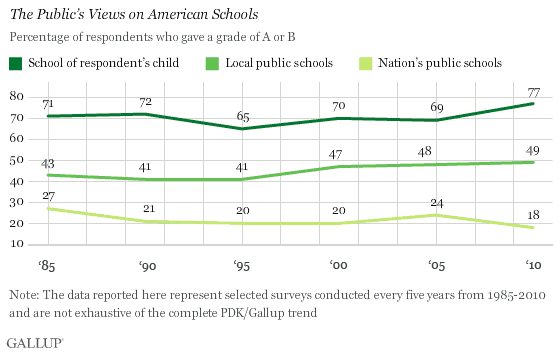
Three very different visions of how to make schools better, but all with a strong agreement that schools today are terrible. We know that most Americans tend to have a skewed vision about school quality. According to Gallup, people think their kids’ schools are great, their local schools are fine, but the nation’s schools are abysmal.public view of public schools gallup

Why is that? Why do so many of us assume without thinking about it that public schools are terrible, when the local schools that we see every day are great?

Could it be because every pundit begins with the assumption that public schools are, at best, a cruel joke? Like Freire, Hirsch, Moe, and Chubb, writers about education tend to start with dire alarms. Whether you read the retreat-and-regroup plans of neo-Benedictine Rod Dreher, the subway fare of the “failure factory” headlines in the NY Daily Post, or the neo-progressive hand-wringing of Diane Ravitch, you could be excused for assuming that we must be in the midst of an alarming educational crisis.

Whatever their politics, most pundits start from the assumption that schools are terrible. So here’s our challenge: Can you find news headlines that disagree? Can you find stories out there about successful schools and wonderful teachers?

What Goes on at Creationist Colleges?

Thanks to Bill and Sue Trollinger, the wizards behind Righting America at the Creation Museum, I’ve had a chance to share a few of my ideas about the vital role played by higher education in the evolution of American creationism.

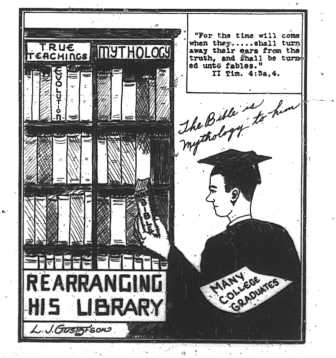
Gustafson chimes cartoon bible a myth at many colleges

Evolution has always been forbidden fruit, but not always in the same ways. This cartoon came from Biola University’s student paper, c. 1939.

This morning RACM has kindly published the first half of my argument about the tangled and troubled history of creationism at America’s evangelical and fundamentalist colleges and institutes. As you might suspect, even though fundamentalists all agreed that evolution was bad, they didn’t agree on much more than that.

Check out the full two-part argument at Righting America at the Creation Museum.

If You Don’t Think It Matters, then YOU’RE the Idiot

Liberty 48, Baylor 45. Bam. Jerry Falwell Jr. might be an idiot for investing unwisely in athletics and brick-and-mortar campus facilities, but at least his investments have paid off. The long-held dream of Jerry Falwell Sr. and his successors seems to be coming to fruition.

As I’ve been working on my upcoming book about the history of evangelical higher education, I couldn’t help but wonder: Why do so many schools invest so much money in seemingly antiquated relics of higher-educations past? If the future of higher ed is online, why do schools make such sacrifices to have winning sports teams and ivy-covered buildings?

In the case of Liberty University, it would make sense if they avoided pricey campus investments. They made all their money, after all, in the flashy world of online education. And it was a lot of money. Instead of presenting themselves as a new, more modern-than-thou online institution, though, Liberty plowed those winnings back into the trappings of traditional higher education.

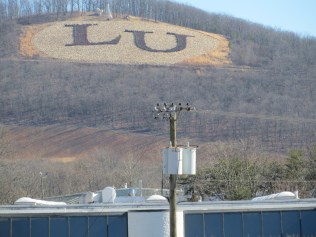
The campus is beautiful and growing fast. It even has an all-year snowboarding hill built into Liberty Mountain. Harvard doesn’t have one of those.

LU sign on mountain

Mountain-sized ambitions…

We might think—as I have—that Liberty’s leaders are merely missing the boat. We might think that they are trapped in a dead-end vision of higher education.

If they are, however, at least they are making that vision come true. Their recent upset win over football powerhouse Baylor was treated on campus as a major miracle. Students were given an official holiday to rub Baylor’s noses in it. President Falwell even relaxed the famous curfew rules in order to encourage Liberty’s students to celebrate.

All the hoopla shows how much athletics means to Liberty. As then-president Pierre Guillermin crowed way back in 1982, Liberty Baptist College (it only became Liberty University in 1985) planned to be

the Notre Dame of the Christian world athletically and the Harvard of the Christian world academically.

This recent football triumph brings that vision one step closer. And it tells us something about the nature of higher education. College has never been only about professional preparation. Yes, in order to be a teacher or a doctor or an engineer one needs a college degree. But “college” as a whole has never been limited merely to that sort of thing.

When Americans think of higher education, we tend to think of a bundle of things all wrapped together. We want to earn a degree, true, but we also want to have an “experience.” We want to attend a “real” college, one that has ivy and winning sports teams.

To a great degree, this unarticulated assumption is the reason why MOOCs flopped. The ability to take challenging classes online can’t replace the allure of a full-bore college experience.

At some level, President Falwell grasps this key fact in a way policy nerds have not. He sacrificed a great deal (not personally, but in institutional terms) to have a winning football team.

For Falwell, as for generations of scrimping and struggling evangelical colleges, the looming, nagging worry has been that they have not been seen as real colleges. They’ve been seen as dumpy little church schools, though they’ve dreamed of being taken seriously.

The win over Baylor means—at least for today—Liberty’s dreams have come true.